





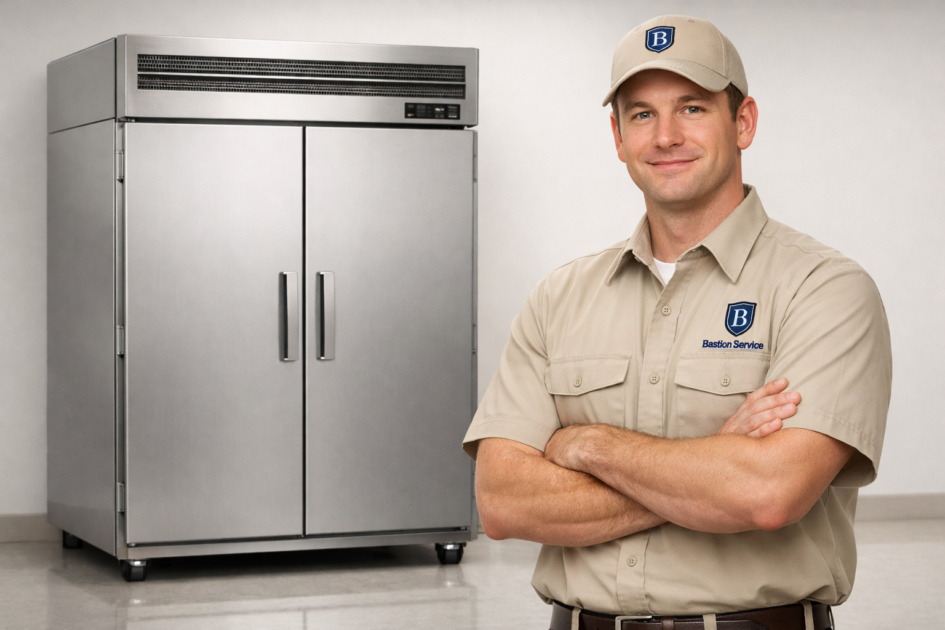
When a Beverage-Air refrigerator starts running warm, cycling incorrectly, or building ice where it should not, the priority is to identify the fault quickly and decide what repair path makes sense for the equipment and the business using it. For businesses in Fairfax, refrigeration issues can affect product quality, prep schedules, staffing flow, and daily operations. Bastion Service provides Beverage-Air refrigerator repair based on symptom-focused diagnosis, repair planning, and scheduling that helps reduce unnecessary downtime.
Related commercial service paths in Fairfax include Beverage-Air Commercial Repair in Fairfax, Commercial Refrigerator Repair in Fairfax, and Beverage-Air Freezer Repair in Fairfax.
Refrigerator problems that should not be ignored
A refrigerator does not have to stop completely to create a serious problem. Many service calls begin with a unit that still powers on, still runs, and still feels partly cold, but no longer holds a stable temperature through the day. That kind of partial failure often points to airflow problems, defrost issues, fan motor trouble, sensor or control faults, or a refrigeration system working under strain.
Common signs that a Beverage-Air refrigerator needs service include:
- Cabinet temperature rising above normal
- Warm product despite the unit running constantly
- Frost buildup on interior panels or around the evaporator area
- Water leaking inside the cabinet or onto the floor
- Fans that sound louder, slower, or irregular
- Frequent cycling on and off
- Poor recovery after door openings
- Door gaskets that no longer seal tightly
These symptoms often get worse with continued use, especially in kitchens, food-service businesses, hotels, and other Fairfax businesses that rely on stable cold holding throughout the day.
What common symptoms usually indicate
Not holding temperature
If the cabinet is warmer than expected, the cause may be related to restricted condenser airflow, an evaporator fan not moving enough air, a bad sensor, a thermostat problem, weak compressor performance, or a sealed-system issue. In some cases, heavy loading patterns or repeated door openings make an existing equipment problem more noticeable rather than causing it outright.
The key service question is whether the refrigerator is failing to cool, failing to circulate cold air, or failing to read and respond to temperature correctly. Those are different repair paths, even though they can look similar at first.
Frost or ice buildup
Frost that returns quickly usually points to a defrost problem, air leaks at the door, moisture intrusion, or reduced airflow across the evaporator. Ice buildup can block circulation and make a refrigerator appear to have a larger cooling failure than it actually does. It can also hide the original cause until the unit is inspected under operating conditions.
When this symptom appears, service often involves checking defrost components, control response, gasket condition, door closure, fan operation, and ice pattern location rather than assuming one failed part.
Running all the time
A Beverage-Air refrigerator that runs nearly nonstop may be struggling to remove heat efficiently. Dirty condenser conditions, weak airflow, a refrigerant issue, warm ambient conditions, or poor door sealing can all push run times higher. If the unit keeps running but temperature still drifts upward, the system is working harder without delivering normal results.
That pattern matters because constant operation increases wear on motors and compressor components while still leaving the cabinet vulnerable to temperature loss.
Short cycling or intermittent shutdown
If the refrigerator starts and stops too often, fails to stay running, or shuts down unexpectedly, the cause may involve controls, start components, electrical supply issues, overload protection, or compressor-related stress. Short cycling can be easy to dismiss early on, but it often leads to a no-cool condition if left unresolved.
Leaks and condensation
Water inside or around the cabinet may come from a blocked drain, meltwater from frost accumulation, failed condensate handling, or warm air entering through a worn gasket. Condensation around the door opening can also signal sealing problems that affect cooling performance long before staff notice a clear temperature failure.
For many businesses in Fairfax, leaks are more than a maintenance annoyance. They can create slip hazards and point to a larger cooling or defrost issue that needs repair.
Noise changes
Buzzing, clicking, rattling, grinding, or unusual fan noise can help narrow the diagnosis. A noisy evaporator fan, a failing condenser fan motor, vibrating panels, hard-starting compressor components, or loose hardware can all change the sound of the refrigerator before cooling performance drops completely.
When staff say the unit “sounds different,” that observation is often useful and worth including when scheduling service.
Why proper diagnosis matters before parts are replaced
With Beverage-Air refrigerators, several different faults can create similar symptoms. A warm cabinet might be caused by a fan problem, a control problem, a door issue, or a refrigerant-related problem. Replacing parts based only on the most visible symptom can lead to repeat visits, added cost, and more lost time.
A good repair decision usually depends on checking operating temperature, airflow, frost pattern, fan performance, electrical response, and overall cabinet condition together. That helps separate a targeted repair from a larger issue involving multiple worn components or declining system performance.
For Fairfax businesses, that distinction matters because the goal is not just to make the refrigerator run again for a day or two. The goal is to restore stable operation in a way that fits the equipment’s condition and the business’s daily demands.
When to schedule service
It is time to schedule refrigerator repair when the unit is no longer maintaining safe temperatures, when frost keeps returning, when water leaks continue, or when the refrigerator runs excessively without recovering normally. Service is also a smart step when the problem seems intermittent. Sporadic temperature drift, occasional shutdowns, and changing fan behavior are often early signs of a larger failure in progress.
Businesses should also watch for small repeated issues across shifts, such as:
- Temperature differences from top to bottom shelves
- Doors that need to be pushed closed firmly
- Condensation around gaskets or door frames
- Long recovery times after normal use
- Interior sections that feel colder or warmer than usual
Those patterns often mean the refrigerator is no longer operating evenly, even if it has not failed completely yet.
When continued use can make the failure worse
Some refrigerators can stay in operation briefly while service is being arranged, but others should be addressed immediately. If the cabinet is warming product, icing over rapidly, hard-starting, or shutting down repeatedly, continued operation can increase strain on the compressor, fan motors, and controls. A unit that cannot recover after normal door openings is already showing that the problem is active.
Continued use is especially risky when staff are adjusting controls repeatedly just to keep the refrigerator usable. That usually means the underlying fault has not been corrected and the unit is operating outside normal conditions.
Repair or replace?
Not every refrigerator with a major symptom needs to be replaced, and not every older unit is worth continued repair. In many cases, repair is the better option when the fault is isolated, the cabinet is still in solid condition, and the refrigerator has otherwise been performing reliably. Replacement becomes a more serious consideration when major component failure combines with age, corrosion, repeated breakdowns, or unstable cooling that keeps interrupting operations.
The most useful question is whether the current issue is a single repairable problem or part of a larger pattern. If multiple systems are showing wear at once, the decision is not only about today’s symptom. It is also about future downtime, food exposure, and the effort required to keep an unreliable refrigerator in service.
How to prepare for a service visit
Before scheduling repair, it helps to note what the refrigerator is doing under normal use. Useful details include when the temperature problem started, whether frost is building in one area or throughout the cabinet, whether the unit is running constantly or shutting off, and whether leaks happen all the time or only after certain cycles. If staff have noticed clicking, fan noise, or changes in door closure, that information can help narrow the diagnosis faster.
It also helps to clear access to the unit, avoid resetting controls repeatedly, and keep track of any recent changes in loading or workflow that may have made the issue more noticeable.
Service decisions should support day-to-day operations
Businesses usually need more than a technical explanation. They need to know what failed, whether the refrigerator is a sound repair candidate, what level of downtime to expect, and what practical next step makes the most sense. For Beverage-Air refrigerator repair in Fairfax, the right service outcome is one that addresses the actual symptom pattern, protects workflow, and helps the business move forward without guesswork.
If a Beverage-Air refrigerator is running warm, leaking, frosting over, or struggling to maintain normal operation, prompt diagnosis and repair scheduling can help prevent a manageable equipment issue from turning into a larger interruption for your Fairfax business.


