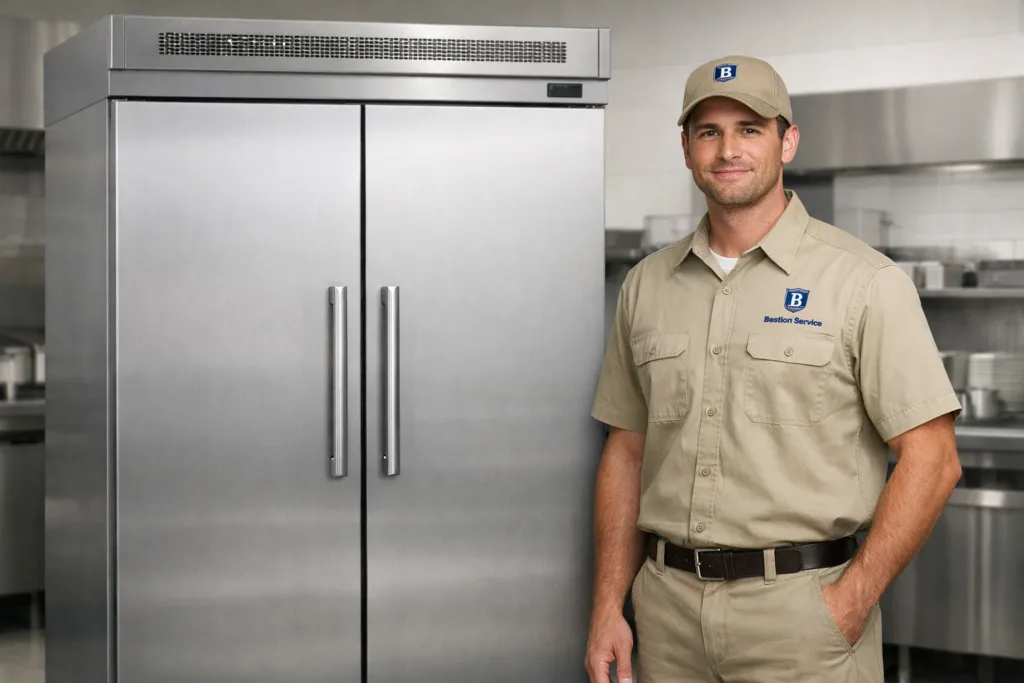




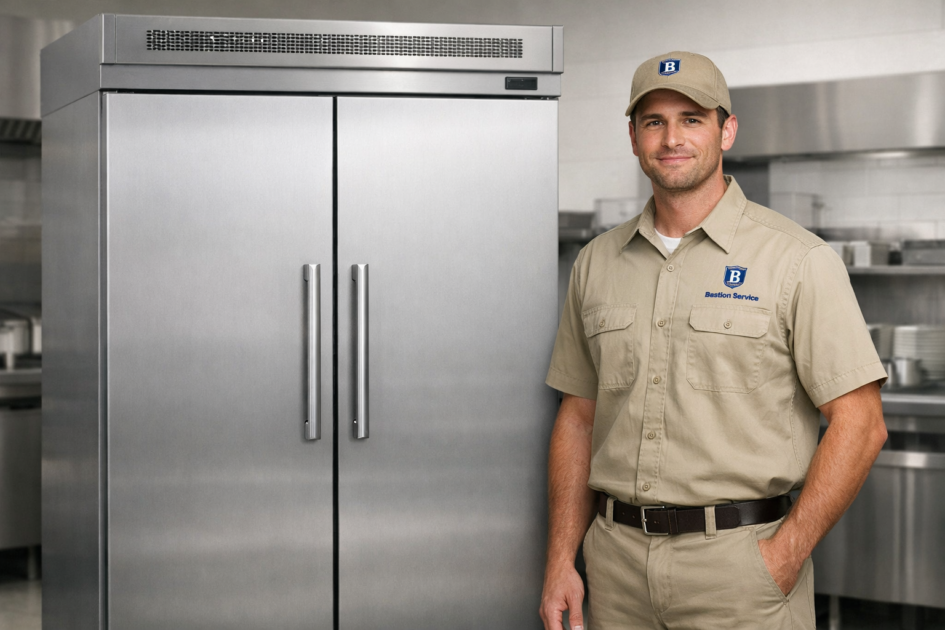
When a Beverage-Air refrigerator starts drifting warm, cycling oddly, or collecting water in Del Rey, the most useful next step is service built around the symptom pattern rather than guesswork. Temperature loss can come from airflow restrictions, control issues, door sealing problems, defrost faults, fan failures, or sealed-system trouble, and each one leads to a different repair path. For businesses that rely on steady cold holding, early diagnosis helps reduce downtime, protect inventory, and prevent a smaller fault from becoming a larger equipment problem.
Related commercial service paths in Del Rey include Beverage-Air Commercial Repair in Del Rey, Commercial Refrigerator Repair in Del Rey, and Beverage-Air Freezer Repair in Del Rey.
Bastion Service works with businesses in Del Rey to evaluate Beverage-Air refrigerator issues based on cabinet performance, operating conditions, and the way the unit is used throughout the day. That includes checking temperature behavior, compressor run time, evaporator condition, condenser airflow, gaskets, fan operation, controls, and drainage before deciding whether adjustment, part replacement, or more extensive repair is the right move.
Common Beverage-Air Refrigerator Problems
Cabinet not holding temperature
If the cabinet is running warm, recovering slowly after door openings, or showing uneven temperatures from one section to another, the cause may be restricted condenser airflow, evaporator fan trouble, sensor or control problems, weak door gaskets, or frost buildup limiting circulation. In a busy kitchen, prep area, or service line, even a modest temperature drift can disrupt workflow and create product-risk concerns.
Unit running constantly
A refrigerator that rarely cycles off is often trying to compensate for heat gain or poor cooling performance. Common reasons include a dirty condenser, failing fan motor, doors not sealing correctly, incorrect temperature sensing, or a refrigeration-side issue that keeps the cabinet from reaching set point. When the unit runs continuously, compressor wear increases and energy use rises while cooling performance often continues to decline.
Water leaks or internal ice buildup
Water under the cabinet or ice forming where it should not can point to a blocked drain, defrost problem, gasket leakage, or airflow imbalance inside the box. These symptoms affect more than appearance. They can reduce usable storage space, create cleanup issues, and signal that cooling air is no longer moving through the cabinet the way it should.
Noise, clicking, or fan-related sounds
Changes in sound often help narrow down the source of the problem. Rattling may come from loose panels or vibration, while scraping or buzzing can indicate a fan issue or ice contact. Repeated clicking may suggest a starting problem or compressor stress. Some noises are relatively minor, but others are early warnings that a component is struggling and should be checked before operation continues as usual.
Why a Beverage-Air Refrigerator Stops Holding Temperature
Warm-box complaints are common, but the root cause is not always obvious from the outside. A Beverage-Air refrigerator may lose temperature because warm air is entering through worn gaskets, because the evaporator fan is not circulating cold air properly, because the condenser cannot shed heat efficiently, or because the control system is not reading conditions accurately. In other cases, frost buildup or a refrigerant-side problem changes how the entire cooling cycle behaves.
This is why symptom-based service matters. Two units can both appear warm, yet one may need a straightforward airflow or gasket repair while the other may need deeper system evaluation. Replacing parts without confirming the source of the problem usually adds cost without restoring reliable performance.
Symptoms That Usually Mean Service Should Be Scheduled Soon
- Temperature swings during normal use
- Product areas that stay warmer than the rest of the cabinet
- Heavy frost on the evaporator area or interior surfaces
- Water pooling under or inside the unit
- Fans that stop, slow down, or become unusually loud
- Compressor running almost nonstop
- Frequent short cycling or intermittent shutdowns
- Doors that no longer close or seal consistently
If staff are compensating by turning controls down repeatedly, rearranging product to avoid warm spots, or checking temperatures throughout the day, the refrigerator is already affecting operations. At that point, delaying service increases the chance of inventory loss and additional wear on major components.
What a Service Visit Typically Focuses On
Effective refrigerator repair starts by matching the complaint to the systems most likely involved. That usually means confirming actual temperature performance, checking airflow through the condenser and evaporator sections, inspecting gaskets and door alignment, reviewing fan operation, looking for signs of defrost or drain issues, and evaluating whether the compressor and controls are behaving normally. The goal is to identify whether the fault is isolated, progressive, or tied to a larger condition inside the unit.
For businesses in Del Rey, that evaluation also needs to account for how the refrigerator is actually used. Frequent door openings, loading patterns, clearance around the cabinet, ambient heat, and day-to-day traffic can all influence symptom severity. Repair decisions are better when they reflect real operating conditions rather than a generic checklist alone.
Airflow and Heat-Rejection Problems
Many Beverage-Air refrigerator issues begin with airflow. If the condenser is dirty or ventilation is poor, the system cannot release heat effectively. The result may be long run times, warmer cabinet temperatures, weak recovery after door openings, and strain on the compressor. If the evaporator fan is failing or blocked by frost, cold air may not circulate evenly, leading to hot spots and inconsistent storage conditions.
These problems are often mistaken for more serious failures because the cabinet still runs but no longer performs well. In practice, airflow-related issues can rapidly affect other parts of the system if the unit keeps operating under stress.
Door, Gasket, and Seal Issues
A refrigerator does not need a major mechanical failure to lose performance. A door that sits slightly out of alignment or a gasket that has become worn, torn, or loose can allow repeated warm-air infiltration. That moisture can contribute to frost buildup, longer run times, and unstable temperatures, especially in high-use environments where doors open frequently.
Seal problems are worth addressing quickly because they tend to create secondary issues. What begins as a gasket concern can turn into fan obstruction, icing, or compressor overwork if the cabinet spends too much time trying to recover from constant air leakage.
Defrost and Drain Problems
When frost starts building where it should not, the refrigerator may be dealing with a defrost control issue, a heater problem, a sensor fault, or a drain blockage that is causing moisture to remain in the wrong area. Frost does more than take up space. It changes airflow, insulates components that need to exchange heat, and can eventually interfere with fan movement.
Drain problems can show up as standing water, ice at the bottom of the cabinet, or recurring moisture near the unit. In a business setting, these symptoms are disruptive because they add cleanup demands and can interfere with safe daily operation around the equipment.
Repair or Replace Considerations
The right next step depends on the specific failure, the overall condition of the cabinet, prior repair history, and how critical the refrigerator is to daily operations. If the issue is isolated to a fan motor, gasket, control component, drain fault, or similar repairable part, service is often the sensible option. When the unit has repeated breakdowns, declining reliability, or signs of more extensive system trouble, replacement may become part of the conversation.
The most useful decision is usually the one based on current condition and operating impact, not assumptions. Businesses generally want to know whether the problem is contained, whether continued operation is reasonable, and whether the expected repair supports dependable use going forward.
Preparing for Beverage-Air Refrigerator Repair in Del Rey
Before service is scheduled, it helps to note the main symptom, when it started, whether the problem is constant or intermittent, and whether staff have seen frost, leaks, unusual sounds, or slower cooling recovery. If there have been recent power issues, cleaning issues, or changes in loading patterns, that information can also help speed diagnosis. The more specific the symptom history, the faster the repair process usually moves.
For businesses in Del Rey, the priority is usually simple: restore stable cooling, limit disruption, and make a sound decision about the equipment without wasting time on the wrong repair. When a Beverage-Air refrigerator is affecting storage conditions, workflow, or daily uptime, prompt diagnosis and a targeted service plan are the practical next steps.