
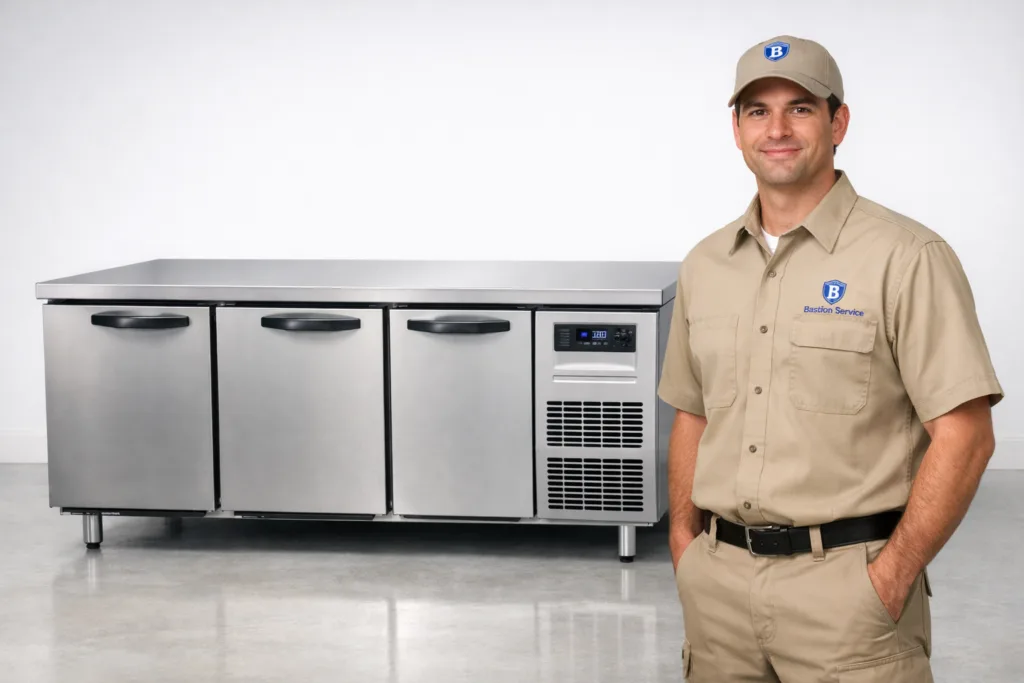




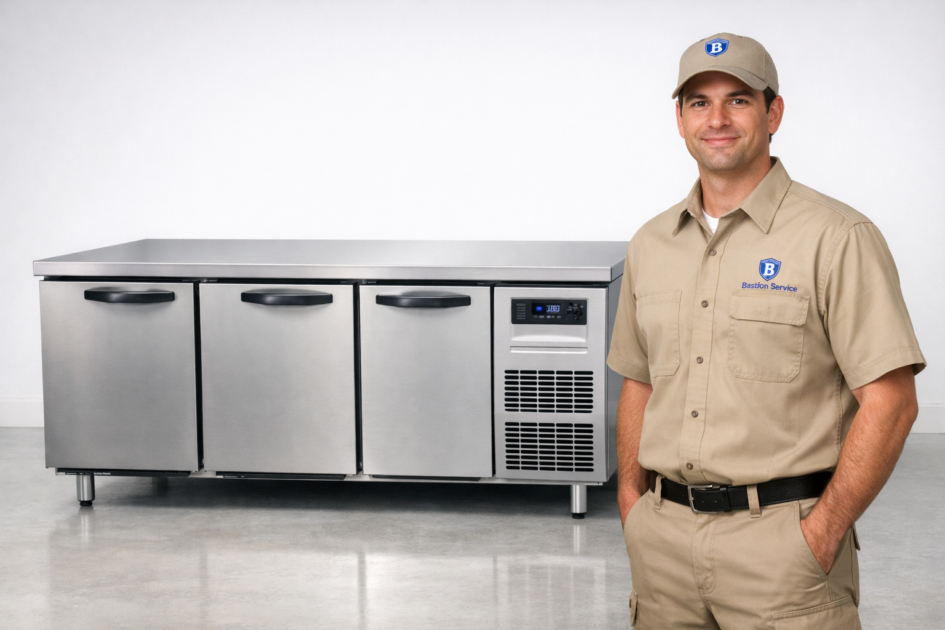
When Beverage-Air refrigeration equipment starts missing temperature targets, building frost, leaking, or struggling to recover during the day, service decisions usually need to happen quickly. For businesses in West Los Angeles, the main concern is not only what failed, but how the symptom is affecting product protection, staff workflow, and whether the unit can stay in use until repair. Bastion Service provides symptom-based diagnosis and repair scheduling for Beverage-Air refrigerator and freezer problems so operators can move from uncertainty to a workable next step.
For specific equipment paths in West Los Angeles, review Beverage-Air Fridge Repair in West Los Angeles, Beverage-Air Freezer Repair in West Los Angeles, and Commercial Appliance Repair in West Los Angeles.
What Beverage-Air refrigeration equipment problems do you troubleshoot?
Most service calls involve symptoms that interrupt daily operations before the equipment stops completely. Beverage-Air refrigerator and freezer issues often show up as warm cabinets, inconsistent temperatures, airflow problems, frost accumulation, repeated leaking, long run times, short cycling, or poor recovery after doors are opened. In many cases, several symptoms appear together, which is why the most useful repair visit focuses on the full operating pattern rather than a single visible problem.
Troubleshooting may involve temperature control faults, fan and airflow issues, defrost failures, door sealing problems, drainage issues, sensor or control irregularities, condenser-related performance decline, or deeper cooling-system concerns. The goal is to identify the actual source of the problem, explain the repair path, and help the business decide whether the unit should continue operating, be monitored closely, or be taken out of service.
Refrigerator symptoms that usually need prompt attention
A Beverage-Air refrigerator that runs but cannot hold a steady temperature can create a misleading situation. Staff may see some cooling and assume the unit is still usable, even while product zones become uneven or recovery slows after routine door openings. That pattern often points to an underlying issue that is already affecting reliability.
Cabinet feels cool but product temperature is rising
If the interior air seems cool but stored items are warming up, the problem may involve weak airflow, fan trouble, sensor inaccuracies, control issues, dirty heat-exchange surfaces, or frost interfering with normal circulation. This is one of the more disruptive symptom patterns because the unit appears partially functional while protection of stored product becomes less predictable.
Slow recovery during busy hours
When a refrigerator takes too long to return to target temperature after loading or repeated door openings, the equipment may be losing cooling capacity or struggling with airflow restrictions. In a business setting, slow recovery often leads to workarounds such as moving product, reducing access, or changing storage habits, all of which signal that repair should be scheduled before the disruption gets worse.
Constant running without stable cooling
A refrigerator that seems to run continuously but still drifts warm is often under strain. The cause can range from air movement problems and control faults to defrost-related buildup or a more significant cooling issue. Long run times are important because they usually indicate that the equipment is working harder while delivering less dependable performance.
Freezer symptoms that can escalate quickly
Freezer issues tend to become urgent faster because even a small performance drop can lead to frost spread, soft product, or repeated recovery failures. A Beverage-Air freezer may continue operating while showing clear warning signs that normal storage conditions are no longer being maintained consistently.
Frost buildup around panels, product, or airflow paths
Heavy frost can point to a defrost problem, moisture entering through worn gaskets or door alignment issues, blocked airflow, or fan-related trouble. Once frost starts restricting circulation, the freezer may run longer, cool unevenly, and lose the ability to recover normally. Removing visible frost without addressing the cause usually turns into a repeat service issue.
Freezer temperature swings or soft product
If product texture changes, cabinet temperatures rise above normal range, or the freezer struggles after normal use, the issue may involve controls, sensing, airflow, fan operation, or a declining cooling system. Temperature swings matter because they can appear intermittent at first, then become severe enough to interrupt operations with little warning.
Door area icing and sealing problems
Ice near door edges, repeated condensation, or signs that the door is not sealing cleanly can allow warm air and moisture into the cabinet. That extra moisture feeds frost buildup and makes the freezer work harder. When this pattern continues, the equipment often develops additional symptoms instead of remaining a simple door-related issue.
Leaks, condensation, and drainage concerns
Water under or around a refrigerator or freezer is more than a housekeeping problem. Leaks can create slip hazards, affect nearby flooring, and signal that drainage, defrost, or cooling performance has changed. In some cases, what looks like a small leak is actually tied to an operating fault that is already reducing temperature stability.
Common causes include blocked drains, frozen drain lines, excess condensation, door gasket failures, and ice melt linked to poor cycling or frost accumulation. A service visit helps determine whether the leak is isolated to drainage or part of a broader refrigeration problem that also needs repair.
Airflow and fan-related problems
Many Beverage-Air temperature complaints trace back to airflow. When air cannot move correctly through the cabinet or across key components, the equipment may cool unevenly, run longer than expected, or show frost in areas where it should not be collecting. Operators often notice this first as hot and cold spots, weak discharge air, or product near one section of the cabinet warming faster than the rest.
Fan-related issues are also common when the unit becomes noisier than usual, airflow sounds change, or cooling performance drops even though the system still appears to be running. Because airflow affects both refrigerator and freezer operation, these symptoms should be evaluated early rather than managed by shifting product placement.
Noise, cycling changes, and signs of strain
Unusual sounds do not always mean immediate failure, but they often help narrow down where the problem is developing. Buzzing, rattling, fan noise, repeated starting and stopping, or extended run cycles can all indicate that the equipment is under abnormal load or that a component is no longer operating correctly.
- Frequent cycling can point to control or sensing problems.
- Long continuous operation often suggests cooling loss, airflow restriction, or frost interference.
- New fan or vibration noise may indicate wear, obstruction, or mounting issues.
- Changes in normal sound patterns are especially important when paired with warm temperatures or leaking.
For businesses in West Los Angeles, these patterns are worth checking before they turn into a no-cool condition during operating hours.
When repair should be scheduled instead of delayed
Waiting usually adds risk when the equipment is already showing more than one symptom. If a Beverage-Air refrigerator or freezer is running warm, recovering slowly, leaking repeatedly, frosting over, or requiring constant staff adjustments, the unit is no longer operating normally. The longer that pattern continues, the more likely it is that product exposure, workflow disruption, or a full outage will follow.
Service should move higher on the schedule when staff are compensating by changing set points repeatedly, opening doors less often than needed, moving inventory to other units, clearing frost by hand, or monitoring temperatures far more closely than usual. Those temporary measures may keep operations moving for a short time, but they rarely solve the cause of the problem.
How repair decisions are usually made
Not every Beverage-Air problem leads to replacement, and not every unit should remain in use while a fault develops. Repair planning usually depends on symptom severity, cabinet condition, age, repair scope, parts availability, and how much downtime the business can tolerate. A refrigerator with a manageable airflow or control issue may justify timely repair, while a freezer with repeated recovery failure and broader performance decline may call for a more cautious decision.
The most useful service assessment answers practical questions:
- What is causing the current symptom pattern?
- Can the equipment continue operating safely until repair?
- Is the problem isolated or part of a larger decline in performance?
- What level of urgency makes sense based on product risk and daily use?
What a service visit helps clarify for West Los Angeles businesses
Refrigeration symptoms often overlap, which is why a warm cabinet, recurring frost, or a leak should not be judged by appearance alone. A freezer that looks like it only needs frost removal may actually have a defrost or airflow fault. A refrigerator that cools part of the time may be losing stability in a way that becomes more expensive if ignored. A service visit helps identify the fault, define the repair path, and determine whether continued operation is reasonable in the short term.
That is especially important for businesses in West Los Angeles that rely on Beverage-Air equipment every day. The right diagnosis supports scheduling decisions, helps reduce unnecessary downtime, and gives operators a more accurate picture of whether repair is the best next move.
If your Beverage-Air refrigerator or freezer is showing warm temperatures, frost buildup, airflow issues, leaks, or unreliable cycling, the best next step is to schedule service before the problem spreads into a larger interruption. A focused repair visit can confirm the source of the issue, explain repair options, and help you decide how to protect operations while the equipment is brought back to stable performance.


