
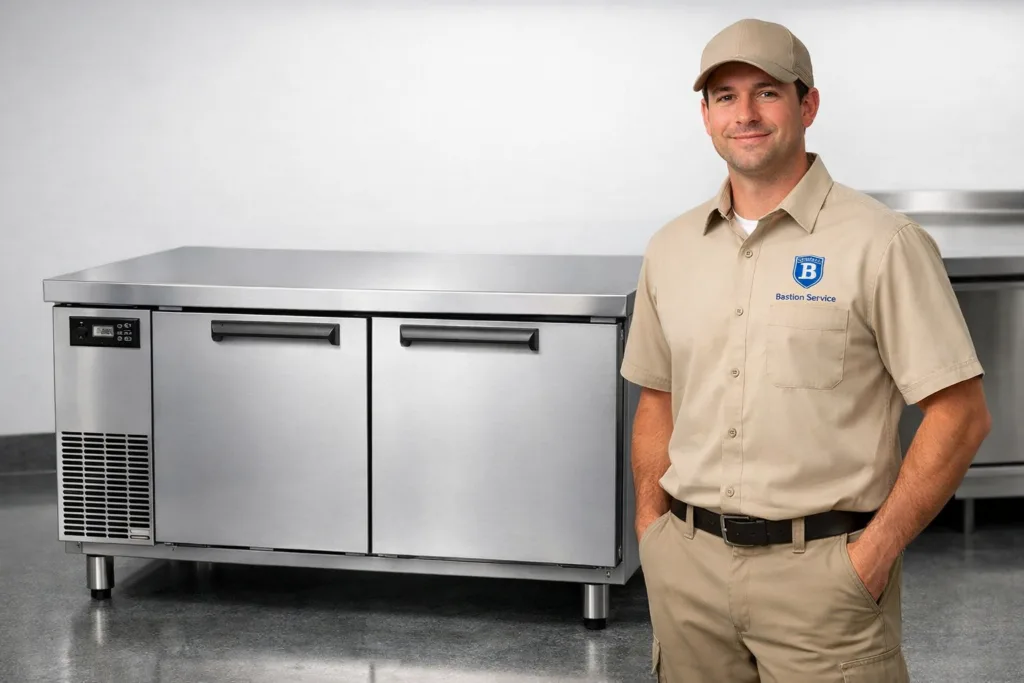




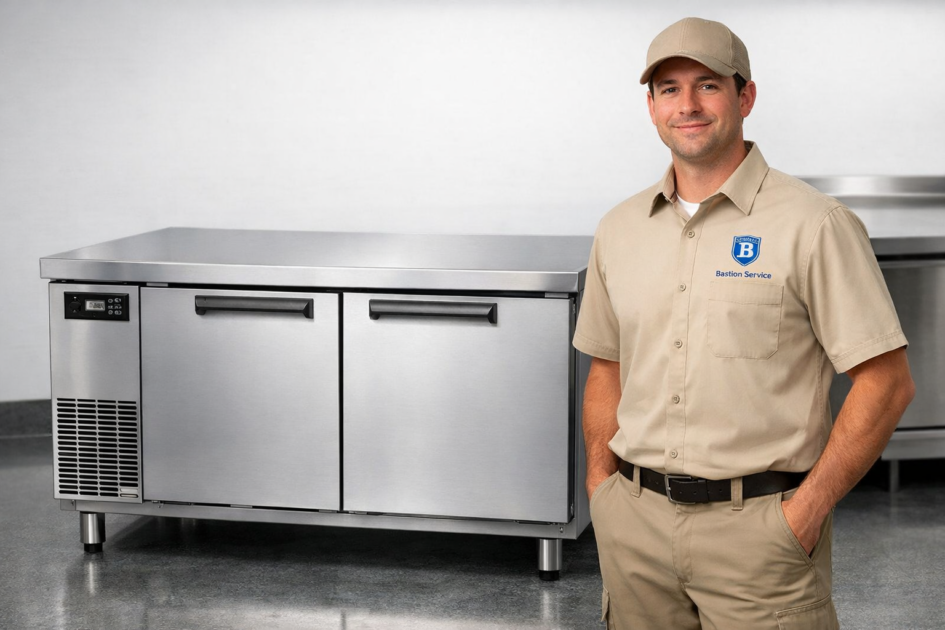
When Beverage-Air refrigeration equipment starts warming, frosting, leaking, or running longer than normal, the main concern is keeping operations moving without risking inventory or forcing a larger breakdown. For businesses in Pico-Robertson, repair service is most useful when it quickly identifies the actual fault, explains whether the unit should remain in use, and helps schedule the right work based on urgency. Bastion Service supports businesses in Pico-Robertson with diagnosis and repair planning for Beverage-Air refrigerator and freezer issues that interfere with storage, prep, workflow, and day-to-day reliability.
For specific equipment paths in Pico-Robertson, review Beverage-Air Fridge Repair in Pico-Robertson, Beverage-Air Freezer Repair in Pico-Robertson, and Commercial Appliance Repair in Pico-Robertson.
Beverage-Air refrigerator and freezer problems that often lead to service calls
Many equipment failures begin as performance changes rather than complete shutdowns. A cabinet may still feel cold at times but struggle during busy periods, recover slowly after door openings, or show uneven temperatures from one section to another. Those early symptoms matter because they often point to airflow, fan, defrost, control, door-seal, or refrigerant-related problems that usually do not improve on their own.
Warm cabinets or inconsistent temperature
If a Beverage-Air refrigerator or freezer is not holding a steady temperature, the cause may be more complex than a simple thermostat issue. Weak cooling can come from dirty condenser airflow, failing fan motors, sensor or control problems, door leakage, evaporator icing, or sealed-system trouble. In a refrigerator, this may show up as warm spots, product spoilage concerns, or a box that seems cold in the morning and warmer later in the day. In a freezer, slow pull-down and soft product are common warning signs.
Temperature inconsistency is one of the most important symptoms to address early because the equipment may appear usable while gradually putting stored product at risk. Service helps determine whether the problem is a repairable component issue or a deeper cooling failure that needs immediate attention.
Frost buildup, ice formation, and restricted airflow
Heavy frost inside a freezer or unexpected ice buildup in a refrigerator usually points to a defrost problem, air leak, circulation issue, or moisture intrusion. Once frost starts blocking airflow across the evaporator area, the equipment can no longer move cold air properly through the cabinet. That often leads to rising temperatures, longer run times, and uneven cooling from top to bottom or front to back.
Frost problems are especially misleading because the unit may still seem to be running normally. In reality, fans may be pushing less air, the system may be working harder than it should, and recovery after door openings may become noticeably slower. A repair visit can separate a door-gasket issue from a fan, heater, sensor, timer, or control fault.
Water leaks, condensation, or pooling around the unit
Water around Beverage-Air refrigeration equipment should not be treated as a minor nuisance. In many cases, leaks are tied to clogged drains, defrost drainage issues, cabinet sweating, door-seal failure, or ice melt caused by unstable temperatures. Even when the cooling complaint seems secondary, moisture often signals that the equipment is not operating the way it should.
For businesses in Pico-Robertson, this kind of problem affects more than the equipment itself. Floor safety, sanitation, nearby storage, and daily staff movement can all be affected when water starts collecting around refrigeration equipment. Service should confirm whether the leak is isolated to drainage or tied to a broader cooling or defrost problem.
Constant running, noisy operation, or poor recovery
When a refrigerator or freezer runs almost nonstop, struggles after normal door openings, or starts making new noises, the issue may involve condenser airflow, evaporator fan trouble, vibration, ice interference, worn motors, or declining cooling efficiency. A unit that used to recover quickly but now lags behind normal use is often showing one of the earliest signs of a larger failure.
Noise changes are also useful clues. Buzzing, rattling, fan contact sounds, or unusual cycling patterns can help narrow the problem to specific components. The sooner those symptoms are checked, the easier it is to avoid added strain on the rest of the system.
What Beverage-Air refrigeration equipment problems do you troubleshoot?
Repair visits commonly address symptom patterns such as:
- Refrigerators not staying cold
- Freezers not reaching or holding target temperature
- Warm cabinets during business hours
- Frost or ice buildup inside the unit
- Evaporator or condenser fan problems
- Water leaks or excess condensation
- Poor airflow and uneven cooling
- Units that run constantly or short cycle
- Slow freezer recovery after loading or door openings
- Door gasket and sealing issues
- Defrost system faults
- Control, sensor, or temperature regulation issues
Because similar symptoms can come from different failures, symptom-based troubleshooting is usually more reliable than guessing from one visible issue alone.
Why symptom patterns matter before approving repair
A warm cabinet, frost buildup, or moisture problem does not automatically identify the failed part. For example, a freezer that is warming may be dealing with blocked airflow from ice, a fan issue, a control fault, or reduced cooling performance. A refrigerator with condensation may have a door-seal problem, but it may also be showing signs of unstable temperature or poor air circulation.
That is why repair planning should focus on the full operating pattern: when the problem started, whether it is getting worse, how the equipment behaves during busy periods, and whether cooling performance changes throughout the day. That information helps determine whether the unit can stay in use temporarily, whether stored product should be moved, and whether the repair is likely to be straightforward or more involved.
When continued use can make the problem worse
Some equipment issues allow short-term operation with caution, but others should be addressed right away. If the cabinet is not maintaining temperature, if airflow is blocked by frost, if fan circulation has weakened, or if the unit is running almost continuously, delaying service can increase wear on major components and lead to a more disruptive outage.
This is especially important for businesses in Pico-Robertson that rely on steady cold storage during active service hours. A refrigerator that barely keeps up or a freezer that loses recovery time may still appear usable, but those conditions often worsen under normal daily demand. Acting before a full failure is usually the better way to limit downtime.
Repair decisions for older or repeatedly failing equipment
Not every Beverage-Air unit with a cooling problem should be replaced, and not every repair is the right long-term investment. The decision usually depends on the failed system, overall cabinet condition, history of repeat problems, and how essential that unit is to daily operations. If the equipment has had recurring temperature, airflow, or frost issues, it makes sense to look beyond the immediate symptom and evaluate whether the repair is likely to restore stable operation.
For many businesses, the real question is not just the cost of the next repair, but whether that repair meaningfully reduces future disruption. A targeted service assessment helps clarify whether the issue is limited to a manageable component failure or part of a broader pattern of declining reliability.
Scheduling Beverage-Air refrigeration equipment repair in Pico-Robertson
If your Beverage-Air refrigerator or freezer is running warm, building frost, leaking water, or showing signs of weak airflow, the next step is to schedule service before the problem affects more inventory or interrupts normal operations. A repair visit in Pico-Robertson should help you understand the source of the failure, whether the equipment can remain in use, and what repair path makes the most sense for your business.


