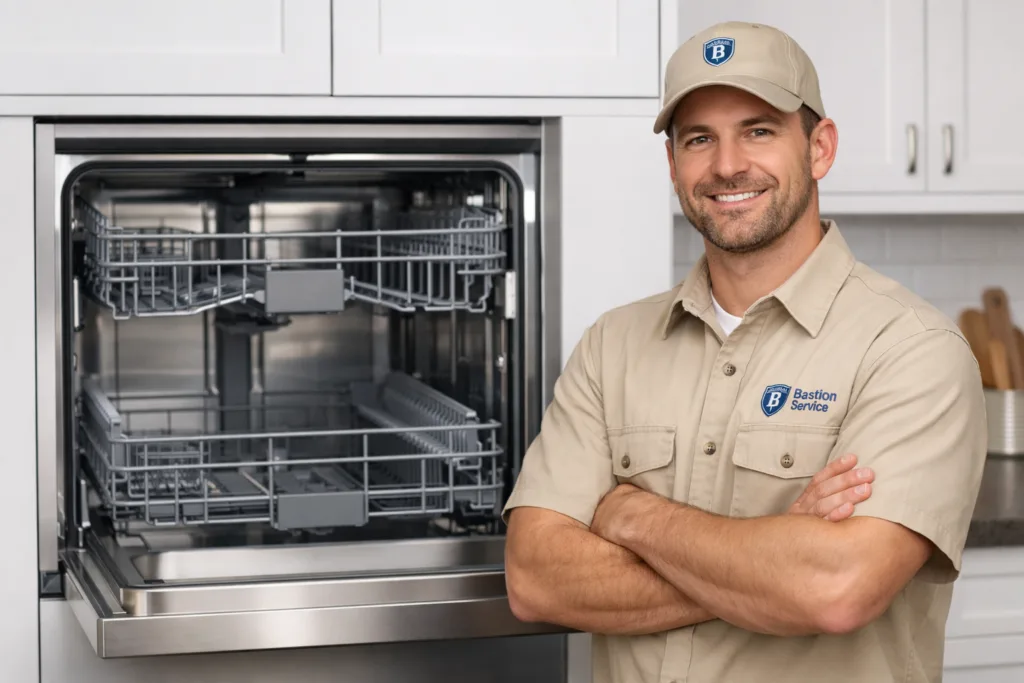
Dishwasher problems are easiest to solve when the symptoms are narrowed down before parts are discussed. An Asko unit that leaks, stops mid-cycle, or leaves residue behind can have a very different root cause than the final result suggests. In a Torrance home, that usually means checking how the machine fills, washes, heats, drains, and seals rather than assuming one failed component from the start.
What the symptom pattern usually reveals
Asko dishwashers tend to show consistent behavior when something begins to fail. A machine that runs but does not clean well points in a different direction than one that never starts, and a dishwasher that drains slowly is diagnosed differently from one that shuts down with water still inside. Looking at the full pattern helps separate a clog, pump issue, sensor fault, heating problem, or control failure.
It also helps homeowners avoid replacing parts based on guesswork. Two dishwashers can show the same visible symptom while failing in completely different ways. The most useful repair plan is based on what the appliance is doing through the entire cycle, not just what is left behind when the door opens.
Common Asko dishwasher issues in Torrance homes
Standing water after the cycle
Water left in the bottom of the tub often points to a restricted drain path, a blocked filter area, a kinked or obstructed hose, or a weak drain pump. In some cases, the dishwasher may wash normally at first and then fail only at the drain stage. If the problem repeats, continued use can lead to odors, cloudy rinse water, and extra strain on the pump system.
Cloudy dishes or poor wash results
When dishes come out with film, grit, or dried-on residue, the cause may be reduced spray pressure, blocked spray arms, filter buildup, detergent dispensing trouble, or water that is not reaching the right temperature. If glasses are consistently dull and plates still feel greasy, the machine may be circulating water poorly even though it appears to complete the cycle.
Leaks near the door or underneath the unit
Leaks can come from door gasket wear, door alignment issues, oversudsing, internal hose problems, pump seals, or inlet-related faults. Even a small amount of water matters. Repeated leaking can affect flooring, cabinet bases, and the hidden space beneath the dishwasher long before the issue looks serious from the outside.
Dishwasher will not start
If the control panel lights up but the cycle never begins, the problem may involve the door latch, user interface, power path, or main control system. When the machine appears unresponsive altogether, power supply issues are also part of the inspection. A no-start condition is often straightforward once the exact stage of failure is identified.
Cycle stops partway through
A dishwasher that fills and then pauses, or one that quits later in the wash, can be reacting to drainage interruption, heating faults, sensor errors, or control problems. Mid-cycle failures are especially important to diagnose correctly because they can look random while still following a repeatable pattern.
Grinding, buzzing, or unusual humming
New mechanical noise usually means the machine should not be ignored. Debris in the pump area, circulation resistance, motor wear, or drain pump problems can all create sounds that were not present before. If the noise starts suddenly, it is often better to stop normal operation until the source is identified.
Signs the problem may involve heating or rinse performance
Low rinse temperature and weak drying results are not always just convenience issues. In many dishwashers, heat supports both cleaning and sanitation. If dishes come out wet, cool, or less clean than usual, the issue may involve the heating circuit, temperature sensing, or a control sequence that is not allowing the machine to reach the proper stage.
Homeowners sometimes notice this first on plastics, glassware, or loads that used to come out clean without extra attention. If the dishwasher is also taking longer than normal, stopping early, or failing to dissolve detergent fully, heating-related faults move higher on the list.
When repeated resets are not helping
If an Asko dishwasher works again after a reset but then shows the same failure on the next load, the underlying problem usually has not gone away. Temporary recovery can happen with control interruptions, drainage issues, or sensor-related faults, but repeat symptoms are a sign that the machine needs attention beyond basic restarting.
Trying load after load to “see if it clears” can make diagnosis less straightforward and may increase wear on already stressed components. This is especially true when the dishwasher is not draining fully, leaking, or making new noises.
Repair or replacement: what usually matters most
Many dishwasher problems are still good repair candidates when the fault is limited to a pump, valve, latch, seal, sensor, or similar single-system issue. Replacement becomes more likely when the appliance has a history of multiple failures, major control problems, recurring leaks, or repair needs that approach the value of the unit.
The best decision usually depends on four things:
- The age of the dishwasher
- Its overall condition aside from the current issue
- The cost and availability of the needed part or parts
- Whether the failure appears isolated or part of a longer pattern
That is why a proper diagnosis matters before deciding. It gives the repair question real context instead of turning it into a guess based on one visible symptom.
When to stop using the dishwasher and schedule service
It is smart to stop regular use if the dishwasher is leaking, failing to drain, tripping power, stopping mid-cycle repeatedly, or producing fresh grinding or buzzing sounds. Water-related problems can spread beyond the appliance, and pump or motor issues often become more expensive if the machine keeps being run under stress.
For many Torrance homeowners, the right time to schedule service is after the symptom becomes repeatable, not after several rounds of trial-and-error. A repeat failure usually provides enough pattern to diagnose accurately and may help prevent secondary damage inside the machine or around the cabinet opening.
What a residential dishwasher service visit should clarify
A useful service visit should confirm which system is failing and explain what that means in plain language. Depending on the complaint, that may include checking water fill, circulation, draining, heating, door sealing, pump operation, and control response. The goal is to determine whether the issue is isolated and repairable or whether the dishwasher is showing signs of broader decline.
For an Asko dishwasher in Torrance, homeowners usually want direct answers: what failed, what the repair involves, whether continued use risks worse damage, and whether the appliance is worth fixing. When those points are clear, the next step is easier to make with confidence.