
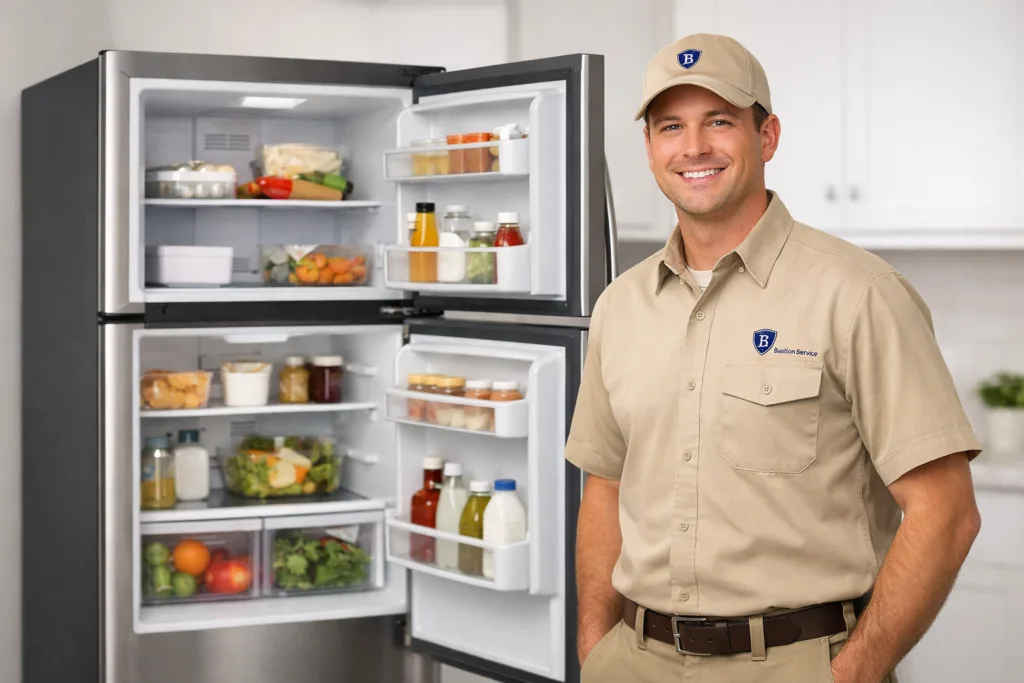




When an Amana appliance starts leaking, warming up, refusing to heat, or stopping mid-cycle in a Westwood home, the best next step is to identify the actual fault instead of guessing at parts. The same outward symptom can come from several different failures, and the right diagnosis helps determine whether the issue is a straightforward repair, a condition that may worsen with continued use, or a sign that replacement deserves consideration.
What a proper diagnosis should answer
Across refrigerators, washers, dryers, dishwashers, ranges, and freezers, symptoms often look simple from the outside but split into very different causes once tested. A refrigerator that is not cooling may involve airflow, frost buildup, sensors, fans, or a sealed-system problem. A dryer that tumbles without drying may point to heat loss, restricted airflow, or a failed heating component. A washer that will not drain can stem from a blockage, pump problem, lid-lock issue, or control fault.
For households in Westwood, that distinction matters because appliance problems rarely stay small for long. A cooling problem can lead to food spoilage, a leak can damage flooring or cabinetry, and an overheating dryer or erratic range can create practical safety concerns. Early troubleshooting is usually less disruptive than waiting for a full breakdown.
Refrigerator and freezer problems that deserve quick attention
Fresh food section warm, freezer still cold
This is one of the most common refrigerator complaints and often points to airflow trouble rather than complete cooling loss. Frost buildup around the evaporator, a failing fan motor, a damper issue, or sensor-related trouble can all create the same pattern. Because the freezer may still seem normal at first, homeowners sometimes wait too long and end up with spoiled food in the refrigerator section.
Water under the refrigerator or inside compartments
Pooled water may come from a clogged defrost drain, ice maker supply issue, poor leveling, or a problem with internal water routing. Even if cooling seems normal, water around the appliance should not be ignored. Repeated leaking can damage nearby surfaces and may indicate a problem that will continue until the source is corrected.
Freezer thawing, frost buildup, or constant running
An Amana freezer that struggles to hold temperature may have a door sealing issue, heavy frost from a defrost failure, fan trouble, or a control problem causing poor temperature regulation. If the unit seems to run nonstop, gets louder than usual, or allows food to soften, those are signs the system is working harder than it should. Prompt evaluation can help limit spoilage and prevent a larger cooling failure.
Washer symptoms that usually point to more than routine maintenance
Will not spin or leaves clothes soaked
When a washer completes a cycle but clothing remains wet, the problem may involve the drain pump, a blockage, an out-of-balance condition, lid-lock failure, or a control issue. Re-running the load over and over usually does not solve the cause and can put extra stress on the machine.
Shaking, banging, or moving across the floor
Strong vibration may be caused by an unbalanced load, worn suspension parts, leveling issues, or internal drum support wear. A single off-balance load is not unusual, but repeated violent movement is a sign to stop and evaluate the washer before additional damage develops.
Leaks, odors, or standing moisture
Water leaks can come from hoses, door seals, pump components, tub problems, or over-sudsing. Musty smells often mean moisture is not draining or drying properly, but they can also accompany a mechanical issue that leaves residue and water behind. When odor and leaking appear together, it is worth looking beyond simple cleaning.
Dryer issues that affect performance and safety
Runs but does not heat
A dryer that tumbles without producing heat may have a failed heating element, thermostat issue, fuse problem, airflow restriction, or electrical supply fault. Because several causes can look identical to the user, replacing parts based on guesswork often wastes time and money.
Takes too long to dry
Long dry times may be tied to restricted venting, weak heat, blower problems, or moisture-sensing issues. If a familiar load suddenly needs two or three cycles, the dryer is no longer operating efficiently. Continued use in this condition increases wear and can raise utility costs.
Burning smell, scraping, thumping, or squealing
Unusual dryer noises and hot odors can signal worn rollers, idler problems, belt trouble, lint accumulation, or motor strain. These symptoms should not be treated as normal aging sounds. If the dryer smells hot or sounds harsh, it is wise to stop using it until the source is identified.
Dishwasher problems that are usually mechanical, not just cosmetic
Dishes come out dirty or cloudy
Poor cleaning performance can result from spray arm blockage, circulation motor problems, low water fill, detergent-related buildup, or wash system faults. If the dishwasher repeatedly leaves residue after normal loading and detergent use, the issue usually goes beyond routine cleaning.
Standing water after the cycle ends
Water left in the tub often indicates a drain restriction, pump issue, hose blockage, or a control problem interrupting the drain sequence. Besides creating odor and residue, standing water can become an overflow risk if the appliance keeps being used without correction.
Water on the floor or moisture around the door
A leaking dishwasher may have a worn door gasket, alignment problem, overfilling condition, cracked internal part, or spray pattern issue that forces water where it should not go. If water appears outside the unit, it makes sense to stop using it until the cause is found.
Range and oven symptoms that should not be ignored
Burners not heating correctly
On electric Amana ranges, weak or non-working surface heat may involve the element, switch, wiring, or electronic control. On gas models, delayed ignition or repeated clicking can point to ignition problems that affect daily cooking and may worsen over time.
Oven temperature seems off
If food bakes unevenly, takes much longer than expected, or comes out overdone at familiar settings, the cause may be a temperature sensor issue, failing element, weak igniter, calibration drift, or control fault. Temperature complaints often sound minor at first, but they usually become more obvious as the problem develops.
When to stop using the range
If a burner will not regulate, the oven overheats, or ignition behavior becomes unreliable, continued use can create larger repair issues and practical safety concerns. A persistent performance problem is worth evaluating before regular meal preparation continues.
When waiting usually makes the problem worse
It is generally time to schedule service when the symptom is repeatable, affects core function, creates leaking, changes temperatures, produces abnormal noise, interrupts cycles, or trips power. Waiting is especially risky with refrigerators and freezers losing temperature, washers or dishwashers leaking onto the floor, dryers showing overheating signs, or ranges with unreliable ignition or temperature control.
By contrast, a one-time pause or minor cosmetic wear does not always call for immediate repair. The important question is whether the problem keeps returning and whether continued use could damage the appliance, nearby surfaces, food, or clothing.
How homeowners usually weigh repair versus replacement
Repair is often the better choice when the appliance is otherwise in good condition, the failure is limited to a serviceable component, and performance was normal before the current issue appeared. Replacement becomes more likely when there are repeated breakdowns, multiple failing systems, major cooling-system concerns, or structural wear that makes repair less sensible.
Age matters, but overall condition matters more. A careful diagnosis helps put the decision in context by showing what failed, whether the issue is isolated, what may happen if the appliance keeps running as-is, and whether a repair is likely to restore normal day-to-day household use.
What service planning looks like in a busy household
Most homeowners want the same things from appliance service: a straightforward explanation of the problem, repair options that match the actual symptom pattern, and scheduling that fits normal routines. That is true whether the issue involves an Amana refrigerator that is warming up, a washer that will not drain, a dryer that is not heating, a dishwasher that is leaving water behind, or a range with unreliable cooking performance.
In Westwood homes, kitchen and laundry disruptions tend to affect the entire day quickly. Looking at the symptom early, confirming the fault, and then deciding on the next step is usually the most efficient way to avoid wasted parts, repeated interruptions, and bigger repair decisions later.


