
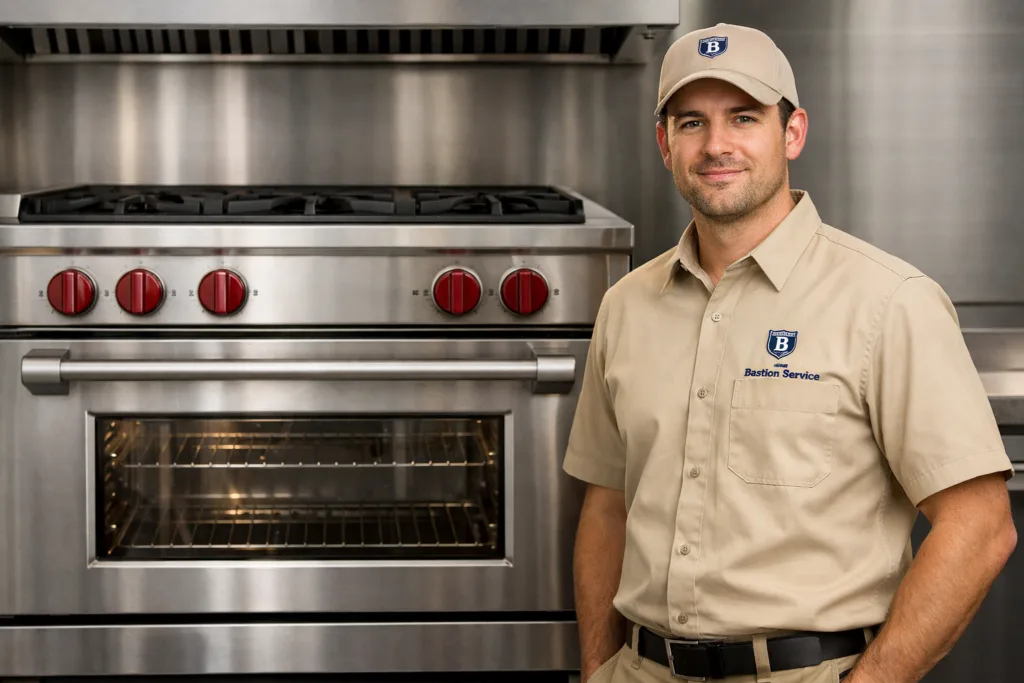




When a Wolf oven starts slowing production or turning out inconsistent results, the repair decision should be based on how the unit is actually failing in daily use. In Manhattan Beach, businesses often call for service after noticing slow preheat, uneven baking, ignition trouble, temperature drift, or unexpected shutdowns that disrupt prep and service timing. Bastion Service helps identify whether the problem is isolated to one component or tied to a broader heating, control, or airflow issue so managers can schedule repair with a realistic view of downtime, parts needs, and next steps.
Related commercial service paths in Manhattan Beach include Wolf Commercial Repair in Manhattan Beach, Commercial Oven Repair in Manhattan Beach, and Wolf Range Repair in Manhattan Beach.
Why is my Wolf oven not heating evenly or reaching set temperature?
This is one of the most common service complaints because several different failures can produce similar results. A Wolf oven that will not reach the selected temperature may have a weak heating element, ignition trouble, sensor inaccuracy, control board problems, relay failure, or power-supply issues. When the oven does reach temperature but cooks unevenly, the cause may be more related to convection performance, airflow restriction, gasket wear, or temperature feedback that is no longer accurate under load.
For businesses in Manhattan Beach, the practical concern is not just whether heat is present, but whether the oven can recover properly between cycles and hold stable temperature during active use. If staff are rotating pans constantly, extending cook times, avoiding certain racks, or rechecking product more often than usual, that usually points to a repair issue rather than normal variation.
Common Wolf oven symptoms and what they may indicate
Slow preheat
Slow preheat often shows up before a complete no-heat failure. It can indicate a weakening heating circuit, ignition components that are not performing consistently, reduced power to the unit, or a sensor and control system that are not responding correctly. In a busy kitchen, longer preheat times can delay the entire opening routine and reduce usable capacity during peak periods.
Uneven baking or roasting
When one side of the cavity runs hotter than the other, or products brown differently from rack to rack, the issue may involve convection fans, airflow pathways, worn door seals, sensor drift, or internal heat-distribution problems. Uneven heat is especially costly because the oven may appear to be working while still creating waste, re-fires, and inconsistent product quality.
Temperature swings during cooking
If the oven overshoots, drops too far below set temperature, or cycles erratically, the likely causes include thermostat-related issues, failing sensors, control instability, or relays that are not switching reliably. These symptoms often become more obvious during longer cooking runs or when the oven is opened frequently and has to recover fast.
Ignition faults or delayed burner response
Gas Wolf ovens may struggle with ignition because of igniter wear, flame-sensing problems, gas-flow issues, or control faults that interrupt the startup sequence. Delayed ignition, repeated clicking, or burners that fail to light consistently should be checked quickly because they affect both performance and safe operation.
Error codes, resets, or intermittent shutdowns
An oven that shuts down mid-cycle or displays recurring fault codes may be dealing with control board problems, communication faults, temperature-sensing errors, or protective shutdowns triggered by another failing component. Intermittent faults are important to diagnose carefully because they may only appear after the oven has been running long enough to heat up under real workload conditions.
Heat loss around the door
If the door does not close firmly or the gasket no longer seals well, the oven can lose heat continuously and struggle to maintain stable temperature. Businesses may notice longer cook times, slower recovery, excess heat in the kitchen, or the impression that the oven is underpowered when the real issue is heat escaping during operation.
How these problems affect daily operations
Wolf oven issues rarely stay limited to the oven itself. A temperature problem can change batch timing, create inconsistency between shifts, increase food waste, and force staff to compensate with workarounds. Over time, those adjustments become part of the routine, even though they are signs that the equipment is no longer performing as expected.
In Manhattan Beach kitchens, common operational warning signs include:
- Prep schedules slipping because preheat takes too long
- Products finishing at different times on the same cook cycle
- Repeated need to reset controls or restart the oven
- Staff avoiding certain shelves or relying on guesswork for timing
- Complaints about overcooking, undercooking, or inconsistent browning
- Production bottlenecks caused by slower temperature recovery
When these patterns start affecting output, it usually makes sense to move from informal troubleshooting to a service call focused on diagnosis and repair planning.
What technicians look for during Wolf oven diagnosis
Effective diagnosis starts with the specific symptom pattern, not just the final complaint. An oven that will not heat at all is evaluated differently from one that heats unevenly only after an hour of use. Service typically involves reviewing recent changes in performance, checking how the fault appears during startup and operation, and testing the heating, sensing, ignition, airflow, and control systems tied to that symptom.
That process helps answer the questions businesses usually care about most:
- Is the failure limited to one part or affecting multiple systems?
- Is the oven safe to continue using before repair?
- Is the issue likely to worsen quickly under daily workload?
- Does the symptom point to a straightforward repair or a more layered problem?
Those answers are what make scheduling easier, especially when the oven supports critical production windows.
When continued use can make the repair more serious
Some Wolf oven problems remain stable for a short period, but many get worse when the unit keeps running under strain. A sensor problem can lead to repeated overheating or underheating. A weak fan motor can create broader heat stress inside the cavity. A poor door seal can force longer heating cycles that put extra wear on other components. What starts as an occasional inconsistency can turn into a more expensive repair if the unit is pushed through heavy use.
Service should be scheduled sooner rather than later if the oven:
- Cannot maintain reliable cooking temperature
- Takes much longer than normal to preheat
- Shows recurring fault codes or shuts down unexpectedly
- Has ignition issues or delayed burner operation
- Produces visible inconsistency that affects sellable output
- Requires staff workarounds to get acceptable results
Repair versus replacement considerations
Replacement is not always necessary when a Wolf oven starts underperforming. Many heating, sensing, ignition, and control issues are repairable if the platform is otherwise in solid condition. If diagnosis points to a defined failure and the oven has been structurally sound and dependable outside that issue, repair is often the more practical option.
Replacement becomes a stronger consideration when multiple systems are failing, breakdowns are recurring, or prior repairs have not restored stable operation. For most businesses, the key question is whether the oven can return to predictable use without repeated interruptions, not simply whether one part can be changed.
Preparing for a service visit
Before scheduling repair, it helps to note exactly how the oven is behaving. The most useful details include whether the problem happens during preheat or during cooking, whether it affects all modes or only one, whether fault codes appear, and whether the issue is constant or intermittent. If staff have noticed changes in recovery time, burner ignition, door closure, or product consistency, those details can help narrow the likely cause faster.
Useful observations to have ready include:
- Whether the oven fails completely or still heats partially
- How long the issue has been occurring
- Whether the problem appears every cycle or only sometimes
- Any recent power interruptions, shutdowns, or unusual noises
- Specific examples of undercooked, overcooked, or uneven batches
Scheduling Wolf oven repair in Manhattan Beach
For Manhattan Beach businesses, the most effective service approach is one that connects symptoms to repair decisions quickly and clearly. If a Wolf oven is not heating evenly, not reaching set temperature, shutting down during use, or slowing production with inconsistent performance, it is time to schedule service based on the actual operating problem rather than wait for a full stoppage. Early diagnosis can reduce avoidable downtime, support better repair planning, and help restore consistent oven performance before the issue affects more of the kitchen workflow.


