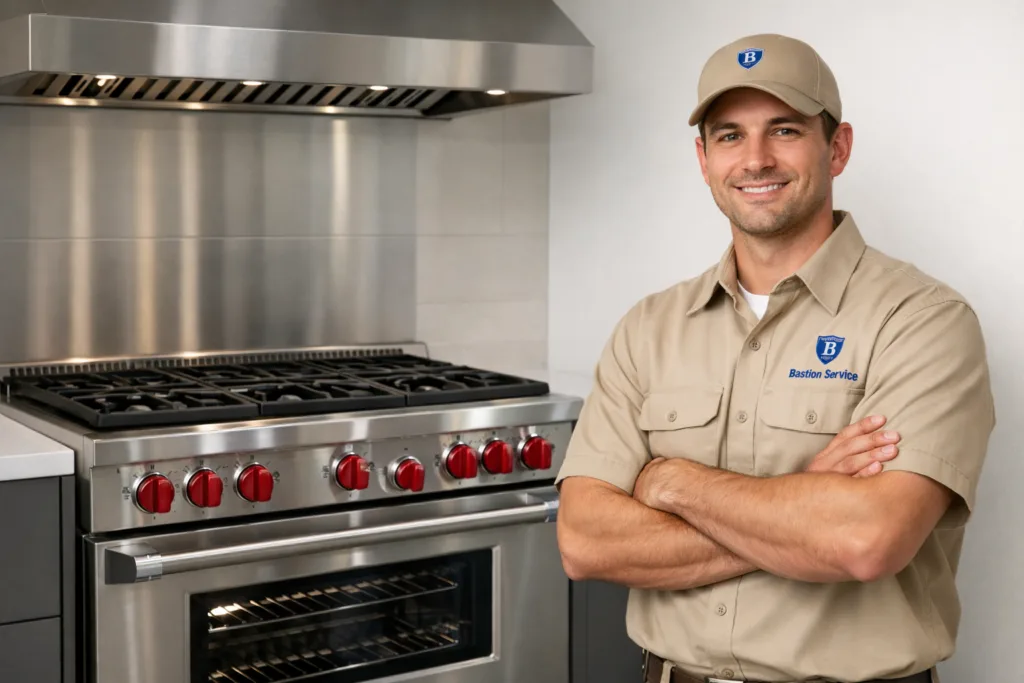




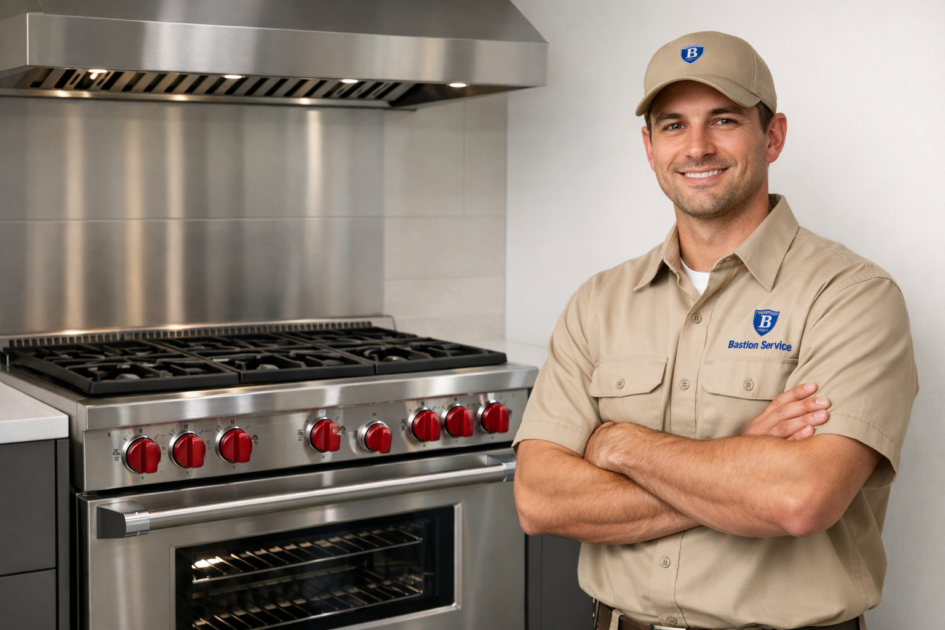
When a Wolf oven, range, or fryer starts missing temperatures, failing to ignite, or dropping out during service, the issue quickly becomes operational rather than technical. Tickets slow down, prep timing shifts, and staff start working around the equipment instead of relying on it. The right next step is service that identifies the actual fault, helps you understand whether the unit can stay in use, and sets repair timing around the demands of your kitchen.
For specific equipment paths in Mid-City, review Wolf Oven Repair in Mid-City, Wolf Range Repair in Mid-City, and Wolf Fryer Repair in Mid-City.
For businesses in Mid-City, repair is most effective when it is tied to symptom patterns instead of guesswork. Bastion Service works on Wolf cooking equipment problems affecting heat output, ignition, burner performance, controls, recovery speed, and unexpected shutdowns, with scheduling and repair decisions shaped by how the equipment is used day to day.
Wolf cooking equipment problems that commonly disrupt kitchen operations
Many equipment failures begin as performance changes rather than total breakdowns. A unit may still run, but not well enough to support consistent production. That can show up as slow preheat, uneven heating, burners that do not respond correctly, delayed ignition, drifting temperatures, or a fryer that cannot recover between batches.
These symptoms matter because they affect more than one station. A temperature problem in an oven can alter cook times and food quality. A range burner issue can force staff to shift pans and change workflow during a rush. A fryer with weak recovery can slow output even though it technically still heats. Identifying the cause early helps prevent avoidable downtime and reduces the risk of secondary component damage.
Heating and temperature problems
Slow preheat, low heat, or uneven cooking
If a Wolf oven takes too long to come up to temperature, cycles inconsistently, or produces uneven results, the fault may involve sensors, thermostatic controls, heating components, calibration, or fuel delivery. On a range, weak or unstable heat can affect cooking speed and consistency across the line. In a fryer, temperature instability can create product quality issues and interrupt batch timing.
These are usually not issues to leave alone once they become repeatable. When temperature complaints show up across multiple shifts or menu items, repair should be scheduled before the problem expands into a no-heat condition or broader control failure.
When temperature drift becomes a production issue
Some units still appear usable but no longer hold the selected setting reliably. Staff may compensate by turning temperatures higher, extending cook times, or rotating food more often. Those workarounds can hide the real problem for a while, but they also signal that the equipment is no longer operating normally. A service visit can determine whether the issue is isolated to a control or sensor problem, a burner-related heating fault, or wear that is affecting overall performance.
Ignition and burner faults
Burners that do not light properly
Ignition trouble on Wolf cooking equipment may appear as repeated clicking, delayed lighting, intermittent startup, or burners that light only after multiple attempts. On a busy line, that kind of inconsistency can slow service and make the equipment difficult for staff to trust. Burners may also fail to hold a stable flame or respond poorly when settings are changed.
Because ignition symptoms can worsen with continued use, it makes sense to schedule repair when the issue becomes recurring rather than waiting for complete failure. Repeated startup attempts can increase wear on related components and turn a manageable repair into a more disruptive one.
Flame quality and burner response issues
Even when ignition succeeds, burner performance may still be off. Flames may look weak, uneven, or unstable, and heat output may not match the selected level. That can point to burner assembly issues, ignition-related faults, control problems, or fuel delivery concerns. In practical terms, it means slower cooking, less predictable heat, and more pressure on neighboring equipment.
If there is a persistent gas odor or any concern about safe operation, stop using the equipment and address the immediate safety issue before arranging appliance repair.
Recovery problems that slow output
Equipment runs but cannot keep pace
Recovery issues are common on hard-working cooking equipment. A fryer may drop below target temperature and take too long to recover between loads. An oven may lose too much heat during normal door openings and struggle to return to setpoint. A range may perform adequately during lighter use but weaken during peak periods.
This type of problem is easy to underestimate because the equipment has not fully stopped working. For kitchens in Mid-City, though, slow recovery can create the same operational pressure as a more obvious breakdown. Output drops, timing becomes inconsistent, and staff start spacing production around the unit’s limitations instead of the pace of service.
Why recovery issues deserve early attention
Recovery problems often point to faults that only show up under load. Controls, heating components, calibration, burner performance, and related wear can all affect how fast a unit returns to usable temperature. Evaluating the equipment before failure becomes total helps determine whether repair can restore normal throughput or whether the unit is no longer dependable enough for daily production.
Control faults and unexpected shutdowns
Settings do not match actual performance
When controls become unreliable, equipment may heat at the wrong level, cycle erratically, ignore setting changes, or shut down during operation. A Wolf oven may show one temperature and behave like another. A fryer may start normally but fail to maintain operation through a batch cycle. A range may respond unevenly from one burner position to the next.
These issues can be especially disruptive because they reduce confidence in the equipment even before it goes fully offline. Managers are then left deciding whether to keep the unit in service, pull it from use, or shift production elsewhere. Diagnosis helps separate a repairable component issue from a broader electrical or control-system problem.
Intermittent faults are still repair issues
Not every shutdown or control complaint happens continuously. Some units fail only when hot, during peak use, or after several cycles. Intermittent behavior should still be taken seriously because it tends to become more frequent over time. If staff have noticed random resets, inconsistent startup, or controls that respond unpredictably, service is warranted even if the unit appears normal between incidents.
Signs continued use may increase downtime
Business equipment often stays in operation as long as possible, but some symptoms are clear warnings that waiting may increase repair scope. Common examples include:
- Repeated ignition failures
- Burners with unstable or weak flame
- Temperature overshooting or falling below setpoint
- Slow fryer or oven recovery during normal production
- Unexpected shutdowns or restart problems
- Controls that no longer respond consistently
Another important sign is workflow adaptation. If staff are avoiding one burner, lowering batch size, extending preheat, rotating product to compensate for hot and cold spots, or relying more heavily on backup equipment, the unit is already affecting operations enough to justify repair scheduling.
Repair versus replacement considerations
Not every Wolf equipment problem means the unit should be replaced, and not every repair is automatically the best long-term choice. The decision usually depends on the age of the equipment, frequency of recent failures, condition of major components, parts availability, and how critical that unit is to daily production.
A proper assessment helps answer the questions that matter most to operators: whether the current issue is isolated, whether related wear suggests future failures, and whether repair will restore reliable service at a reasonable cost. That information is especially valuable when the equipment is still partly operational but becoming less dependable with each shift.
Scheduling service for Wolf ovens, ranges, and fryers in Mid-City
It is usually best to arrange repair when the first repeatable symptoms begin affecting consistency, speed, or reliability rather than waiting for a complete shutdown. Earlier service gives you more flexibility in planning around production and helps reduce the chance that a heating, ignition, or control problem will take the entire unit out of service at the worst possible time.
If your Wolf cooking equipment in Mid-City is showing poor heat performance, startup trouble, uneven burners, slow recovery, or control-related shutdowns, the most useful next step is to schedule diagnosis based on the way the equipment is actually used in your operation and move forward with repairs before the disruption spreads to the rest of the kitchen.