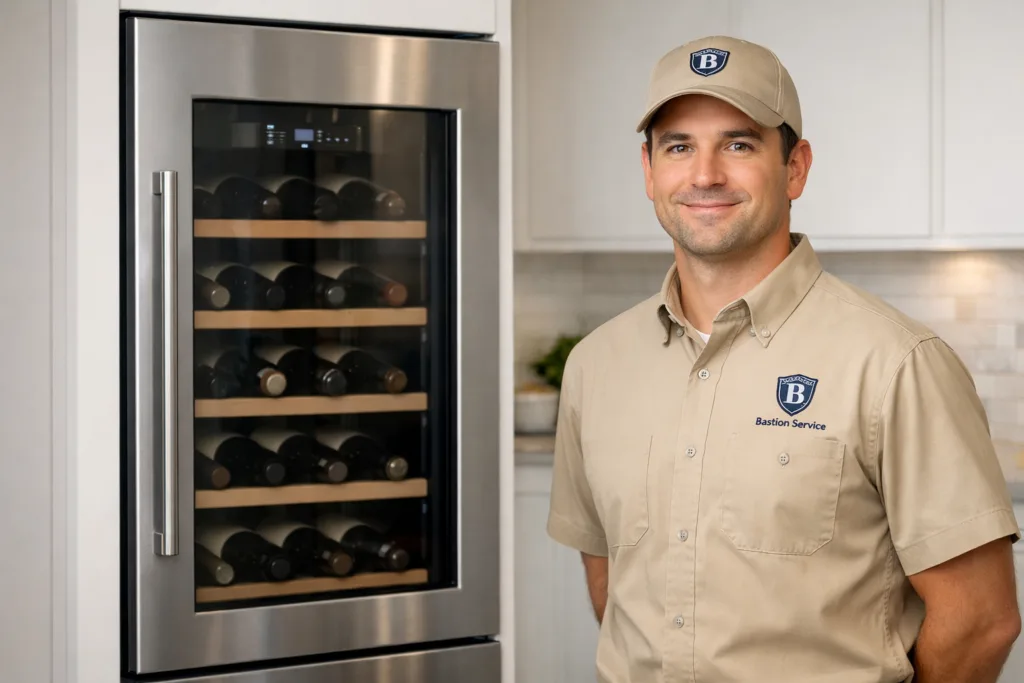
Temperature drift is one of the most common signs that a wine cooler needs attention. A cabinet that feels slightly warm one day and overly cold the next may have a thermostat problem, a failing sensor, restricted airflow, or a control issue that is not cycling the compressor correctly. When the unit runs for long stretches without reaching the set temperature, that can also point to dirty condenser components, a weak fan motor, or a sealed-system cooling problem.
Common wine cooler symptoms and what they may indicate
Uneven cooling is often the first thing homeowners notice. One shelf may stay reasonably chilled while another feels several degrees warmer, or the display may show a normal number while the bottles inside are clearly not being held at a stable serving or storage temperature. In many cases, that symptom traces back to poor internal air circulation, evaporator fan trouble, door gasket wear, or an electronic control fault.
Short cycling can be just as important as a complete loss of cooling. If the wine cooler turns on and off frequently, struggles to recover after the door opens, or seems to run at odd times without settling into a steady pattern, the cause may be a sensor reading problem or heat buildup around the cabinet. Built-in models are especially sensitive to ventilation issues, so installation conditions matter more than many homeowners expect.
Noise, condensation, and frost
Not every failing wine cooler becomes silent or completely warm. Some start making new noises first. Buzzing may come from the compressor, rattling can be caused by vibration against surrounding cabinetry, and clicking may suggest an electrical or control-related issue. A fan blade rubbing, a worn motor, or loose mounting hardware can also create sounds that get worse over time.
Condensation inside the cabinet, water under the unit, or bottles that feel damp often point to warm air entering where it should not. A worn gasket, drain blockage, poor leveling, or unstable internal temperature can all contribute to moisture buildup. Frost on interior surfaces may indicate a sealing problem, a sensor issue, or an airflow fault that prevents the cooling system from cycling normally.
If the coldest symptoms are centered in a separate freezer compartment elsewhere in the home, Freezer Repair in West Los Angeles may be the more relevant service path.
How to tell whether the problem is the wine cooler or another appliance
Because wine coolers are part of the refrigeration family, some symptoms can resemble problems in a standard kitchen refrigerator. For example, temperature inconsistency, fan noise, door seal leaks, and control display errors can appear in both appliances even though the repair approach may differ. If fresh-food cooling problems are affecting your main kitchen unit rather than your bottle storage appliance, Refrigerator Repair in West Los Angeles may be the better fit for that diagnosis.
Ice-related symptoms can also create confusion. A homeowner may assume the wine cooler is leaking when the actual concern comes from a nearby ice system, water line, or fill issue. If the main complaint is low ice production, overflow, or dispenser-related water problems, Ice Maker Repair in West Los Angeles may be the more appropriate service to start with.
When to schedule repair instead of waiting
It is usually best not to wait when the cabinet is warming up, the controls are unresponsive, the unit starts tripping a breaker, or the compressor seems to run almost constantly. A problem that begins as weak airflow or a bad gasket can place extra strain on the cooling system if ignored. The longer the unit struggles to maintain temperature, the more likely it is that energy use rises and internal components wear faster.
Scheduling service also makes sense when you notice recurring error codes, heavy condensation, or a cabinet that never fully stabilizes after loading a normal number of bottles. These symptoms may not mean total failure yet, but they often signal that the appliance is no longer operating as designed.
Repair versus replacement considerations
Whether repair makes sense depends on the age of the wine cooler, the type of failure, the condition of the sealed system, and parts availability. Problems involving fans, thermostats, sensors, door gaskets, or drainage are often more manageable than major compressor or sealed-system issues on an older unit. Built-in units also require careful evaluation because restricted ventilation or tight cabinet spacing can mimic more serious cooling problems.
For homeowners in West Los Angeles, the most useful next step is usually diagnosis before deciding on replacement. That helps clarify whether the issue is a repairable control or airflow fault, or whether the cost of major cooling-system work outweighs the value of keeping the existing unit.
What a service visit should address
A thorough wine cooler service call should look beyond the simple symptom of “not cooling.” The inspection should include temperature behavior, door seal condition, fan operation, control response, drainage, and the condition of major cooling components. That process helps determine whether the problem is mechanical, electrical, airflow-related, or tied to the sealed refrigeration system.
In West Los Angeles homes, wine coolers are often installed under counters or within finished cabinetry, so access, ventilation, and surrounding heat conditions should be part of the evaluation. Understanding what failed and whether the appliance should remain off until repair can help prevent avoidable damage and unnecessary repeat issues.