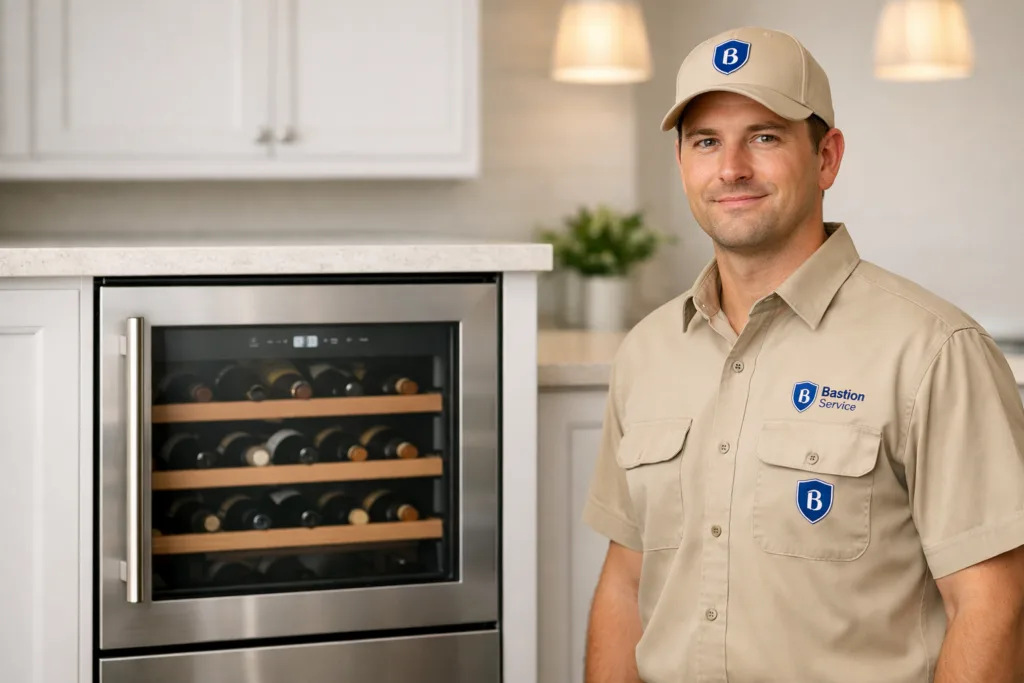
Small temperature changes matter in a wine cooler, and early symptoms often point to different problems than homeowners expect. A unit that feels only a few degrees warm may have a dirty condenser, weak internal airflow, a worn door gasket, or a control issue rather than a complete cooling failure. In Venice homes, catching those smaller changes early can help protect both the appliance and the bottles stored inside.
Common wine cooler problems homeowners notice first
One of the most frequent complaints is inconsistent cooling. The cabinet may seem fine one day and warmer the next, or the display setting may not match the actual interior temperature. That kind of swing can come from a faulty sensor, thermostat trouble, fan problems, or heat buildup around a built-in unit that is not venting properly.
Moisture is another common warning sign. Condensation on the glass, water collecting inside, or dampness under the appliance can indicate warm air entering through a poor seal, a drain issue on certain models, or repeated cycling that never fully stabilizes. Noise changes also matter. Buzzing, clicking, rattling, or a fan that suddenly sounds louder than usual can signal stress on moving parts or vibration from loose panels and uneven placement.
Electrical symptoms deserve attention too. If interior lights fail, the display blinks, settings reset, or touch controls stop responding, the problem may involve the control board, wiring, or power supply rather than the cooling system alone. These issues can overlap, which is why symptom-based diagnosis is more useful than guessing at a single bad part.
What specific symptoms can mean
Not cooling enough
When a wine cooler gradually warms up, homeowners often assume the compressor is failing, but airflow restrictions are just as common. Dust on the condenser, blocked vents, a weak evaporator fan, or a door that is not sealing tightly can all reduce cooling performance. If the temperature problem is centered in a separate freezer compartment elsewhere in the kitchen, Freezer Repair in Venice may be the more relevant service path.
Too cold or freezing bottles near the back
A wine cooler that overcools can be just as concerning as one that runs warm. Freezing near the rear wall often points to a sensor that is reading incorrectly, a thermostat that is not cycling the system properly, or airflow that is uneven across the cabinet. This is especially important in wine storage because temperature control is the point of the appliance, not simply producing the coldest possible interior.
Running constantly
If the unit rarely shuts off, it may be struggling to hit the selected temperature. Warm air leaking past the gasket, poor ventilation around the cabinet, dirty coils, or declining cooling efficiency can all keep the compressor working longer than normal. Continued operation under strain can shorten component life and increase the chance of a larger repair.
Condensation or leaks
Moisture inside the cabinet or under the appliance is not always a plumbing problem. In many wine coolers, condensation starts with door-seal issues, frequent warm-air intrusion, or drainage trouble. If water and cooling symptoms are tied to ice production, fill problems, or a supply line near the dispenser area, Ice Maker Repair in Venice may be a better fit for that diagnosis.
New or louder noises
Most wine coolers make some operational sound, but a noticeable change usually means something has shifted. Fan blades can start rubbing, mounting hardware can loosen, and compressors can begin to labor more audibly when a unit is struggling to maintain temperature. A sudden noise change paired with weak cooling should not be ignored, especially if the appliance is installed inside cabinetry where heat can build up.
When repair makes sense
Repair is often worthwhile when the cabinet, shelves, and overall structure are still in good shape and the problem is limited to serviceable parts such as fans, sensors, seals, switches, or controls. Many wine cooler issues are not catastrophic; they stem from components that can be tested and replaced without replacing the entire appliance.
Replacement becomes more likely when the unit has repeated major failures, advanced sealed-system trouble, or repair costs that approach the value of the appliance. The key is identifying whether the fault is isolated and practical to fix or whether the cooler has reached the point where recurring breakdowns are likely.
Why accurate diagnosis matters with cooling appliances
Cooling symptoms can overlap across kitchen appliances, which is why homeowners sometimes misidentify the source of the problem at first. A refrigerator with unstable fresh-food temperatures can look similar to a wine cooler issue when both are located near each other, and in that situation Refrigerator Repair in Venice may be the better place to start. Distinguishing between control problems, airflow restrictions, and deeper cooling-system faults helps avoid replacing the wrong parts.
That same approach is useful in homes with multiple cold-storage appliances. What seems like a single household cooling problem may actually be separate issues affecting different units. A focused inspection helps determine whether the cause is environmental, electrical, or isolated to one appliance.
What to check before scheduling service
- Make sure the door is closing fully and the gasket is not cracked, loose, or dirty.
- Check whether the unit has enough ventilation space, especially if it is built into cabinetry.
- Look for dust buildup on accessible coils or vents.
- Notice whether the display temperature matches the actual feel inside the cabinet.
- Pay attention to when noise occurs, such as at startup, during cooling, or continuously.
- Note any moisture pattern, including water under the appliance or condensation on the glass.
These observations can help narrow down the problem, but repeated resetting or changing settings usually does not solve a failing sensor, a bad fan motor, or a worn seal. If the unit is still powered on but performance is slipping, a timely service visit is usually more effective than trial and error.
Practical service considerations in Venice homes
Wine coolers are often used continuously, so even a mild issue can become more serious if it is left alone. A unit that struggles for weeks may keep running, but that extra strain can wear down the compressor and related components. Prompt attention is especially helpful when bottles are warming, labels are getting damp, or the appliance is cycling nonstop.
For homeowners in Venice, the most useful service outcome is knowing exactly what failed, what condition the rest of the appliance is in, and whether a repair is likely to restore stable operation. That makes the next step clearer and helps protect both the cooler and what is stored inside it.