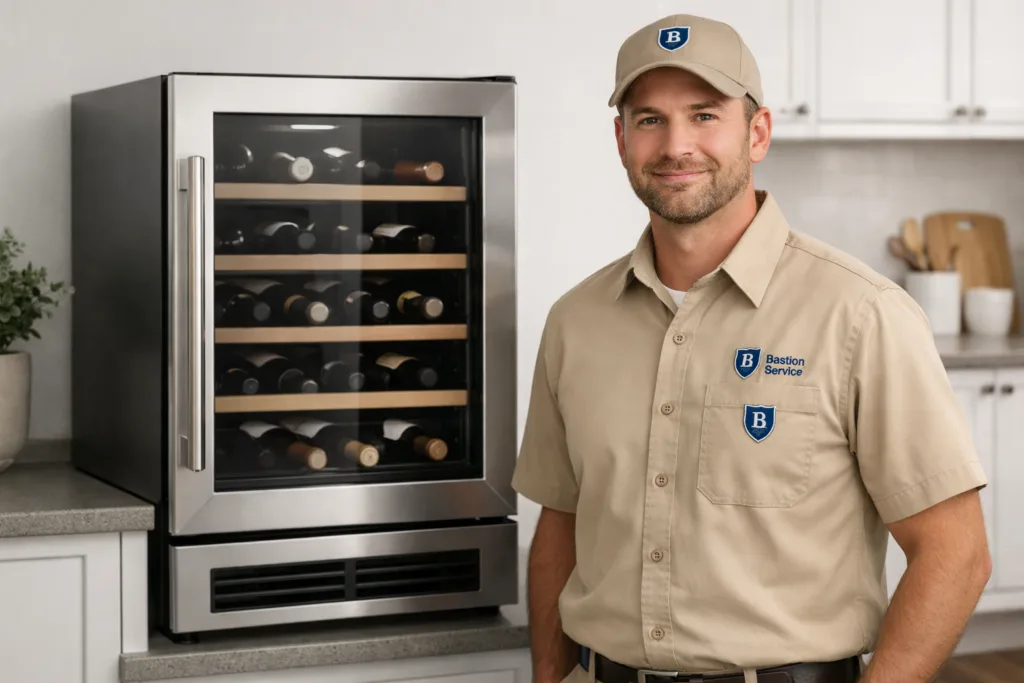
Temperature instability is one of the first signs that a wine cooler needs attention. A cabinet that reads one setting but feels noticeably warmer, cools unevenly from top to bottom, or drifts several degrees during the day may be dealing with restricted airflow, a failing fan, a weak thermostat, a sensor problem, or a door seal that is letting room air in. In other cases, the control panel appears normal while the cooling system itself is not responding as it should.
Common wine cooler problems and what they can mean
A wine cooler that is not cooling enough does not always have the same failure as one that is overcooling or cycling unpredictably. When the cabinet stays too warm, technicians usually look at condenser cleanliness, evaporator airflow, fan operation, thermostat response, and whether the compressor is running efficiently. When the unit gets too cold or freezes certain sections, the problem often points more toward controls, sensors, or regulation of the cooling cycle than toward simple loss of cooling power.
Noises can also help narrow down the cause. A soft fan sound is often normal, but rattling, intermittent clicking, buzzing, or a compressor that seems to start and stop repeatedly can suggest loose panels, fan blade interference, relay trouble, or a compressor under strain. Water under or inside the unit may come from condensation buildup, a blocked drain route, or warm air entering around a gasket. Even if the display and interior light still work, those signs do not confirm that the cooling system is healthy.
Symptoms that should not be ignored
If bottles are losing their stable storage temperature, the cabinet has warm pockets, or the unit runs for long stretches without recovering, it is worth scheduling service before the problem spreads. Longer run times can increase wear on fans and the compressor, and moisture issues can lead to odor, cabinet damage, or corrosion around electrical components. A wine cooler that trips a breaker, smells hot, or shuts itself off repeatedly should be checked before regular use continues.
Small changes matter too. A door that does not pull shut cleanly, a new vibration sound, or condensation forming more often than usual can be early warning signs rather than harmless quirks. Addressing those issues sooner is often easier than waiting until the unit stops cooling entirely.
How technicians separate wine cooler issues from other refrigeration problems
Some cooling complaints start in a dedicated wine cooler, while others are really part of a broader household refrigeration issue. If the concern is mainly poor temperature recovery, frost buildup, or airflow trouble in a separate frozen compartment, Freezer Repair in Sawtelle may be the better fit for that symptom pattern. That distinction matters because freezer failures and wine cooler failures can look similar at first while needing very different testing and parts.
Ice-related complaints can create the same confusion. When the cabinet temperature seems acceptable but the main frustration is low ice production, leaking at the fill area, or dispenser-related issues, Ice Maker Repair in Sawtelle may be more relevant than wine cooler service. A wine cooler diagnosis is most useful when the core problem involves beverage storage temperature, humidity, fan behavior, controls, or cabinet cooling performance.
It also helps to separate specialty cooling from whole-kitchen food storage. If the larger issue is happening in the main fresh-food section, with groceries warming up or both compartments struggling to hold temperature, Refrigerator Repair in Sawtelle may be the right path instead. That comparison can save time when households in Sawtelle are deciding which appliance problem is actually driving the urgency.
Repair versus replacement
Many wine cooler problems are repairable, especially when the fault is limited to a fan motor, temperature control, sensor, gasket, switch, drain issue, or accessible electrical component. A single failed part in an otherwise stable unit often makes repair the more sensible option. The outlook changes when there are multiple failures at once, signs of sealed-system trouble, repeated temperature loss after earlier repairs, or cabinet damage from long-term moisture.
Age is only one factor. Overall condition, part availability, and whether the unit has held temperature reliably up to this point usually matter more than the calendar alone. A good assessment should explain not just what failed, but whether the repair is likely to restore consistent performance or only postpone a larger problem.
What a useful service visit should cover
A thorough wine cooler diagnosis should include checking actual cabinet temperature against the display, inspecting airflow paths, testing fan and compressor operation, evaluating door sealing, and looking for signs of control or sensor drift. Condensation patterns, drain condition, and the cleanliness of heat-exchange components can also provide important clues. That kind of step-by-step inspection helps distinguish between a straightforward repair and a deeper cooling-system concern.
For homeowners in Sawtelle, the goal is not just to make the unit feel cold again for a day or two. The better outcome is understanding why the temperature changed, whether continued use risks more damage, and what repair plan makes sense for the condition of the cooler. A practical diagnosis should leave you with a clear picture of the fault, the likely next steps, and whether the unit is worth further investment.