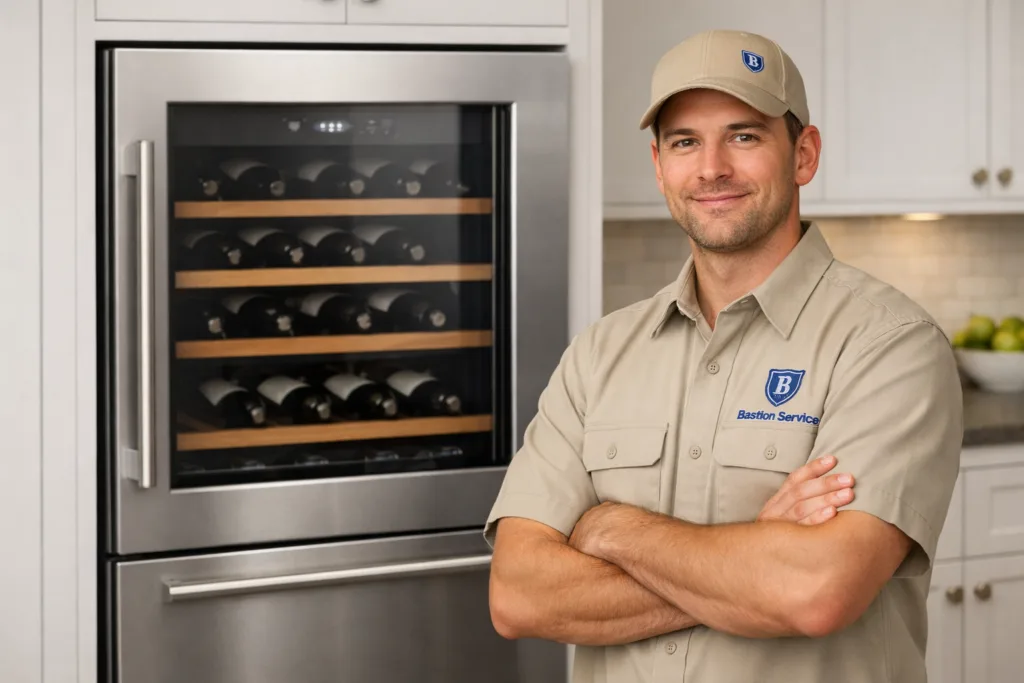
Temperature swings, excess condensation, and new fan noise usually point to a problem that is affecting how the cabinet moves air and holds a stable climate. In a wine cooler, even small changes matter because bottle storage depends on steady cooling rather than quick recovery. A unit that feels only slightly off can still be overworking in the background due to a failing fan motor, a drifting sensor, blocked condenser airflow, or a door gasket that is no longer sealing tightly.
Common wine cooler problems and what they can mean
Inconsistent temperature is one of the most common complaints in Redondo Beach homes. If bottles feel warmer than the display suggests, the issue may involve the thermostat, thermistor, control board, evaporator fan, or dirty condenser area. If one shelf seems cooler than another, airflow is often part of the diagnosis, especially in compact cabinets where a small obstruction can affect the entire interior.
A wine cooler that runs constantly or starts and stops too often may be struggling to maintain set temperature. That can happen because of restricted ventilation, dusty coils, weak fan performance, or a cooling-system problem. Clicking, buzzing, rattling, or a louder than usual hum can also help narrow down whether the problem is related to the compressor, a loose panel, or a fan blade contacting ice or debris.
Moisture inside the cabinet or water underneath the unit should not be ignored. Condensation can come from frequent door opening, poor gasket contact, drainage trouble, or a control issue that lets the interior drift too warm. Over time, that extra moisture can affect labels, shelving, surrounding flooring, and the appliance’s ability to hold a dependable temperature.
Signs the issue may be outside the wine cooler itself
Some households notice cooling complaints in more than one appliance at the same time, which can make symptoms easier to compare. If the coldest problems are centered in the freezer compartment with frost, soft frozen food, or slow temperature recovery, Freezer Repair in Redondo Beach may be the better service path.
If the concern is mainly poor ice production, small cubes, leaks around the fill area, or a dispenser that stopped working while the wine cooler still chills, Ice Maker Repair in Redondo Beach may be more relevant. Separating these symptoms early helps avoid treating an ice-system issue like a cabinet-cooling problem.
When the same kitchen is also showing warm fresh-food sections, spoiled groceries, or a refrigerator that cycles oddly, Refrigerator Repair in Redondo Beach may be the more useful place to start. That comparison can be especially helpful when a built-in wine cooler and a full refrigerator are both in regular daily use.
When to schedule service
It is usually smart to schedule service when the cooler no longer holds a steady setting, bottles are noticeably warmer than expected, or the appliance begins making a new sound. Waiting can lead to more compressor strain, heavier condensation, and longer run times that increase wear on other components.
Service is also worth considering when the display appears normal but real storage conditions do not match it. On many units, the control panel reflects what the system is trying to do, not always what the cabinet is actually maintaining. A useful inspection checks actual interior temperature, fan operation, sensor response, door sealing, drainage, and whether the cooling system is performing as it should.
Repair versus replacement
Repair is often reasonable when the fault involves accessible parts such as fans, sensors, thermostats, switches, lighting, or door gasket issues. Replacement becomes more likely when the cabinet has multiple failures, the sealed system has a major problem, or repair cost approaches the value of a newer unit. Age, storage needs, noise level, and how often the cooler is used all play a part in that decision.
What homeowners can check before an appointment
There are a few basic checks that can help rule out simple causes. Make sure the unit has enough clearance for ventilation, especially if it sits under a counter or inside tight cabinetry. Confirm that shelves and bottles are not blocking interior airflow, and check that the door closes fully without resistance from racks or protruding bottle necks.
It also helps to inspect the door gasket for gaps, hardened areas, or debris that prevents a good seal. If the condenser area is accessible, removing built-up dust may improve airflow and efficiency. These steps can help with minor performance issues, but they will not resolve failing controls, electrical faults, fan motor problems, or sealed-system trouble.
Repeatedly unplugging and restarting a warm unit is usually not the best approach. If the cabinet is staying warm, building condensation, or making unusual noises, continued operation may add wear rather than restore normal cooling.
What a practical repair visit should accomplish
A good service call focuses on the actual symptom rather than guessing from the display alone. That means identifying whether the problem comes from airflow, control components, drainage, door sealing, or the cooling system itself, then explaining what repair is likely to restore and what limits may remain based on the unit’s age and condition.
For homeowners in Redondo Beach, the most helpful outcome is a straightforward explanation of the fault, what parts or labor are involved, and whether fixing the current wine cooler makes better sense than replacing it. That keeps the decision centered on reliable storage performance instead of trial-and-error repairs.