Washer trouble rarely looks the same from one Whirlpool model to the next. A machine that leaves clothes soaked may have a drain restriction, a weak pump, a lock problem, or a control issue preventing full spin. A unit that seems to wash normally but leaks at the end of the cycle may point to a very different failure path. The fastest way to avoid wasted time and unnecessary parts is to match the repair plan to the exact symptom pattern.
Common Whirlpool washer symptoms in Playa Vista homes
Most service calls begin with one of a few familiar complaints: the washer will not drain, it will not start, it stops mid-cycle, it leaks, or it becomes unusually loud during spin. Both front-load and top-load Whirlpool washers can develop these problems, but the likely causes depend on when the symptom appears and whether it happens consistently.
Washer not draining or leaving clothes too wet
If water is still sitting in the tub at the end of the cycle, or laundry comes out heavier and wetter than usual, the issue is often tied to the drain system or spin system. Common causes include a clogged drain hose, debris in the pump, a failing pump motor, or a lid or door lock fault that prevents the washer from reaching full spin speed.
Sometimes the machine drains slowly rather than stopping completely. In that case, homeowners may notice longer cycle times, repeated attempts to spin, or clothes that need an extra run through drain and spin. Continued use can put more strain on the pump and may lead to standing water odors inside the washer.
Leaks during fill, wash, or drain
A Whirlpool washer leak should be treated as more than a nuisance, especially on finished flooring. The location of the water often helps narrow the cause. Water near the front can suggest a door boot, dispenser, or tub-related issue on certain front-load models. Water at the back may come from inlet hoses, hose connections, or the fill valve area. Water showing up during drain or spin may point toward the pump, internal hoses, or the drain line.
Even a small leak can spread under the machine and damage nearby flooring or trim. If the leak appears every time the washer runs, service is usually worth scheduling before the source gets worse.
Loud banging, grinding, or severe vibration
Whirlpool washers should not slam, walk, or sound like metal is striking metal during spin. Excessive movement may be caused by worn suspension parts, tub support problems, leveling issues, or an unbalanced basket. On some machines, grinding or roaring sounds can also signal bearing or drive-related wear.
If the basket is hitting the cabinet, it is best to stop using the washer until the cause is identified. Repeated high-speed spin with a support problem can turn a moderate repair into a more expensive one.
Will not start or stops before finishing
When the control lights come on but the cycle does not begin, the problem may involve the latch, lid switch, user interface, control board, or pressure sensing system. If the washer starts and then quits partway through, the cause may be related to draining, filling, overheating, imbalance detection, or a failing internal component.
Intermittent shutdowns are especially frustrating because they can look random. In practice, they usually follow a pattern, such as failing only on large loads, stopping during rinse, or quitting as the machine tries to transition into spin.
Fill problems, detergent residue, or poor wash results
If a Whirlpool washer fills too slowly, fills with too little water, or does not rinse well, the issue may involve the inlet valve, pressure sensing, screens clogged by sediment, or a control fault. Poor wash results can also come from mechanical issues that reduce proper agitation or from problems with water temperature management on models designed to monitor incoming water conditions.
Residue on clothes, leftover detergent in the dispenser, and unevenly wet loads can all be signs that the washer is not moving water through the cycle the way it should.
Why the same symptom can have different causes
One reason washer repairs are often misjudged is that symptoms overlap. “Won’t spin” does not always mean a bad motor. “Won’t drain” does not always mean a failed pump. “Leaking” does not always mean a bad hose. Whirlpool washers rely on several systems working together, including water fill, sensing, drainage, balance control, locking mechanisms, and electronic control logic.
That means a single visible problem can start somewhere else in the machine. For homeowners in Playa Vista, this is why part swapping based on a guess often wastes money. A correct diagnosis looks at where in the cycle the failure happens, whether the issue is constant or intermittent, and whether related systems are also showing stress.
Signs the washer should not keep running
Some problems can wait a short time. Others should be addressed before the next load. It is smart to stop using the washer and schedule service if you notice any of the following:
- Water leaking onto the floor during any part of the cycle
- A burning smell, electrical odor, or repeated power shutoff
- The basket slamming the cabinet or extreme shaking during spin
- The door or lid failing to lock or unlock properly
- Standing water remaining in the tub after the cycle ends
- Repeated error codes that return after resetting the machine
- Grinding, screeching, or unusually loud spin noise
These symptoms can lead to secondary damage, including failed pumps, damaged suspension components, moisture problems around the laundry area, and added wear on the control system.
What to note before a Whirlpool washer repair visit
A few observations can make service more efficient. If possible, note whether the problem happens during fill, wash, drain, or spin. It also helps to know whether the issue appears on every load or only with bulky items, towels, or larger loads. If an error code is displayed, write it down exactly as shown.
Other helpful details include whether the washer recently became noisier, whether water appears in the same spot each time, and whether the machine has trouble finishing only certain cycles. If the unit is leaking heavily or shaking violently, it is best not to run test loads before service.
Repair or replace: what usually matters most
The right choice depends less on the headline symptom and more on the washer’s overall condition. A Whirlpool washer with a single isolated failure is often a reasonable repair candidate. On the other hand, an older machine with multiple problems, significant rust, recurring electronic issues, or major tub and bearing wear may be harder to justify repairing.
Age alone does not decide it. What matters is whether the failure is contained, whether the rest of the machine is still structurally sound, and whether the repair path makes sense compared with the condition of the appliance as a whole.
A focused approach for Playa Vista homeowners
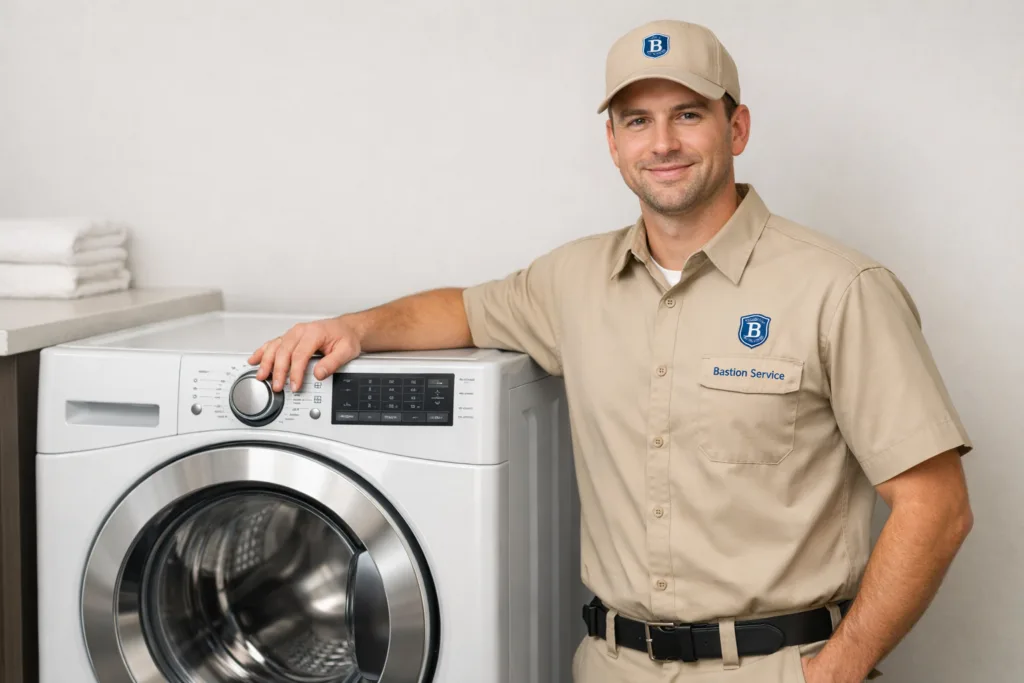
In residential settings, washer issues tend to become urgent quickly because laundry cannot wait and water-related problems can spread beyond the appliance itself. Bastion Service helps homeowners in Playa Vista evaluate Whirlpool washer problems based on the actual symptom, the condition of the machine, and the most sensible repair path.
Whether the washer is not draining, leaking, stopping mid-cycle, or producing poor wash results, the goal is the same: identify the failed system, check for related wear, and determine the next step with practical repair guidance rather than guesswork.