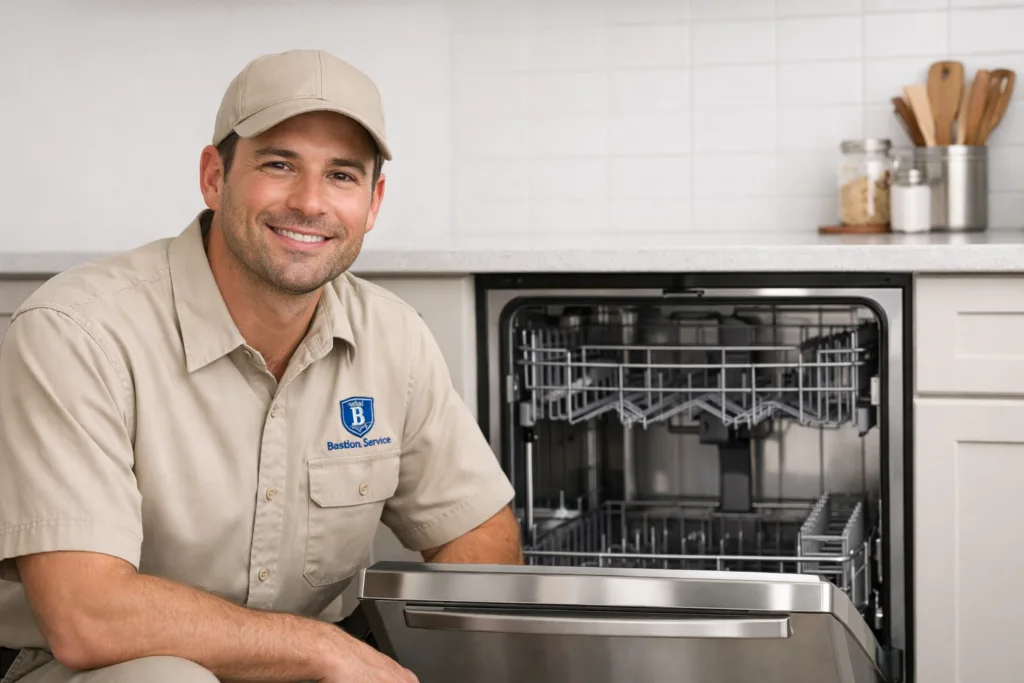
Common Whirlpool dishwasher symptoms and what they often mean

Whirlpool dishwashers usually give warning signs before they stop working completely. Paying attention to the exact symptom helps narrow the problem faster and avoids replacing parts that are not actually causing the failure.
Related Whirlpool and dishwasher service paths in Century City include Whirlpool Appliance Repair in Century City, Dishwasher Repair in Century City, and Whirlpool Refrigerator Repair in Century City.
Dishes come out dirty or gritty
If a cycle finishes but food residue is still left behind, the problem may involve weak spray pressure, clogged spray arm openings, a circulation pump issue, poor fill, or leftover dirty water staying in the tub between cycles. In some homes, grease and detergent buildup can also reduce cleaning performance over time. A sudden drop in wash quality often points to a failing component rather than normal wear.
Water stays in the bottom after the cycle
Standing water is one of the most common dishwasher complaints. On a Whirlpool unit, that can be related to a blocked filter area, restricted drain hose, drain pump trouble, or a control issue that prevents the machine from completing the drain portion of the cycle. Even if the dishwasher still runs, poor draining can lead to odor, residue, and extra stress on the pump system.
Water leaks onto the floor
Leaks are not always caused by the door seal alone. Water can escape because of a worn gasket, a rack sitting out of place, cracked sump components, loose hose connections, overfilling, or a drain problem that causes water to back up. If leaking appears during or after a cycle, it is best to stop regular use until the source is found, especially where flooring or surrounding cabinets could be affected.
The dishwasher will not start
When a Whirlpool dishwasher does not respond at all, the issue may involve the latch, user interface, control board, wiring, or incoming power. In other cases, the machine may appear to power on but fail to begin the cycle because it is not recognizing that the door is fully closed. This is one of the symptoms where testing matters most, since several different faults can look the same from the outside.
The cycle starts and then stops
A dishwasher that fills and then quits, or shuts down partway through, can have a wash motor problem, overheating component, drain failure, or electronic control fault. Intermittent stopping is especially frustrating because the machine may work once and fail the next time. That pattern usually means the problem needs to be traced through the full cycle instead of judged from one quick glance.
Unusual humming, grinding, or rattling
New noise during wash or drain is often a sign that something has changed inside the machine. Debris in the pump area, spray arm interference, worn motor parts, or loose internal components can all create sound changes. A brief noise may not mean immediate failure, but a dishwasher that suddenly gets louder should not be ignored for long.
Why symptom-based diagnosis matters
Dishwashers rely on several systems working together: water fill, circulation, heating, draining, and electronic control. One symptom can come from more than one failed part. For example, poor cleaning may be caused by weak wash action, but similar results can also happen when the dishwasher does not fill properly or cannot remove dirty water between stages.
That is why Whirlpool dishwasher repair in Century City is most effective when the actual failure is confirmed first. The goal is to determine whether the problem is a blockage, seal issue, pump failure, control fault, or a combination of smaller issues that are affecting the same cycle.
Signs the dishwasher should not keep running
Some problems can wait briefly for service. Others are more likely to create secondary damage or leave the appliance in worse condition if it keeps being used. It is wise to stop regular operation if you notice:
- Water remaining in the tub after every cycle
- Active leaking under the door or below the unit
- A burning smell or repeated shutdowns
- Controls that fail to respond consistently
- Loud new noise during wash or drain
- Cycles that never finish or leave soap behind
- Repeated poor rinse performance or low final water temperature
Leaks and drain failures are especially important to address quickly in a residential kitchen. What begins as a dishwasher problem can turn into damage around the appliance if it is left unresolved.
Low rinse temperature and drying problems
When dishes come out wet, cool, or still coated in residue, the dishwasher may not be heating water as it should. Whirlpool models depend on proper temperature during wash and rinse stages for both cleaning and drying. A heating-related problem can show up as cloudy glasses, detergent that does not dissolve well, or cycles that seem to finish without fully drying the load.
Because heating performance is tied to several parts and cycle conditions, this symptom should be looked at in context. It may involve a failed heating component, a sensor issue, control trouble, or another fault that prevents the dishwasher from reaching the temperature it expects.
Pump-related issues in Whirlpool dishwashers
Pump problems can show up in different ways depending on whether the trouble is on the wash side or the drain side. A circulation pump issue often leads to weak cleaning, quiet spray action, or a cycle that sounds different than usual. A drain pump issue is more likely to leave water in the tub or create a humming sound without fully clearing the machine.
Because both systems involve water movement, they are sometimes confused with one another. A homeowner may describe the dishwasher as “not working right,” when the real distinction is whether the machine is failing to wash, failing to drain, or doing both. Identifying that difference is key to an efficient repair path.
Repair or replacement: what usually makes sense
For many households in Century City, the real question is not just what failed, but whether fixing the Whirlpool dishwasher is still worth it. That decision usually depends on the age of the unit, the overall condition of the machine, the cost of the repair, and whether the current problem is isolated or part of a longer pattern.
Repair is often reasonable when the dishwasher is otherwise in solid condition and the issue is limited to one clear component or system. Replacement becomes more likely when there are repeated electronic problems, multiple failing parts, ongoing leaks, or repair needs that start stacking up close together. A practical repair plan based on the exact symptom pattern makes that choice much easier.
What homeowners can do before service
Before scheduling repair, it helps to note exactly what the dishwasher is doing. Useful details include whether it fills with water, whether spray sounds are normal, whether the cycle stops at the same point each time, and whether water is left behind at the end. If the machine is leaking, note where the water appears and whether it happens during wash, drain, or after the cycle is complete.
You can also check for simple loading issues, obvious spray arm obstruction, and visible debris around the filter area. If the symptom continues after that, deeper testing is usually the safest next step.
What to expect from in-home troubleshooting
Service-focused troubleshooting should center on the behavior of the appliance in your kitchen, not on guessing from a single symptom name. That means checking how the dishwasher fills, washes, drains, heats, and seals during operation. It also means looking for signs of wear, blockage, or electrical interruption that might explain why the cycle changed.
For Century City homeowners, that approach helps separate minor correctable issues from larger repairs and gives a more realistic picture of whether the dishwasher should be fixed now, monitored, or replaced. When a Whirlpool dishwasher is no longer cleaning, draining, or completing cycles correctly, early attention usually prevents a smaller problem from becoming a larger one.