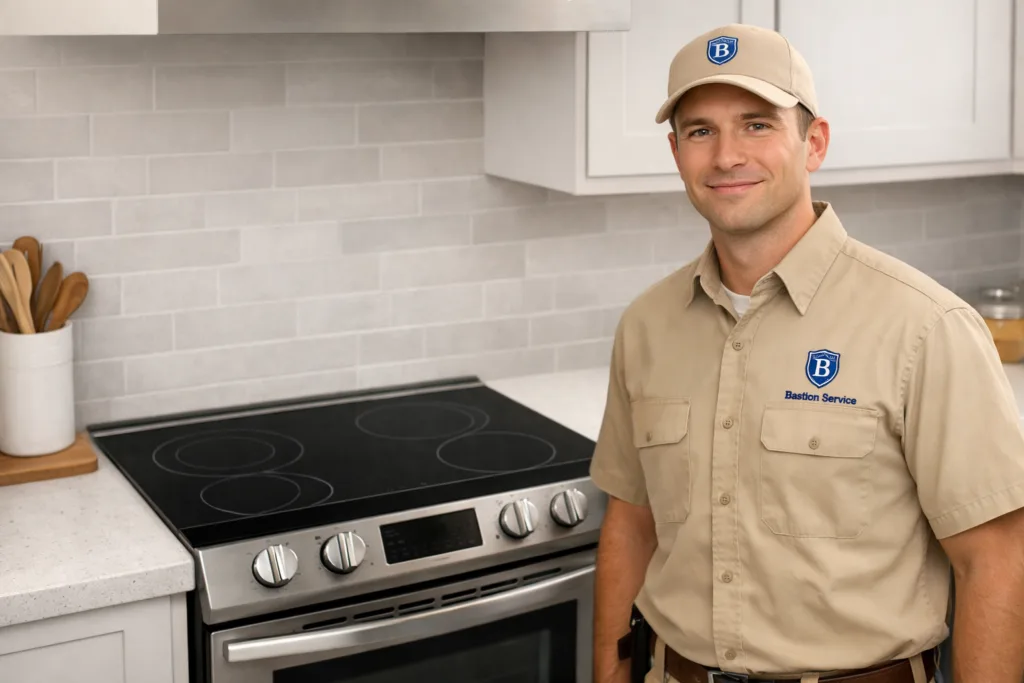
A cooktop problem rarely starts as a total shutdown. More often, one burner begins clicking too long, heat becomes uneven, or a knob no longer matches the setting you selected. On a Whirlpool cooktop, those small changes can point to very different failures, so the best next step is to match the symptom to the likely repair path instead of guessing.
Related Whirlpool and cooktop service paths in Century City include Whirlpool Appliance Repair in Century City, Cooktop Repair in Century City, and Whirlpool Refrigerator Repair in Century City.
What common Whirlpool cooktop symptoms usually mean
Burner clicks but does not light
On gas models, repeated clicking without ignition often traces back to the burner cap being out of position, moisture around the igniter, food debris blocking proper flame flow, or a worn ignition component. If the spark is present but the burner still does not light normally, the issue may be more than simple surface buildup.
If the clicking continues after the burner is turned off, stop using the affected area until it is checked. Persistent sparking can point to a switch or ignition problem that should not be ignored.
Burner does not heat at all
On electric Whirlpool cooktops, a burner that stays cold may have a failed element, a bad receptacle connection, a faulty switch, or wiring damage below the surface. If only one burner is affected, the repair may stay limited to that cooking zone. If several burners stop working together, the problem may involve shared electrical components or incoming power.
Uneven heat or temperature that will not regulate
When a burner runs too hot, too low, or cycles in a way that does not match the setting, cooking becomes unpredictable. Pancakes brown unevenly, sauces scorch, and pans take longer than usual to heat. Electric units often show this symptom when the switch is failing. Gas units may show uneven flame because of blocked burner ports, ignition trouble, or burner assembly wear.
One burner works, but the others act strangely
Mixed symptoms across different burners usually suggest that the problem is not just routine wear on one part. It can indicate a control issue, wiring problem, or a fault affecting more than one circuit. That matters because a repair that looks small from above the glass or grate level may involve deeper access under the top panel.
Cracked glass or damaged cooktop surface
A cracked glass surface should be treated seriously even if the burner still appears to work. Heat stress, impact damage, and spill intrusion can all affect safe operation. In many cases, continued use increases the risk of a larger failure and may turn a surface problem into an electrical one.
Signs the issue is getting worse
Homeowners in Century City often wait because the cooktop still works “well enough.” The trouble is that partial function usually means the failed part is already affecting normal operation. It is smart to stop and schedule service when you notice:
- delayed ignition or repeated relighting
- burners that heat differently from one day to the next
- controls that feel loose, stick, or respond inconsistently
- clicking that continues after ignition
- burners that stay too hot or will not reach full heat
- visible cracking, sparking, or intermittent power loss
These symptoms do not always mean a major repair is coming, but they do mean the appliance is no longer operating predictably.
Why symptom-based diagnosis matters
Two Whirlpool cooktops can show the same complaint for completely different reasons. A burner that will not light may have a simple alignment issue, while another with the same symptom may need ignition parts or switch work. A burner that overheats may point to a control fault rather than the burner itself.
That is why diagnosis should answer a few practical questions first: is the fault limited to one burner, is it affecting shared controls, is continued use likely to cause more damage, and is the repair sensible for the cooktop’s age and overall condition?
Repair issues that are often worth addressing
Many Whirlpool cooktop problems are repairable when the failure is limited to parts such as igniters, burner components, switches, wiring connections, or control-related hardware. A targeted repair often makes sense when the rest of the appliance is in solid condition and the issue is isolated rather than system-wide.
This is especially true when the cooktop fits the kitchen well, matches other appliances, and has otherwise been dependable for daily household use in Century City.
When replacement may make more sense
Replacement becomes more likely when the cooktop has several major problems at once, when the glass or top structure is badly damaged, or when age and parts cost make repair hard to justify. The decision is usually not about one symptom alone. It is about the total picture: condition, repair scope, usability, and whether the result would restore reliable cooking or only postpone a larger decision.
What to do before service
A little observation can make the problem easier to pinpoint. Before the appointment, note which burner is affected, whether the issue happens every time or only sometimes, and whether the symptom changes after cleaning or cooling down. Also pay attention to whether the problem began suddenly or gradually.
Helpful details include:
- which burner or burners are affected
- whether the unit is gas or electric
- if clicking continues after the knob is turned back
- whether the heat is too weak, too high, or inconsistent
- any visible crack, loose knob, or unusual sound
That kind of symptom history often helps narrow the likely cause faster.
What homeowners usually want from a service visit
Most households are not looking for a long technical explanation. They want to know what failed, whether the repair is practical, and whether the cooktop can be returned to normal daily use without guesswork. For residential Whirlpool cooktop repair in Century City, the most useful appointment is one that turns a vague complaint like “the front burner is acting up” into a specific, understandable repair decision.