Will not drain or spin
The drain path, pump, lid or door lock, balance, motor, or controls may be involved.

Washer service
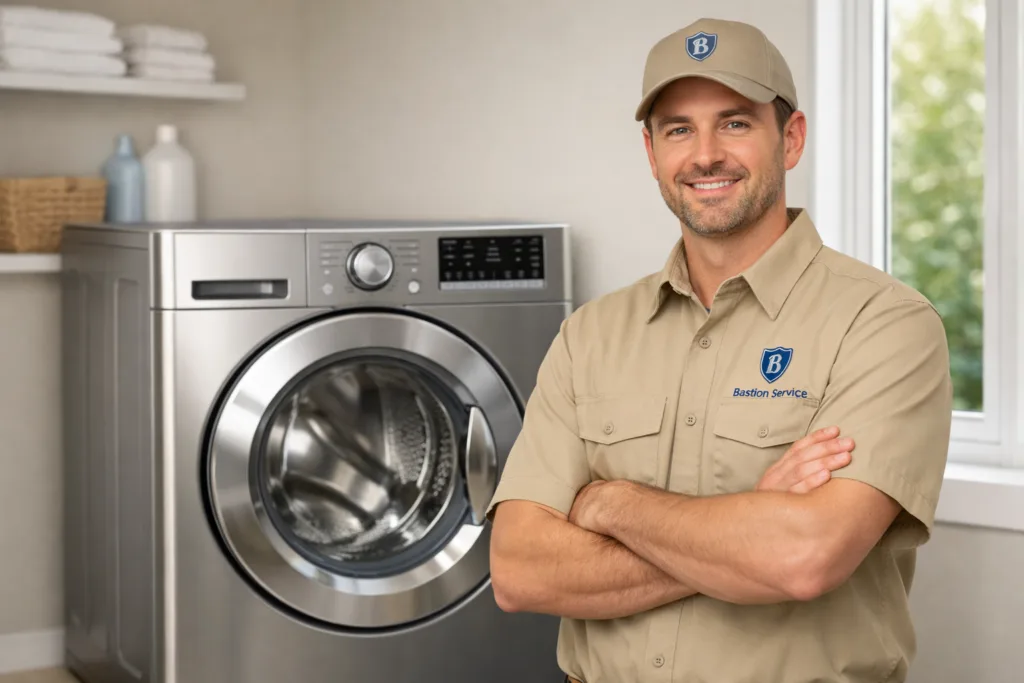
Diagnosis and repair for washers in homes and businesses across Rancho Park. Same-day service is available.
Common problems
The same symptom can have several causes. A technician tests the operating system before recommending a repair.
The drain path, pump, lid or door lock, balance, motor, or controls may be involved.
Hoses, seals, the dispenser, pump, or excess suds can send water outside the machine.
A lock, sensor, water-supply, drive, or control fault can interrupt operation.
Supported brands
Maintenance
Maintenance intervals come from the instructions for the exact model and its operating conditions. Heavy use, heat, dust, grease, hard water, and poor ventilation can shorten the interval.
Clean accessible filters and keep vents, coils, and surrounding space free of dust, grease, boxes, and fabric.
Longer cycles, unstable temperature, new sounds, leaks, and repeated error messages are reasons to schedule service before a shutdown.
Cleaning products, procedures, filters, and intervals vary by model. Follow the manufacturer instructions for the exact equipment.
Customer reviews

Andre is the best tech we have ever worked with. After Samsung sent 3 techs out and couldn’t fix our bespoke fridge -Andre came to our house and diagnosed and fixed it in 2 hours with a warranty and no additional parts. Truly a wizard.

Fast and efficient, affordable prices, does not have hidden agenda, and are honest. Thank you

Quick response. Very pleasant interactions. Diagnosed and offered professional opinion. Would recommend and would use again. Less expensive than others. Very appreciated.
Questions
Clear answers before you schedule.
Same-day service is available based on the schedule. Call (323) 433-6360 for the quickest confirmation.
The diagnostic service call is $85 for residential appliances and $120 for commercial equipment. If you approve the repair, this fee is applied toward the total cost.
Yes. Bastion Service schedules on-site diagnosis and repair in Rancho Park for supported equipment and brands.
It helps, especially when a part or manual must be matched. A clear photo of the model and serial label is enough.
Yes. The technician diagnoses the problem and provides an estimate before approved repair work begins.
Completed repairs include a 90-day repair warranty.
Ready to schedule?
Call for the quickest confirmation or book a service visit online.