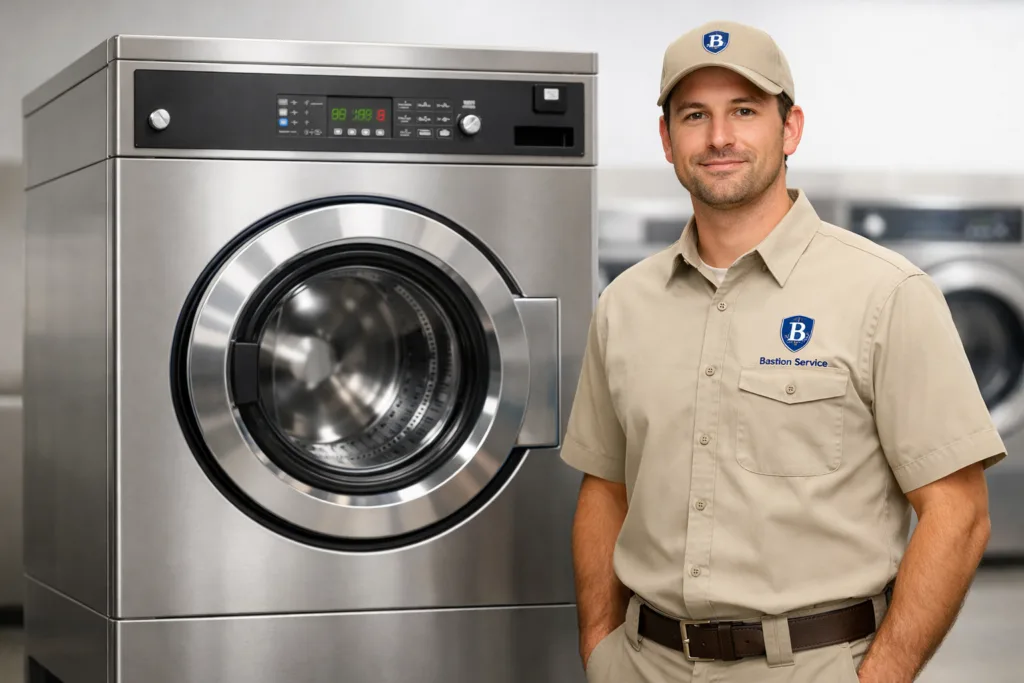




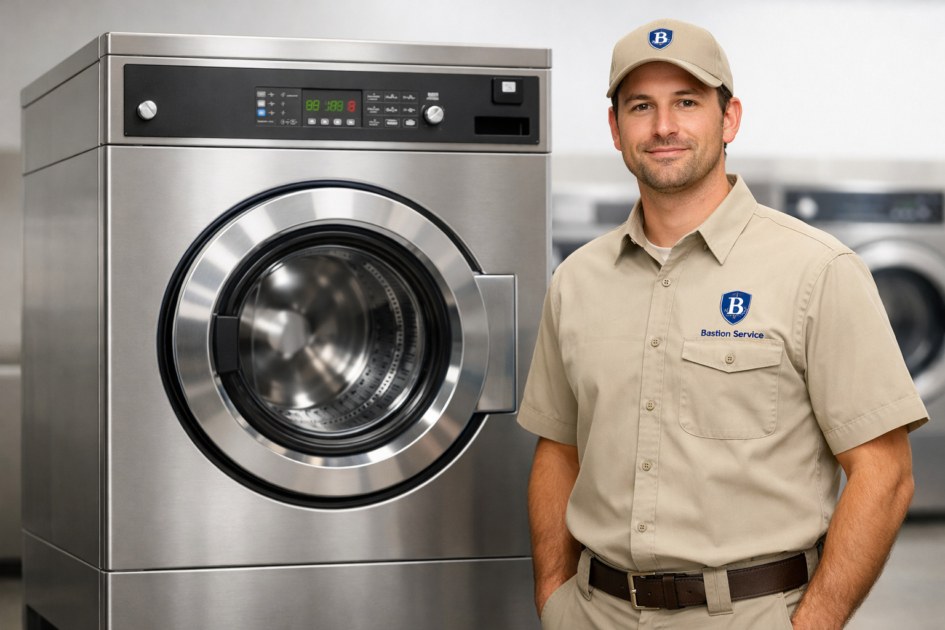
Washer downtime disrupts turnover, staffing, and daily production, especially when loads begin backing up across a busy laundry room. With Wascomat equipment, the same visible symptom can come from very different failures, so the most useful next step is service that tests the machine under the reported condition and narrows the problem to the actual system involved. Bastion Service provides Wascomat washer repair for businesses in Hermosa Beach that need a focused diagnosis, repair scheduling, and a realistic plan to restore operation without unnecessary guesswork.
Related commercial service paths in Hermosa Beach include Wascomat Commercial Repair in Hermosa Beach, Commercial Washer Repair in Hermosa Beach, and Wascomat Dryer Repair in Hermosa Beach.
That matters whether the washer is fully down or still running with reduced performance. A unit that leaves loads too wet, fills inconsistently, flashes errors, or stops mid-cycle may still operate part of the time, but partial function often creates just as much disruption as a complete shutdown. Service is most effective when it connects the symptom pattern to the repair decision before added wear spreads to pumps, drive parts, controls, or surrounding equipment.
Common Wascomat washer symptoms that point to repair needs
Washer problems rarely stay isolated for long. Small performance changes often appear before a larger failure, and those early signs can help identify what should be inspected first.
Not starting or not completing the cycle
If the washer does not respond when started, locks but never advances, or stops before finishing, the issue may involve door lock components, power supply faults, control problems, wiring issues, or a protective shutdown caused by another failing part. Intermittent cycle failure is especially important to address quickly because it can become a hard stop with little warning.
Standing water or incomplete draining
Water left in the drum at the end of a cycle usually points to a drain-related problem, but the root cause is not always the pump itself. Restrictions in the drain path, a faulty pump, control failure, or a sensing issue can all produce similar results. In daily operations, this leads to re-runs, manual water removal, delayed dryer use, and increased staff time spent recovering stalled loads.
Slow fill, no fill, or water level problems
When a washer fills too slowly, does not fill at all, or appears to overfill or underfill, likely causes include inlet valve faults, pressure-sensing issues, supply restrictions, or control problems. Water level errors affect wash quality and cycle timing, and they can also cause inconsistent results from one load to the next. For businesses that depend on predictable throughput, those inconsistencies often become the first sign that service is needed.
Excessive vibration, banging, or weak extraction
A Wascomat washer that shakes more than usual, produces impact noise, or struggles to reach full spin may have suspension wear, bearing issues, drive problems, balance-related faults, or installation concerns. Poor extraction leaves loads wetter than normal, increasing dry times and slowing the rest of the workflow. If vibration is worsening, taking action early can help avoid damage to adjacent components and mounting surfaces.
Leaks around the washer
Leaks may come from hoses, seals, pump connections, drain components, door areas, or internal water routing parts. Even minor water leakage should be treated seriously in a business setting because it can create a safety hazard, affect nearby equipment, and conceal a larger issue inside the machine. A leak that appears only during fill, wash, drain, or spin can also help narrow down where the failure is occurring.
Error codes and control irregularities
Error codes are useful clues, but they do not always identify the failed part on their own. In many cases, the displayed fault points to a system that is affected by another issue elsewhere in the washer. Buttons that do not respond, cycles that do not advance correctly, or repeated reset attempts that temporarily restore operation all suggest that controls should be evaluated as part of the repair process rather than treated as a standalone display problem.
Why symptom-based diagnosis matters
Replacing parts based only on the most obvious symptom can lead to repeat downtime and unnecessary cost. A washer that appears to have a drain problem may actually be stopping because of a control or sensing fault. A machine that seems to have a vibration issue may also have wear in related support or drive components. Testing the equipment in relation to the exact complaint helps separate primary failures from secondary effects.
For businesses in Hermosa Beach, that approach supports better repair planning. It helps answer practical questions such as whether the machine can stay in limited rotation, whether continued use risks more damage, and whether the present failure is contained or part of a larger wear pattern. Those answers are what turn a service visit into a useful operating decision.
When to take the washer out of service
Some symptoms suggest the washer should not continue running until it has been evaluated. This is especially true if the unit:
- Trips breakers or loses power during operation
- Leaks heavily onto the floor
- Produces a burning smell
- Shakes violently during spin
- Will not unlock or complete a cycle safely
- Shows repeated failures after resets
Running a machine in that condition can increase the repair scope and create avoidable risk for staff and surrounding equipment. If the issue is less severe but performance has noticeably changed, it is still worth scheduling service before the unit reaches a full breakdown.
What businesses should note before service
A few details from the operator can make the service visit more efficient and help narrow the likely fault path faster. Useful information includes:
- Whether the problem happens on every cycle or only sometimes
- The point in the cycle where the washer stops
- Any error message or repeating indicator pattern
- Whether the issue involves draining, filling, heating, spinning, or locking
- Any recent change in noise, vibration, leak pattern, or wash quality
- Whether other nearby equipment is operating normally
This kind of symptom history is often more valuable than a general description that the machine is simply “not working.” It gives the technician a better starting point and helps connect the complaint to the systems most likely involved.
Repair or replace: how the decision usually gets made
Many Wascomat washer failures are repairable when the machine is otherwise in sound operating condition and the problem is limited to one serviceable area. Replacement tends to become a stronger consideration when the washer has recurring downtime, several major systems are showing wear, or the cost of restoring reliable performance no longer fits the equipment’s overall condition.
The right decision depends on more than age alone. Service history, workload, extraction performance, structural condition, and the business impact of repeated interruptions all matter. A washer that supports daily volume reliably after repair may still be a good asset, while a unit with repeated failures across multiple systems may be signaling a broader lifecycle issue.
What a repair visit should accomplish
A productive service call should do more than confirm that the washer has a problem. It should identify the failing system, check for related issues that could affect the repair outcome, and explain the next step in terms that are useful to the operator. That may mean a straightforward component repair, temporary removal from rotation while parts are addressed, or a broader recommendation based on condition and downtime risk.
For Hermosa Beach businesses relying on Wascomat laundry equipment, the goal is to restore stable operation with as little disruption as possible. If the washer is not draining, not spinning properly, leaking, stopping mid-cycle, or showing persistent control problems, scheduling service promptly is the best way to limit downtime and move from symptoms to a repair plan that fits real operating needs.