
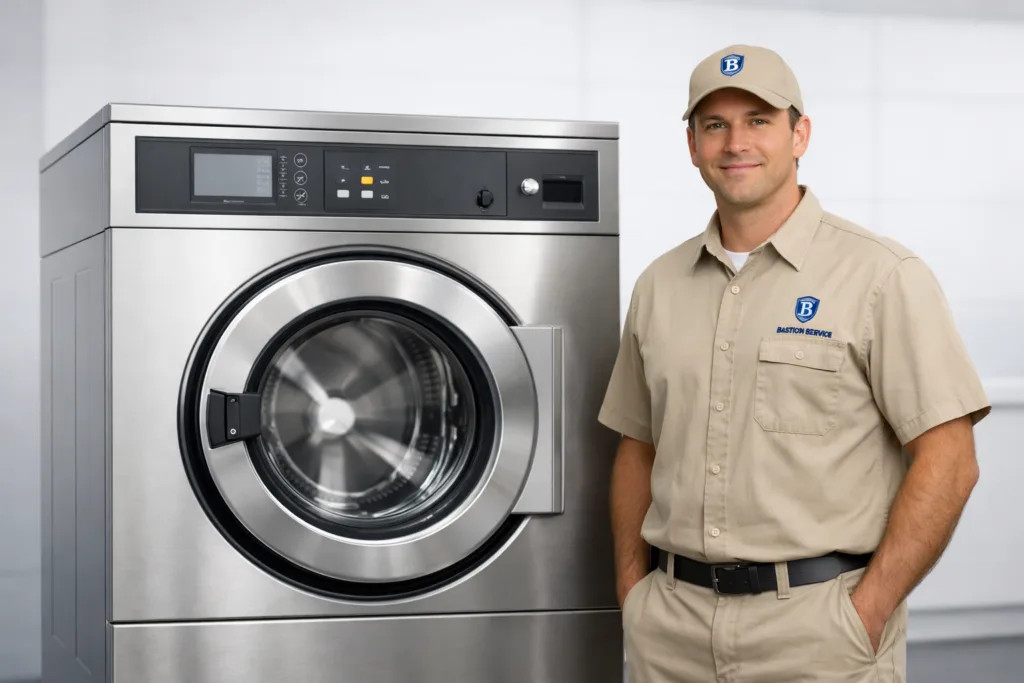




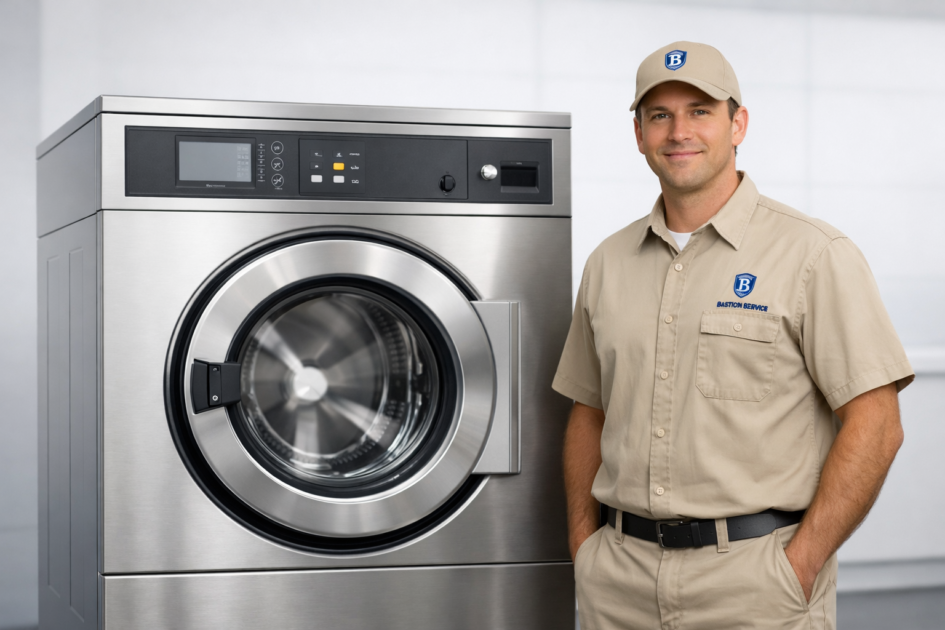
When Wascomat laundry equipment starts affecting turnover, staff workflow, or daily output, the next step is to identify the fault quickly and schedule repair based on the real operating risk. For businesses in West Los Angeles, that means looking beyond the visible symptom to determine whether the issue is isolated, whether the unit should be taken out of service, and how soon repair should be scheduled to limit downtime.
For specific equipment paths in West Los Angeles, review Wascomat Washer Repair in West Los Angeles, Wascomat Dryer Repair in West Los Angeles, and Commercial Appliance Repair in West Los Angeles.
Bastion Service works with West Los Angeles businesses that rely on Wascomat washers and dryers in laundromats, shared laundry rooms, hotels, and other facilities where missed cycles and slow equipment create immediate operational problems. Service is centered on symptom-based diagnosis, repair planning, and practical next steps that match the condition of the machine.
What Wascomat laundry equipment problems usually lead to repair
Laundry equipment does not always fail all at once. In many cases, there are early warning signs such as longer cycle times, repeat stoppages, poor extraction, weak heating, or unusual noise. Those symptoms matter because even partial performance loss can reduce throughput across the entire laundry process.
Common reasons businesses schedule service include:
- Washers that do not fill, drain, spin, or complete cycles properly
- Dryers with no heat, inconsistent heat, or extended dry times
- Leaks, standing water, or moisture where it should not be
- Repeated control errors, shutdowns, or reset-dependent operation
- Excess vibration, banging, scraping, or abnormal mechanical noise
- Units that appear to run but produce poor washing or drying results
These issues are not just inconvenient. They can slow room turnover, increase labor time, push extra load volume onto working machines, and make scheduling harder for teams that depend on predictable equipment performance.
Washer symptoms that need attention
Drain and spin problems
If a Wascomat washer leaves loads overly wet, stops before extraction, or holds water in the drum, the cause may involve the drain system, pump function, sensing, or cycle controls. From an operations standpoint, the effect is immediate: dryers take longer, load timing slips, and staff may need to rerun work that should have moved through the lineup the first time.
Repeated drain or spin issues should be checked promptly, especially when staff are restarting the machine to finish loads. Continued use under those conditions can lead to more downtime and may increase wear on related components.
Leaks and water-related issues
Leaks around a washer are easy to underestimate when the unit still runs, but water loss can point to hose, seal, valve, drain, or internal component problems. In business settings, leaking equipment also creates risk for surrounding flooring, adjacent machines, and cleanup time that pulls staff away from other tasks.
If water is appearing during fill, wash, drain, or after the cycle ends, the problem should be diagnosed before normal use continues. The visible leak pattern often helps narrow the source, but the repair decision should still be based on inspection rather than assumption.
Noise, vibration, and out-of-balance operation
A washer that shakes excessively, bangs during spin, or seems unstable can indicate issues with balance handling, suspension-related wear, loading conditions, or mechanical problems that need service. A machine that is technically running but doing so with heavy vibration may be placing added stress on its own components and the surrounding area.
When vibration increases over time, or when a unit is being taken out of service by staff because of movement and noise, repair should be scheduled before the problem expands into a larger mechanical failure.
Dryer symptoms that often affect daily output
No heat or weak heat
One of the most disruptive dryer problems is heat loss. Even if the drum turns normally, a dryer that produces little or no heat can stall workflow and back up the rest of the laundry process. Depending on the symptom pattern, the issue may involve heating components, airflow restrictions, control faults, or safety-related shutdown conditions.
When dry times suddenly increase or linens come out damp after normal cycles, the machine should be evaluated rather than kept in rotation as a slower backup unit. Reduced heat is still a performance failure when production depends on predictable turnover.
Long dry times and airflow-related performance loss
Dryers that require repeated cycles often point to restricted airflow, heat delivery problems, control issues, or other conditions that keep moisture from clearing efficiently. For operators, the practical result is higher energy use, delayed load completion, and staff having to monitor machines more closely than usual.
If one dryer is consistently slower than the rest, that difference is worth investigating. A unit does not need to be fully down to justify service when it is already affecting capacity.
Shutdowns, odors, and unusual operation
Dryers that stop mid-cycle, overheat, produce burning smells, or behave unpredictably should be inspected before continued use. Those symptoms can indicate anything from airflow and lint-path concerns to failing components or safety cutoffs being triggered.
When a dryer is running with abnormal heat behavior or repeated stoppages, using it until complete failure is rarely the best choice. Early repair can help avoid a wider interruption and reduce the chance of more costly damage.
Why symptom-based diagnosis matters
The same visible problem can come from different failures. A washer that will not finish may have a drain issue, a door-lock problem, a sensor fault, or a control-related failure. A dryer with poor drying results may involve heat production, airflow, cycling behavior, or shutdown conditions. That is why repair planning should start with confirmation of the actual fault instead of replacing parts based only on the symptom.
For businesses in West Los Angeles, this matters because repair timing and equipment decisions affect staffing, customer flow, and load management. A proper assessment helps determine whether the unit can remain in limited use, whether it should be shut down immediately, and whether the repair is likely to be straightforward or more involved.
When to stop using the equipment and schedule service
Some machines can operate in a limited way until a scheduled visit, while others should be removed from use right away. A service call is especially important when:
- A washer is leaking onto the floor or not draining reliably
- A washer repeatedly stops, unlocks incorrectly, or will not complete extraction
- A dryer is running without normal heat or taking much longer than expected
- A dryer produces strong odors, overheats, or shuts down during operation
- Noise or vibration has become noticeably worse
- Staff are constantly resetting a machine to keep it going
These are signs that the problem is already affecting reliability and may worsen if the unit stays in normal rotation.
Repair planning for washers and dryers in active business settings
Repair decisions are rarely based on the equipment alone. They also depend on how many machines are affected, how heavily the site depends on that unit, and whether the symptom is causing a bottleneck elsewhere in the process. A washer problem can quickly become a dryer backlog. A weak dryer can leave clean loads waiting for completion and create delays across the full shift.
In active laundry environments, the best approach is usually to assess the symptom pattern early, confirm whether the machine should stay in use, and schedule repair before the issue spreads into a larger workflow problem. That is especially true when the remaining lineup is being forced to absorb extra volume.
Repair versus replacement considerations
Not every Wascomat issue raises the same long-term question. Some faults are isolated and make sense to repair promptly. Others may need a broader review of machine age, repeat breakdown history, parts condition, and how much downtime the site has already experienced.
Replacement may become part of the conversation when failures are stacking up or when a major repair would not restore dependable operation in a meaningful way. In many cases, though, a targeted repair is the more efficient choice when the machine is otherwise solid and the problem is clearly defined.
Service support for Wascomat equipment in West Los Angeles
Washer and dryer problems are easier to manage when the next step is clear. If your Wascomat laundry equipment in West Los Angeles is leaking, stopping mid-cycle, vibrating excessively, losing heat, or slowing overall production, scheduling service is the most practical way to confirm the fault and decide how to move forward. The goal is not just to get a machine running again, but to restore reliable performance with the least disruption to daily operations.


