







Equipment problems in a laundry operation rarely stay isolated for long. One washer that will not drain properly or one dryer with weak heat can slow turnover, tie up staff, and put extra pressure on the rest of the room. For businesses in Fairfax, service is most useful when the problem is evaluated in the context of uptime, safety, scheduling, and whether the machine should stay in rotation while repair is arranged.
For specific equipment paths in Fairfax, review Wascomat Washer Repair in Fairfax, Wascomat Dryer Repair in Fairfax, and Commercial Appliance Repair in Fairfax.
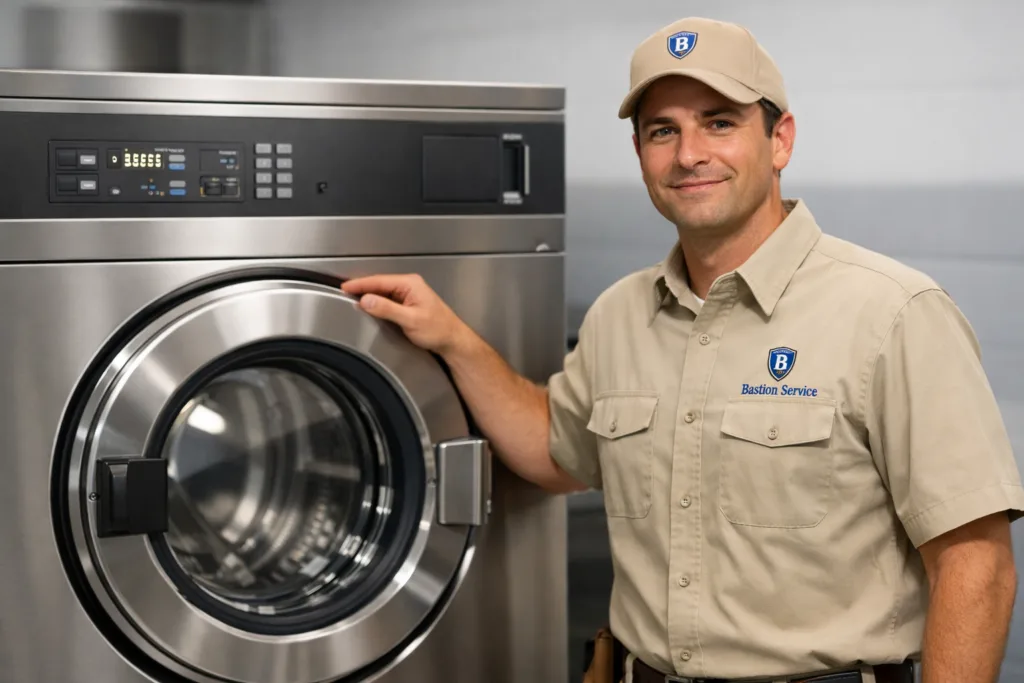
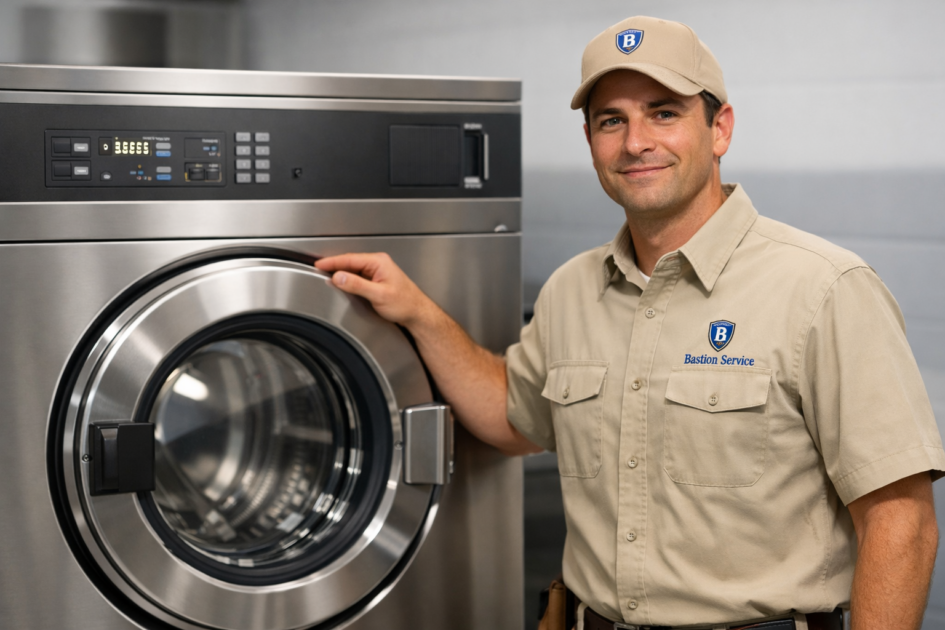
Bastion Service works with Fairfax businesses that rely on Wascomat laundry equipment and need more than general troubleshooting. The goal of a service visit is to identify the fault behind the symptom, understand how urgent the issue is, and help management plan the next step with less disruption to daily operations.
Washer and dryer support for business laundry equipment
Wascomat laundry equipment is often used in high-demand environments where repeated daily cycling exposes wear in pumps, valves, bearings, belts, controls, heating systems, and airflow components. A machine does not have to be fully down to justify service. Declining performance, intermittent failures, and unusual operating behavior are often the early signs that a repair should be scheduled before the issue spreads into a larger outage.
That is especially important in shared laundry rooms, laundromats, hotels, housing properties, and other local businesses where missed turns and delayed dry times affect customer experience and staff workflow. Repair decisions should be based on the actual symptom pattern rather than trial-and-error restarts.
Common Wascomat washer symptoms
Washer will not start or stops before the cycle finishes
When a washer will not begin a cycle, locks out, or shuts down partway through operation, the cause may involve the door lock system, control faults, power issues, water fill problems, or sensor interruptions. In a busy laundry setting, intermittent shutdowns are often just as disruptive as a complete failure because staff must keep returning to the machine instead of moving loads through normally.
If the machine has become unpredictable, service helps determine whether the fault is isolated to a specific component or whether the problem points to a broader control or safety issue.
Slow fill, no fill, or water left in the drum
Washers that take too long to fill, fail to bring in enough water, or finish with standing water can create poor wash results and longer turnaround times. These symptoms may be tied to inlet valves, fill controls, drain pumps, clogged drain paths, or related electrical faults. Continued use under these conditions can increase strain on the machine and create inconsistent load quality.
When staff begin noticing repeated drain delays or wet loads sitting in the drum, it is usually time to schedule repair rather than keep working around the issue.
Excess vibration, hard banging, or movement during spin
Severe vibration should not be treated as normal wear. A washer that shakes excessively, bangs during spin, or appears to shift more than usual may be dealing with suspension wear, mounting problems, bearing issues, balance-related faults, or internal mechanical damage. In a business environment, abnormal movement can affect flooring, surrounding equipment, and long-term machine reliability.
If the vibration is getting worse or the sound profile has changed noticeably, stopping use and arranging inspection is often the better decision than risking additional damage.
Leaks around the washer
Water on the floor can come from hose connections, door seal wear, drainage problems, pump issues, or internal leaks that show up only during certain parts of the cycle. Even a small recurring leak can become a larger maintenance problem once it begins affecting slip risk, wall finishes, nearby machines, or subfloor conditions.
A targeted repair starts with identifying where the leak is originating and whether the issue is limited to one failed part or connected to broader wear in the unit.
Common Wascomat dryer symptoms
Dryer runs but heat is weak or absent
When the drum turns but loads are still coming out damp, the problem may involve heating components, controls, sensors, airflow restrictions, or cycling failures. This symptom often causes bottlenecks before operators think of it as a breakdown, because the dryer is still running but no longer producing normal results.
Repair planning should focus on whether the heat issue is coming from a straightforward failed component or whether airflow and temperature regulation problems are also contributing to the poor performance.
Long dry times and reduced output
Long dry times are one of the most expensive laundry symptoms because they quietly reduce capacity. Loads sit longer, machines stay occupied, and staff may need to re-run cycles to get acceptable results. Common causes include airflow restrictions, declining heat output, sensor issues, drum-related drag, or drive system wear.
If daily production is slipping because dryers are taking too long, service is often warranted even if the machine has not fully stopped working.
Dryer will not start or shuts off during operation
A dryer that will not start, cuts off unexpectedly, or repeatedly shows fault conditions may be dealing with door switch issues, overheating protection, motor problems, control failures, or power-related faults. These problems are especially disruptive because they can appear intermittently at first, leading teams to keep attempting resets while the underlying condition worsens.
An inspection helps clarify whether the dryer can remain offline for a targeted repair or whether the symptom suggests a more involved problem affecting safe operation.
Burning smell, scraping noise, or harsh mechanical sound
Strong odors, rubbing sounds, squealing, or metal-on-metal noise should be treated as priority symptoms. They may point to roller wear, belt problems, motor trouble, overheating, lint-related airflow problems, or internal friction that can quickly escalate. In these cases, continuing to run the dryer can increase both repair scope and downtime.
For business operators, the practical move is to remove the machine from use and schedule service before putting it back into regular production.
Signs the problem is affecting more than one machine
Sometimes the complaint starts with one washer or dryer, but staff begin noticing similar performance issues across the laundry room. That can suggest broader operating conditions such as drainage restrictions, airflow problems, utility supply concerns, or maintenance gaps that are putting strain on multiple units. A good service process looks at the symptom on the machine in question while also considering whether the problem is isolated or part of a larger pattern.
This matters when managers are deciding how to prioritize repairs, rotate equipment, and avoid avoidable shutdowns during busy periods.
When repair should be scheduled sooner rather than later
It usually makes sense to schedule service when any of the following are happening:
- Cycles are not finishing consistently
- Loads come out wetter than normal
- Dry times are increasing and backing up production
- Machines are leaking, vibrating, or making new noises
- Staff need repeated resets or workarounds to keep equipment running
- Error conditions or shutdowns are becoming more frequent
These are the points where repair is often more manageable than waiting for a complete stoppage. Once a machine drops out entirely, the scheduling pressure on the rest of the operation usually gets worse quickly.
Repair planning versus replacement
Not every equipment issue points to replacement, and not every repeated service call should automatically lead to another repair. The better decision depends on the current failure, the machine’s overall condition, prior repair history, parts involved, and how important that unit is to daily production. In some cases, one focused repair returns stable performance. In others, repeated heat, drain, vibration, or control problems may suggest that replacement planning should be part of the discussion.
For business operators, the real question is often less about a single part and more about whether the machine can return to reliable service without creating another round of downtime in the near future.
What a service visit helps you decide
A service call should do more than confirm that a washer or dryer has a problem. It should help you understand what failed, how urgent the issue is, whether the machine should remain out of service, and what the likely repair path looks like. That is particularly helpful when operations depend on keeping enough equipment available to handle daily volume without overloading the remaining machines.
If your Wascomat laundry equipment in Fairfax is showing leaks, drain problems, vibration, no-heat conditions, long dry times, or repeated cycle failures, the next step is to schedule repair before the symptom grows into a wider interruption. Early evaluation helps protect throughput, reduce avoidable downtime, and give your team a clearer path forward.


