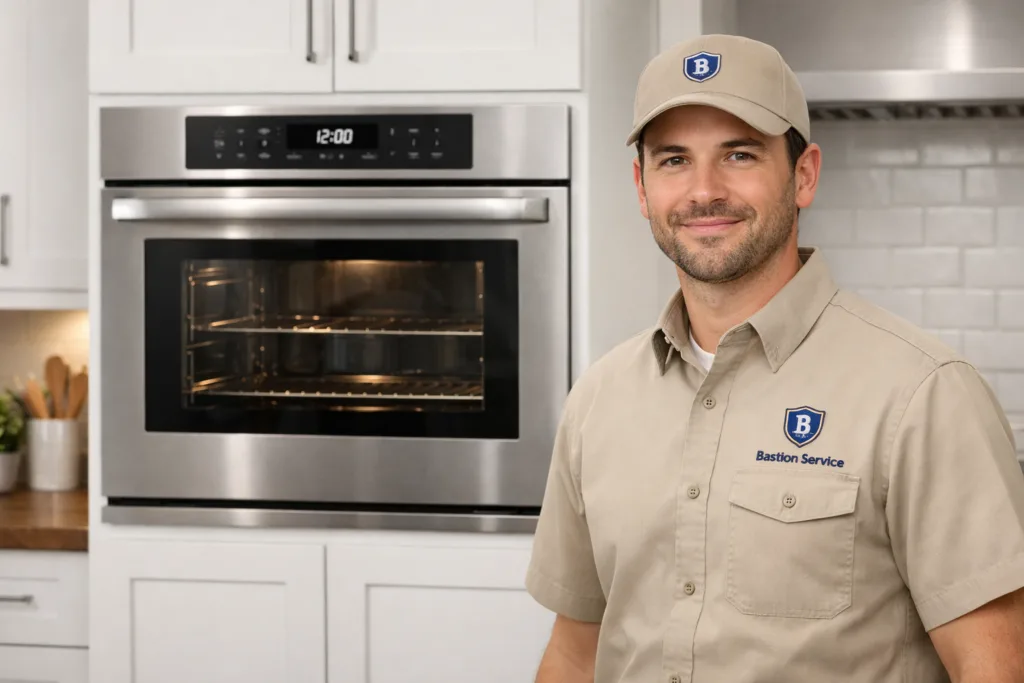
Built-in ovens often fail in ways that look similar at first, but the underlying cause can be very different. A unit that will not heat at all may have an interrupted bake circuit, while one that eventually warms up but cooks poorly may be dealing with a weak element, a drifting sensor, or a control issue that throws off temperature timing. For homeowners in Westwood, it helps to look at the symptom pattern rather than assuming every heating problem means the same repair.
Common wall oven problems homeowners notice
Uneven baking, slow preheat, no heat, temperature swings, and controls that do not respond are among the most common complaints. Some ovens still light up and accept settings but never reach the selected temperature. Others appear to preheat normally, then undercook food in the center or brown too aggressively on one side. Those differences matter because they can point to separate issues in the heating system, sensor circuit, door seal, or electronic controls.
Homeowners also call for service when the oven door will not close fully, the display flashes error codes, the self-clean cycle leaves the door locked, or the appliance shuts off in the middle of cooking. Even when the problem seems small, a built-in unit depends on several systems working together, so a minor-seeming fault can affect performance, safety, and daily use.
What different symptom groups can indicate
Oven not heating or heating too slowly
If the cavity stays cold, the issue may involve the bake element, broil element, thermal protection component, sensor, wiring, or control board. If bake fails but broil still works, that often narrows the problem to one part of the heating circuit rather than the entire appliance. When the symptom is broad oven performance without the built-in wall configuration being the key issue, Oven Repair in Westwood may be the better service path.
Slow preheat can be especially frustrating because the oven may seem functional while still missing target temperature by a wide margin. In that case, weak element output, inaccurate temperature sensing, or relays not staying engaged long enough can all lead to longer cook times and unreliable results.
Food cooks unevenly or temperatures seem off
If one rack burns while another remains pale, or familiar recipes suddenly stop turning out correctly, the oven may not be regulating heat as intended. Temperature sensor drift, poor heat circulation, a damaged gasket, or calibration problems can all show up as uneven baking. This is often why homeowners notice the issue first with cookies, casseroles, or anything that depends on steady heat over time.
An oven that runs too hot can also create confusion because it still appears to be working. Overheating may come from a stuck relay, sensor misreadings, or a control fault that keeps elements on too long. Continued use in that condition can damage food, cookware, and in some cases surrounding components.
Display, controls, or lock problems
Unresponsive touchpads, flashing codes, delayed button response, and doors stuck in a locked position usually point toward electronic control or latch-related faults. These problems are not always solved by resetting power, especially if the issue returns as soon as the oven starts heating again. Because a wall oven is built into cabinetry, forcing the door or repeatedly cycling power can create more trouble than it fixes.
When the problem may involve another cooking appliance
Some households are not sure whether the issue belongs to the wall oven or another appliance nearby. If the problem is only with the surface burners and the oven cavity is unaffected, Cooktop Repair in Westwood may be more relevant. If oven temperature problems and burner performance are happening together on one combined appliance, Range Repair in Westwood often fits that symptom pattern better. And if the concern is centered on a freestanding unit used as the main kitchen cooker, Stove Repair in Westwood may be the more accurate match.
When to stop using the wall oven
It is best to stop using the appliance if it trips the breaker, gives off a burning electrical smell, overheats the surrounding cabinet area, sparks, or shuts off unpredictably during cooking. The same goes for repeated error codes tied to heating or door-lock faults, especially if the oven cannot maintain a stable temperature. Continuing to use a unit in that condition can turn a single failed part into a broader repair.
If the door does not seal, the controls behave erratically, or the oven seems much hotter than the display indicates, service is usually wiser than trial and error. A built-in cooking appliance can hide electrical and heat-related faults behind normal-looking operation, so visible signs are not the only factor to consider.
Repair or replace?
Repair is often the practical choice when the issue is limited to a heating element, sensor, latch assembly, thermostat-related component, or another clearly identified part. Replacement tends to make more sense when the oven has major control failure, repeated breakdowns, or age-related problems across several systems at once. With a wall oven, cabinet fit and installation details also matter, so replacing the appliance is not always the simplest option.
A useful service visit should answer a few basic questions: what failed, whether the oven can be used safely in the meantime, whether the repair is likely to restore reliable cooking performance, and whether the cost is reasonable for the household. That kind of clarity is especially important with built-in appliances that affect the rhythm of everyday meals.
What to expect from wall oven service in Westwood
Service should focus on confirming the actual fault rather than swapping parts based on a guess. That usually means checking heat output, temperature sensing, control response, door operation, and any stored error behavior to determine whether the issue is isolated or part of a larger failure. For homeowners in Westwood, the goal is straightforward: get the oven back to dependable daily cooking without unnecessary delays or unnecessary part replacement.
Whether the complaint is no heat, inconsistent baking, slow preheat, or control trouble, symptom-based diagnosis is what makes the next step clearer. Once the cause is identified, it becomes much easier to decide whether the fix is simple, urgent, or a sign that replacement deserves consideration.