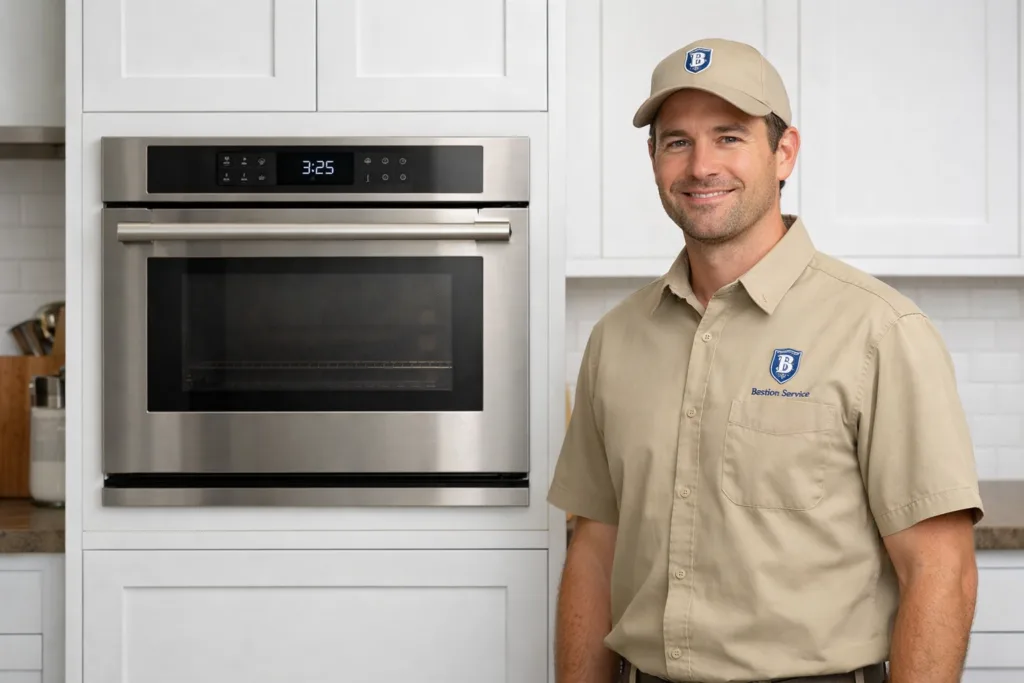
Wall ovens can fail in ways that look similar at first but point to very different causes. A unit that seems slow to preheat may have a weak bake element, a failing igniter, a temperature sensor drifting out of range, or an electronic control issue. Because built-in cooking appliances hide much of their wiring and hardware behind the cabinet opening, it usually takes a step-by-step inspection to identify what is actually preventing normal cooking performance.
Common wall oven symptoms and what they can indicate
If food is coming out undercooked on one rack and overbrowned on another, the problem may involve uneven heat distribution, a sensor issue, or inconsistent cycling of the heating system. Some homeowners in Venice notice that the display appears normal while the oven cavity never reaches the selected temperature. In that situation, the fault may be in the heating circuit rather than the control panel itself.
Other symptoms are more direct. A wall oven that will not turn on, shuts off in the middle of baking, locks unexpectedly, or shows recurring error codes may have trouble with its control board, wiring connections, door latch assembly, or internal safety components. If the issue is centered on a separate surface unit rather than the built-in oven cavity, Cooktop Repair in Venice may be the more appropriate service path.
Not heating or heating too slowly
When a wall oven does not heat at all, diagnosis often starts with incoming power, heating elements on electric models, or igniter performance on gas models. Slow preheat can be just as disruptive, especially when the oven eventually reaches temperature but takes much longer than it should. That pattern can point to a weakened component that still functions intermittently, which is why the appliance may seem fine on one day and frustrating the next.
Uneven baking and temperature swings
Temperature inconsistency is one of the most common complaints because it affects every meal without always causing a full shutdown. Cakes may bake lopsided, casseroles may stay cold in the center, or roasting times may become unpredictable. If the symptom is clearly tied to the oven cavity and not another cooking appliance, Oven Repair in Venice may also help households compare whether the issue fits a standard oven setup or a true wall oven configuration.
Door, latch, and control problems
A damaged gasket, loose hinge, or door that does not close fully can let heat escape and make the appliance seem weaker than it is. Touchpad problems, delayed button response, or a self-clean cycle that will not start can also be related to latch or control faults rather than the heating system alone. These issues matter because even a small seal or latch failure can affect temperature stability throughout the cooking cycle.
Why accurate diagnosis matters
Wall ovens combine heating components, sensors, controls, and built-in installation details that can make simple guesswork expensive. Replacing one part based only on the symptom does not always solve the problem, especially when a second issue is masking the first. A proper evaluation helps determine whether the repair is limited to one failed part, whether there is an underlying electrical problem, and whether the overall condition of the unit supports repair.
This is also where appliance type matters. If burner heat and oven temperature problems are happening together in one appliance, Range Repair in Venice may be the better fit because a range combines both functions in a single unit. Matching the symptom to the right service category helps avoid confusion and keeps the repair process more focused.
When to stop using the appliance
Some wall oven problems are inconvenient, while others raise safety concerns. It is best to stop using the unit if it trips the breaker, produces sparking, gives off a burning smell from the control area, overheats, or fails to turn off properly. Continued use can increase damage to wiring, insulation, or electronic parts behind the built-in assembly.
For gas-equipped models, a persistent gas odor should never be treated as a routine appliance issue. Stop using the oven, leave the area if needed, and contact the gas utility or emergency service before arranging repair. If the concern is really focused on a freestanding cooking unit rather than a built-in wall oven, Stove Repair in Venice may be a better match for that symptom pattern.
Repair or replacement?
Many wall oven problems are worth repairing when the cabinet fit, oven cavity, insulation, and main structure remain in good condition. A targeted repair often makes sense for failed elements, igniters, sensors, door hardware, or certain control-related faults. Replacement becomes more reasonable when the unit has severe interior damage, repeated electrical failures, multiple expensive issues at once, or limited part availability.
Age is part of the decision, but it is not the only factor. A well-kept appliance with one definable fault may still have years of useful life left, while a newer unit with repeated control problems may deserve a closer cost comparison. What matters most is whether the repair is likely to restore reliable daily cooking without leading to repeated service calls.
What homeowners in Venice can expect from service
Service typically begins with confirming power and operation, checking heat output, reviewing temperature behavior, and inspecting the parts most closely connected to the reported symptom. From there, the next step depends on whether the problem involves heating performance, control response, wiring, or mechanical door components. That process helps homeowners understand not just what failed, but why the oven started acting differently in the first place.
If your wall oven is still running but cooking unevenly or preheating slowly, addressing the issue sooner can help prevent wasted food and additional strain on related components. When the unit shows stronger warning signs like electrical faults, smoke, or uncontrolled heating, it is best to stop using it until the cause is identified.