
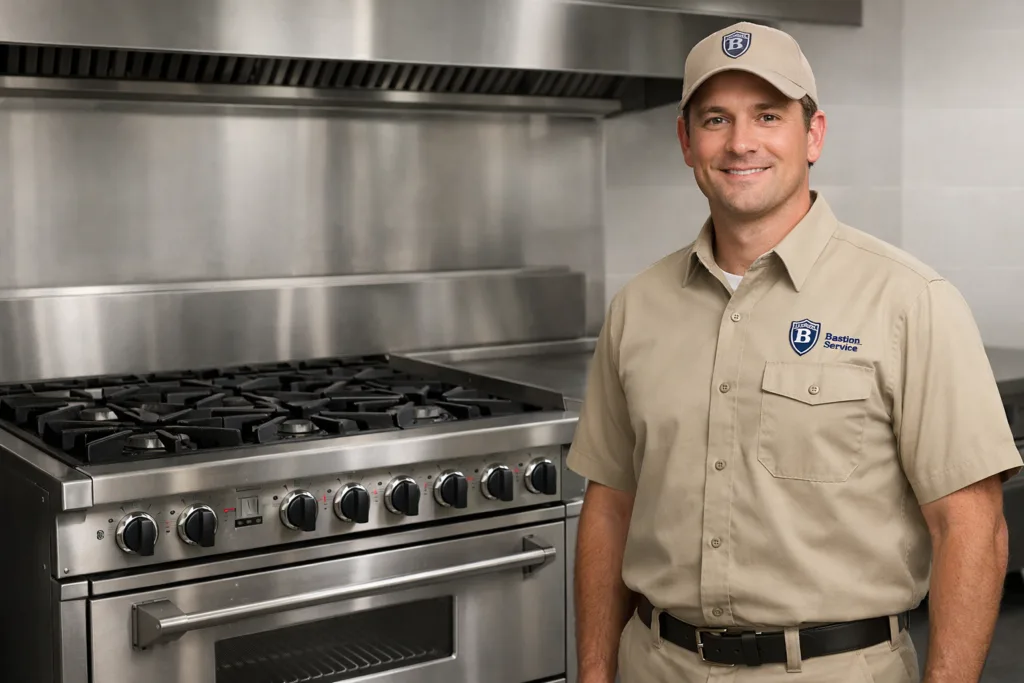




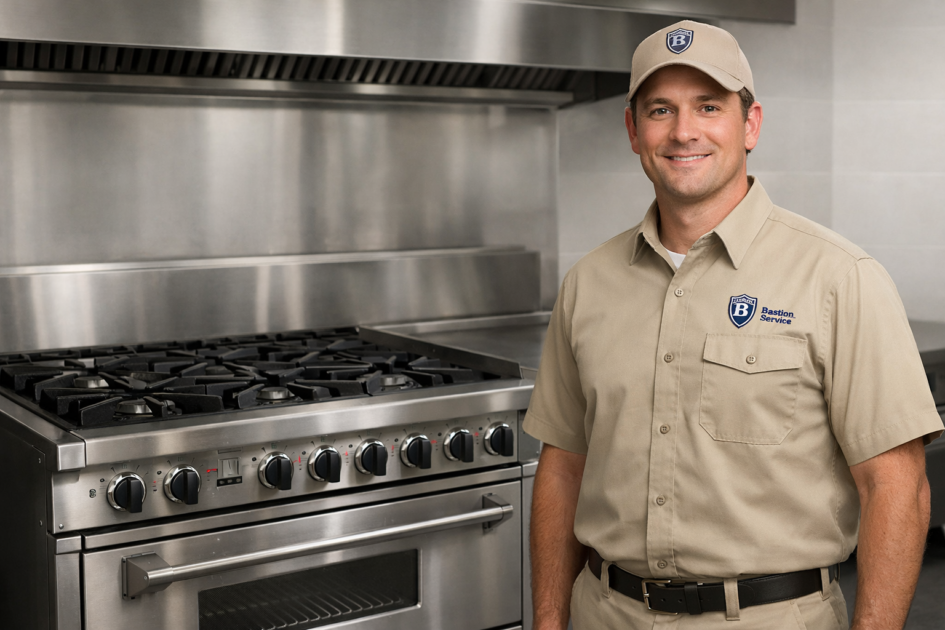
Range problems can slow an entire kitchen, especially when burner output, ignition, or oven performance becomes unpredictable during active service. For businesses in Inglewood, the right repair approach starts with identifying which section is failing, how often the problem appears, and whether the issue affects safe operation, recovery time, or production capacity. Bastion Service handles Vulcan range repair with attention to symptom patterns, downtime impact, and scheduling that helps operators move from disruption to a workable repair plan.
Related commercial service paths in Inglewood include Vulcan Commercial Repair in Inglewood, Vulcan Oven Repair in Inglewood, and Vulcan Fryer Repair in Inglewood.
Common Vulcan range symptoms that need service
Burners that will not light or take too long to ignite
When a burner does not light promptly, clicks repeatedly, or lights only after several attempts, the problem may involve ignition components, burner port blockage, wiring issues, contamination, or gas flow faults. In a busy kitchen, delayed ignition is more than an annoyance. It can interrupt line timing, affect station reliability, and force staff to shift work to other equipment.
If the problem is intermittent, that does not mean it is minor. Intermittent ignition faults often worsen under heat, grease buildup, or repeated daily use. A service visit should determine whether the failure is isolated to one burner or tied to a broader control or supply issue.
Weak flame or uneven burner performance
A burner that looks smaller than normal, heats unevenly, or struggles to maintain output may be dealing with restricted ports, regulator issues, wear in burner components, or pressure-related problems. These symptoms often show up as slower cook times, uneven pan heating, or stations that cannot keep pace during rush periods.
Uneven flame also matters because staff may begin compensating by turning settings higher, rotating pans more often, or avoiding certain sections of the range altogether. Those workarounds reduce efficiency and can hide a problem that is already affecting daily operations.
Oven section not reaching or holding temperature
If the oven cavity runs hot, cold, or cycles inconsistently, likely causes can include thermostat issues, sensor faults, ignition problems, burner performance loss, or failing controls. In production settings, temperature swings can lead to inconsistent food quality, longer cook times, and avoidable waste.
It is important to distinguish between a calibration issue and a deeper heating fault. A proper diagnosis helps determine whether the oven section needs a targeted repair or whether multiple components are contributing to the temperature drift.
Pilot problems, shutdowns, or unstable heating
Pilots that will not stay lit, burners that cut out during use, or heat that drops unexpectedly may point to contamination, worn safety components, gas delivery restrictions, or electrical interruptions. These symptoms should not be ignored in equipment used every day. What begins as an occasional shutdown can become a full loss of service at the worst time.
Controls not responding normally
When knobs, thermostatic controls, or ignition-related functions do not respond as expected, the issue may involve switch failure, worn control components, damaged wiring, or heat-related wear inside the unit. Controls that feel inconsistent or behave unpredictably can make the range difficult to operate with confidence and may also point to broader electrical or mechanical problems.
Why is my Vulcan range not lighting, heating, or holding temperature?
These symptoms often overlap, which is why accurate testing matters before parts are replaced. A lighting problem may actually come from poor gas flow or contamination. A heating complaint may trace back to ignition weakness, a failing thermostat, or a burner issue that is reducing output. Temperature instability in the oven may not be a sensor problem alone if the burner system is also underperforming.
The most effective repair decision comes from looking at the full pattern: which sections fail, whether the issue is constant or intermittent, how the unit behaves when hot, and whether operators have noticed changes in recovery time, flame quality, or control response. That process helps prevent unnecessary part replacement and supports a more reliable repair outcome.
What a service visit should help you confirm
- Whether the problem is limited to one burner, the oven section, or multiple functions
- Whether ignition, gas flow, controls, or heating components are causing the complaint
- Whether continued use may lead to added damage or a larger interruption
- Whether the repair is straightforward or part of a broader equipment condition issue
- Whether the unit is a good repair candidate based on overall performance and wear
When a repair should be scheduled sooner rather than later
Some range issues can wait for planned downtime, but others should be addressed quickly. Service should move up in priority when ignition becomes unreliable, burners stop maintaining flame, the oven cannot hold temperature during normal use, or staff begin avoiding parts of the range because they no longer trust the equipment.
It is also smart to act quickly when symptoms are getting worse. Repeated clicking, delayed lighting, erratic temperatures, shutdowns under load, or inconsistent control behavior usually mean the problem is progressing. For kitchens in Inglewood, earlier service often reduces the chance of losing the unit during a peak shift.
Repair or replacement: how to make the call
Not every Vulcan range problem points to replacement. Repair is often the better choice when the issue is clearly defined, the unit remains structurally sound, and the rest of the range still supports the kitchen’s production needs. A contained ignition fault, burner repair, or temperature-control issue may be worth correcting if the equipment is otherwise in solid working condition.
Replacement becomes a more serious consideration when failures are frequent, multiple systems are showing wear, repair history is growing, or the current problem is only one part of a larger decline. The goal is to determine whether the range can return to stable daily use without repeated disruption.
How to prepare before service arrives
Helpful information from the kitchen can speed up diagnosis. Try to note which burners or oven functions are affected, whether the issue happens all the time or only during long shifts, and whether the problem appeared suddenly or got worse over time. It also helps to know if the unit shows delayed ignition, unusual flame behavior, clicking, temperature drift, or random shutdowns.
If possible, share whether staff have changed how they use the range to work around the issue. Those details often reveal whether the problem is isolated, heat-related, or tied to a specific control or burner section.
Service-focused support for businesses in Inglewood
When a Vulcan range starts losing reliability, the best next step is to schedule service based on the exact symptoms rather than continue guessing at the cause. A focused inspection can identify the faulty system, clarify whether the repair is practical, and help your team plan around downtime before the problem disrupts another shift. For businesses in Inglewood, that means getting from inconsistent performance to a repair decision with less uncertainty and a clearer path back to normal kitchen operation.


