
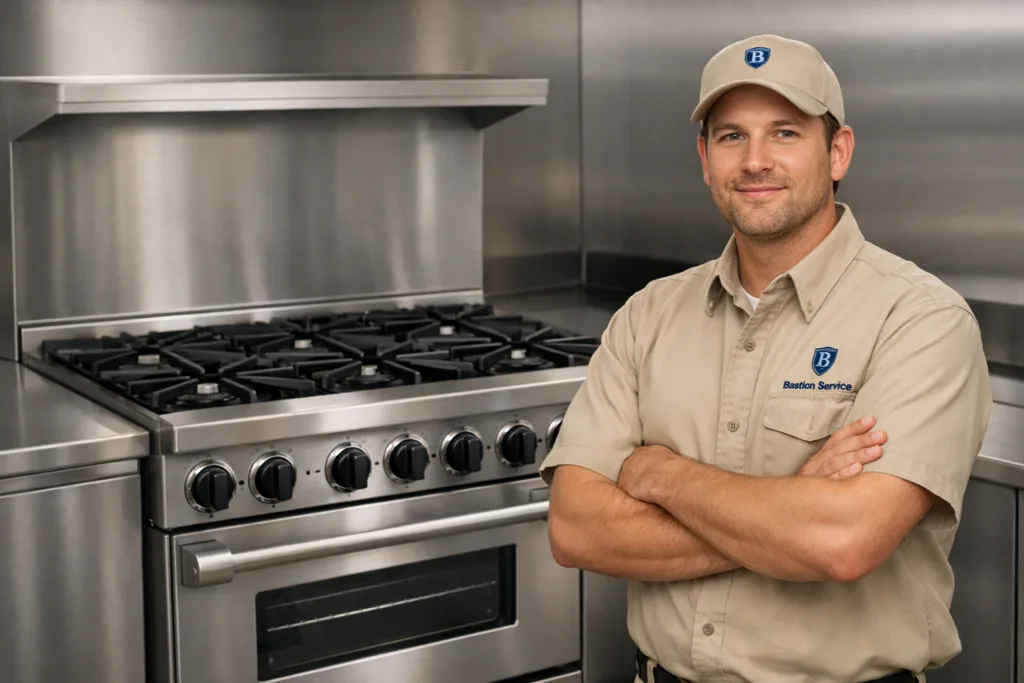




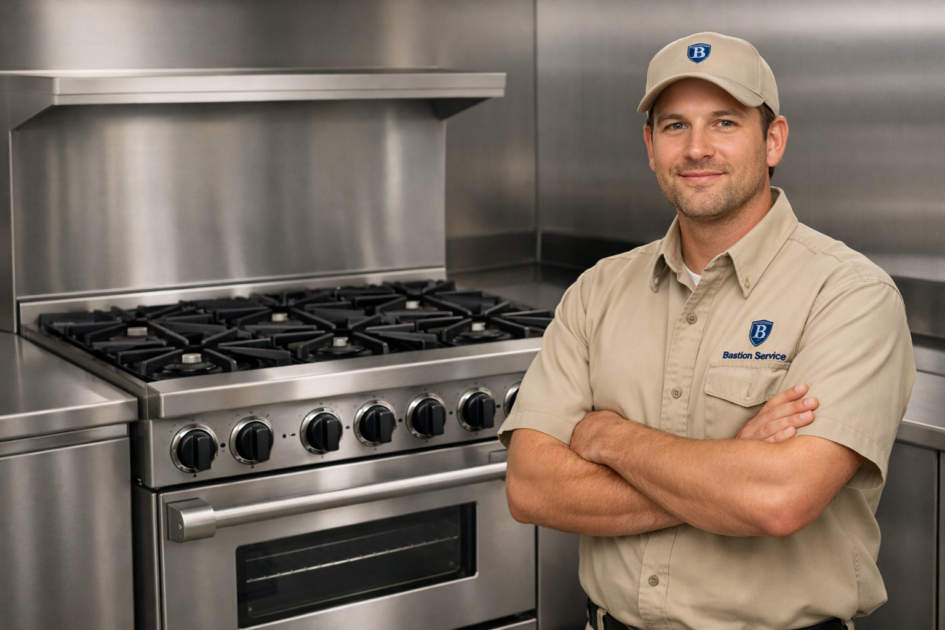
Range problems rarely stay minor for long when the unit is tied to daily production. If a Vulcan range in Fairfax is failing to light, losing heat, cycling unpredictably, or dropping burner performance during service, the best next step is to schedule diagnosis based on the exact symptom pattern rather than guessing at parts. That approach helps reduce avoidable downtime, protects workflow, and makes it easier to decide whether the issue is isolated or part of a broader wear problem.
Related commercial service paths in Fairfax include Vulcan Commercial Repair in Fairfax, Vulcan Oven Repair in Fairfax, and Vulcan Fryer Repair in Fairfax.
Bastion Service works with Fairfax businesses that rely on Vulcan cooking equipment and need repairs that are grounded in testing, fault isolation, and realistic scheduling. For kitchens managing prep, service, and staffing, the goal is to restore stable operation with as little disruption as possible while also identifying any conditions that could affect safe or consistent use.
Common Vulcan range symptoms that point to service
Most range failures show up first as inconsistent performance rather than a complete shutdown. A burner may click without lighting, flame may look weak or uneven, the oven section may run hot or cool, or recovery may slow during busy periods. These symptoms often trace back to ignition components, gas delivery issues, burner wear, control faults, sensor problems, or heat-related deterioration inside the unit.
Burners that will not light or stay lit
If a burner takes multiple attempts to ignite, lights intermittently, or goes out during use, the problem may involve the igniter, pilot system, burner ports, valve operation, or restricted gas flow. What matters is that similar symptoms can have different causes. A burner that appears to have a simple ignition issue may actually need deeper testing to confirm whether the fault is at the burner, the control side, or the fuel side of the system.
Delayed ignition is also worth attention because staff often work around it until the problem gets worse. Repeated relighting, inconsistent flame carryover, and weak burner output can all slow production and put added strain on nearby components.
Oven section not heating properly
When the oven on a Vulcan range is slow to preheat, overshoots temperature, or fails to hold a steady cooking range, food quality and timing can suffer quickly. This can point to thermostat or sensor issues, burner performance problems, calibration drift, door-related heat loss, or control faults affecting how the oven cycles.
A useful repair visit should determine whether the complaint is a true temperature-control issue, a combustion problem, or a heat retention problem. Those are not the same repair, even if staff describe all of them as “the oven is not heating right.”
Uneven flame, hot spots, or slow recovery
Some ranges continue operating but no longer perform evenly across the cooktop or oven cavity. One section may run hotter than another, pans may take longer to come up to temperature, or the unit may struggle to recover between batches. These are often early signs of partial component failure rather than total equipment loss.
That matters because partial failures can create ongoing production issues before the range fully breaks down. If output, consistency, or timing has changed, it usually makes sense to have the unit checked before a busy shift turns a manageable repair into an urgent outage.
Why is my Vulcan range not lighting, heating, or holding temperature?
This is one of the most common service complaints, and the answer depends on which function is failing. Lighting problems can be caused by worn ignition parts, pilot issues, contamination around burner components, gas supply restrictions, or control-related faults. Heating complaints may come from weak burner operation, failing thermostatic components, calibration errors, or damaged parts affecting heat transfer and recovery.
Temperature instability can be especially misleading. In some cases, the unit is producing heat but not regulating it correctly. In others, the control appears to be the issue when the real cause is poor burner performance or heat loss. That is why symptom-based testing matters more than replacing the first part that seems likely.
Why diagnosis matters before parts are ordered
Replacing visible components without confirming the root cause can add cost and delay while the actual fault remains unresolved. A clicking burner does not automatically mean the igniter is the only problem. An oven that will not hold temperature does not automatically need a major assembly. Proper diagnosis helps determine:
- whether the issue is isolated or affecting multiple functions
- whether continued use risks more damage
- whether the repair is straightforward or part of a larger wear pattern
- whether the equipment is still suitable for current kitchen demand after repair
For businesses in Fairfax, those answers matter because they affect staffing, menu execution, and how much disruption a service event creates.
Signs the range should be serviced soon
Some symptoms call for prompt scheduling even if the unit is still operating:
- burners that need repeated attempts to ignite
- constant clicking or inconsistent spark behavior
- weak, uneven, or unstable flame
- oven temperature drift during normal cooking
- slow preheat or slow recovery between cycles
- controls that do not respond normally
- sections of the range running hotter or cooler than expected
These are often the stage where repair is more manageable. Waiting until the unit fails completely can compress scheduling options and increase the operational impact on the kitchen.
When continued use can make the problem worse
Ranges are often kept in use because they are still “mostly working,” but unstable ignition, poor flame quality, and temperature-control problems can all lead to bigger failures. Repeated failed ignition can wear related components. Burners that do not burn correctly can create uneven heat stress. Ovens cycling outside normal operating conditions can place extra strain on controls and heating systems.
If the equipment is showing a persistent gas odor, stop using it and address the safety issue immediately. If the problem is repeated clicking, delayed ignition, drifting temperature, or inconsistent performance throughout the day, scheduling repair before the next heavy-use period is usually the smarter move.
Repair or replace?
Many Vulcan range problems are repairable when the failure is limited to specific components and the overall unit is still in workable condition. Repair tends to make sense when the issue is contained, parts condition is otherwise reasonable, and restoring stable performance will return the range to reliable daily use.
Replacement becomes a more serious consideration when the range has stacked failures, recurring downtime, heavy wear across multiple systems, or repair needs that no longer fit the condition and role of the equipment. The better decision usually comes from looking at the full operating picture, not just the single complaint that triggered the service call.
How to prepare for a service visit
Before repair is scheduled, it helps to note exactly how the problem appears in real use. Useful details include whether the issue affects all burners or one section, whether it shows up only during long shifts, whether the oven is running hot or cold, and whether the problem is constant or intermittent. Staff observations about clicking, flame appearance, preheat time, or temperature inconsistency can help narrow the fault faster.
If available, it is also helpful to know the model information, approximate age of the unit, and whether recent repairs were made to related parts. That context can speed up troubleshooting and make the repair plan more accurate.
Service-focused support for Fairfax kitchens
For Fairfax businesses, range repair is not just about fixing a part. It is about restoring dependable cooking performance, reducing disruption on the line, and making informed decisions about what needs attention now versus what can be monitored. When a Vulcan range begins showing ignition trouble, burner faults, oven heating issues, or unstable temperature behavior, timely service helps protect uptime and keeps the problem from growing into a larger interruption.


