
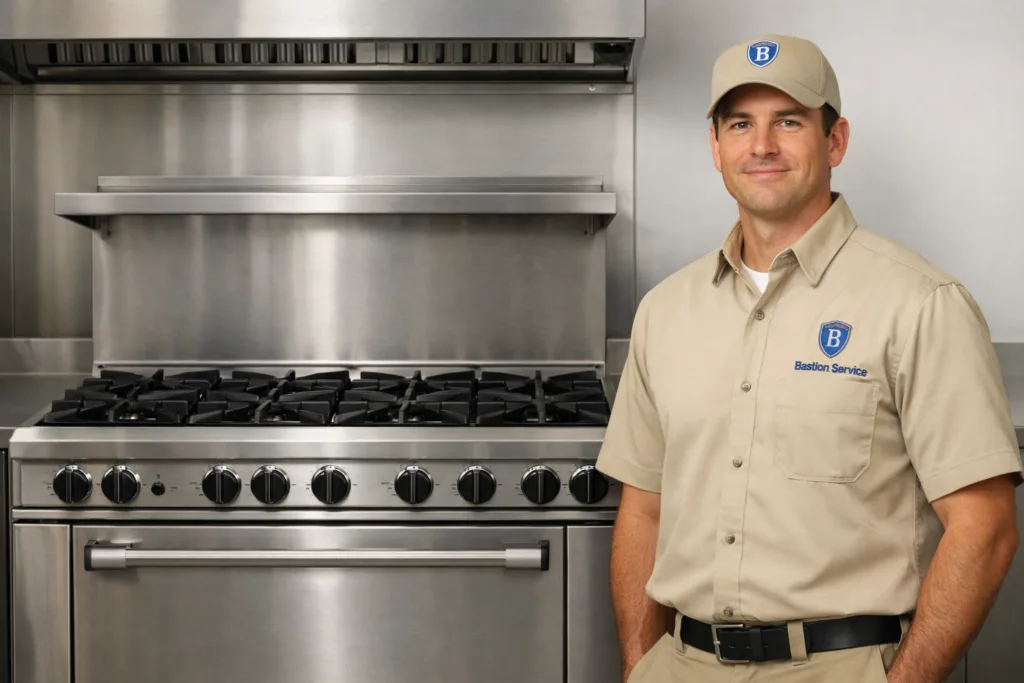




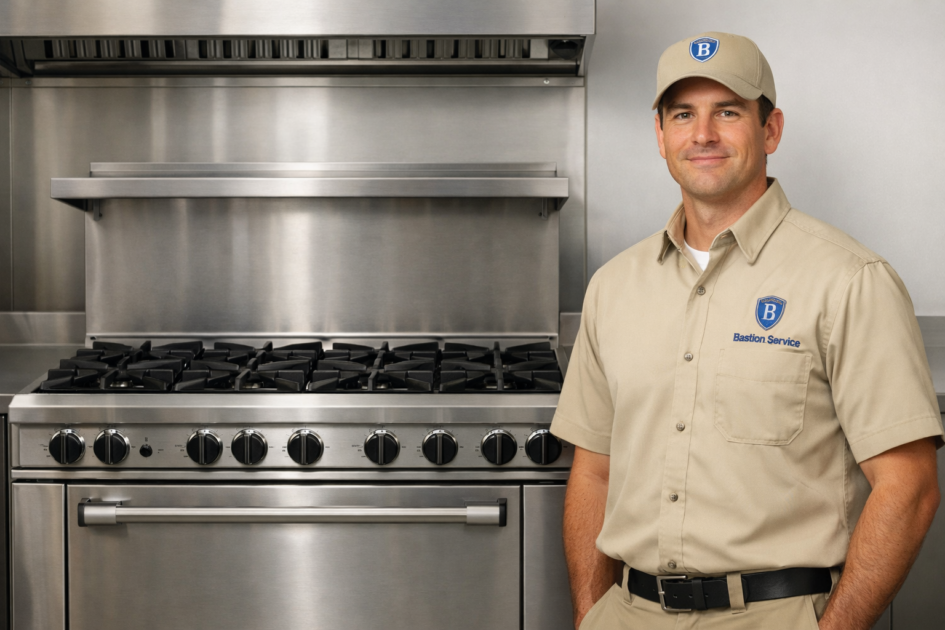
When a Vulcan range starts losing burner output, clicking without ignition, or struggling to keep oven temperature stable, the next step should be service based on the actual symptom pattern rather than guessing at parts. In Brentwood, range problems can slow ticket times, disrupt prep, and create safety concerns if the unit is not operating as intended. Bastion Service handles Vulcan range repair for businesses that need the issue identified, the operating condition checked, and repair scheduled around daily workflow as efficiently as possible.
Related commercial service paths in Brentwood include Vulcan Commercial Repair in Brentwood, Vulcan Oven Repair in Brentwood, and Vulcan Fryer Repair in Brentwood.
How symptom-based diagnosis helps with Vulcan range repairs
Range problems often look similar from the outside, but the cause can vary widely. A burner that will not light may involve an ignition fault, a blocked burner path, a gas flow issue, or a worn component. An oven that runs too hot, too cool, or erratically may point to sensor problems, control issues, burner performance faults, or heat distribution problems inside the unit.
That is why the most useful service visit is one that determines whether the problem is isolated to one function or whether the range is showing signs of broader wear. For businesses in Brentwood, that diagnosis helps answer practical questions quickly:
- Is the range safe to continue using?
- Is the problem likely to get worse during service hours?
- Will a targeted repair restore reliable operation?
- Are multiple symptoms connected to one underlying fault?
Common Vulcan range problems that affect daily operations
Burners not lighting or lighting inconsistently
If a top burner fails to ignite, lights only after repeated attempts, or clicks without establishing a steady flame, the issue should be checked before the range stays in regular use. Common causes can include ignition component failure, burner blockage, wear at the burner assembly, or gas delivery problems within the appliance.
Intermittent ignition is especially disruptive because staff may not know whether the burner will light normally from one use to the next. That creates delays during prep and service, and it can lead to uneven output when the burner does light but does not perform consistently.
Oven not heating properly
When the oven section of a Vulcan range is slow to preheat, fails to reach set temperature, or cycles unevenly, the range can become hard to trust for repeatable results. This kind of problem may involve temperature sensing, burner operation, controls, calibration issues, or other heat-management faults within the unit.
Businesses usually notice this problem through longer cook times, inconsistent finished product, or staff needing to adjust settings constantly to compensate. Once that pattern starts, service becomes less about convenience and more about protecting consistency during daily production.
Temperature swings during use
Ranges that overshoot, drop temperature unexpectedly, or recover too slowly between uses can create workflow problems even when the unit still technically runs. Temperature instability may be tied to a failing control, sensor drift, burner weakness, or related wear that affects how the appliance responds under load.
These issues are important to address early because intermittent temperature faults often become more obvious during busy periods, when stable heat matters most.
Weak, uneven, or abnormal flame
Flame quality is one of the clearest signs that a range is not operating correctly. A weak flame, uneven flame pattern, or unstable burner output can reduce heat transfer and lead to longer cook times. On a busy line, this often shows up first as slower production, inconsistent pan performance, or repeated adjustments by staff trying to get normal results from the equipment.
If flame behavior changes noticeably, the range should be evaluated before continued use creates a larger interruption or added stress on related parts.
Clicking, delayed ignition, or control-related faults
Persistent clicking, delayed burner lighting, or controls that do not respond normally can point to problems that affect both performance and safe operation. In some cases, the range may still function part of the time, which makes the issue easier to postpone. But that kind of inconsistency is exactly what turns into sudden no-heat or no-ignite situations during the workday.
If there is a strong gas odor or a suspected gas-related issue, stop using the range until the problem is properly addressed.
Why is my Vulcan range not lighting, heating, or holding temperature?
In most cases, those symptoms come from one of a few categories: ignition failure, burner performance problems, gas flow issues within the appliance, sensor or thermostat faults, control problems, or general component wear. The challenge is that the same visible symptom can have different causes. A burner that does not light may not have the same underlying fault as another burner with the same complaint, and an oven that will not hold temperature may be suffering from something very different than a unit that simply heats slowly.
That is why repair decisions should follow testing and inspection rather than assumptions. The goal is to identify the failed part or operating condition, determine whether the issue is isolated, and confirm what repair is most likely to restore stable day-to-day use.
When to schedule service instead of waiting
It is time to schedule repair when staff are compensating for the range instead of relying on it. That may mean rotating pans to avoid hot spots, retrying ignition repeatedly, changing cook times to match weak burner output, or avoiding one section of the unit because its performance is unpredictable.
Waiting can increase downtime risk when symptoms involve delayed ignition, repeated clicking, poor temperature control, or reduced flame quality. Problems that seem minor during a slow shift can become much more disruptive when the range is under regular production demand.
Early service is often the better decision when the issue is intermittent. Intermittent faults are easier to contain before they become complete failures that stop a station from functioning.
Repair or replacement: what makes sense for a Vulcan range?
Many Vulcan range problems are repairable once the fault is identified correctly. A targeted repair is often the right path when the issue is limited to a burner, ignition system, control component, sensor-related problem, or another defined failure that does not suggest broader decline across the unit.
Replacement becomes a more serious consideration when the range has multiple active problems, recurring service history, heavy wear across major systems, or reliability issues that continue even after recent repairs. For Brentwood businesses, the decision usually comes down to condition, repair scope, expected downtime, and whether the unit can return to dependable operation after service.
Preparing for a service visit
A few details can make diagnosis faster and more productive. Before the appointment, it helps to note which burners or oven functions are affected, whether the problem is constant or intermittent, and what staff have observed during normal use. Useful examples include clicking without ignition, weak flame on one side, slow oven preheat, overheating, or temperature drift during longer cooking cycles.
It is also helpful to know whether the issue appeared suddenly or developed gradually. Changes in performance over time can point to wear-related problems, while sudden failure may suggest a specific component fault.
Range service focused on business continuity in Brentwood
For businesses in Brentwood, range repair is not just about getting heat back. It is about restoring a piece of equipment that affects timing, output, and consistency across the workday. When a Vulcan range starts showing ignition trouble, burner faults, temperature swings, or control problems, service should move quickly from symptom review to diagnosis and repair planning so the business can make a sound next decision and reduce unnecessary downtime.


