
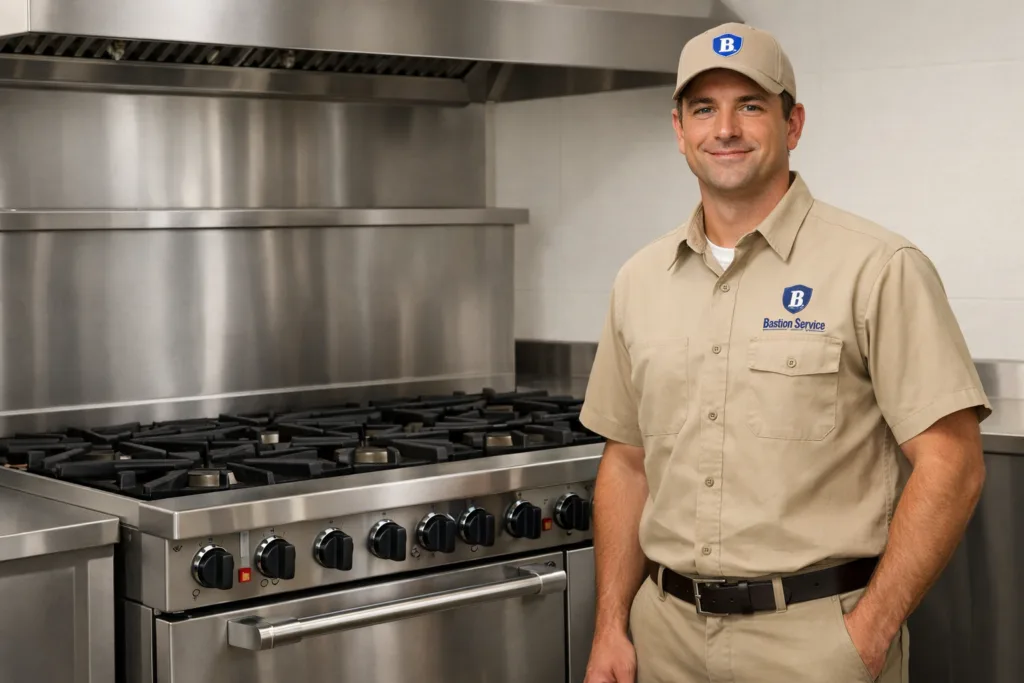




When a Vulcan fryer, oven, or range starts missing temperature, failing to ignite, or slowing production in Rancho Palos Verdes, the next step should be service-oriented, not guesswork. A repair visit can determine whether the issue is tied to burners, controls, sensors, thermostats, gas flow, ignition parts, or another fault that is affecting daily kitchen performance. For businesses trying to protect uptime, the value is not just identifying the symptom, but understanding how urgent the repair is and whether the unit should remain in use until service is completed.
For specific equipment paths in Rancho Palos Verdes, review Vulcan Oven Repair in Rancho Palos Verdes, Vulcan Range Repair in Rancho Palos Verdes, and Vulcan Fryer Repair in Rancho Palos Verdes.
Bastion Service works with businesses in Rancho Palos Verdes that need timely diagnosis, repair scheduling, and a realistic plan for equipment that is disrupting prep, cooking, or service flow. That is especially important when the same unit is central to production and even a partial loss of performance starts affecting timing, consistency, or staff workload.
What Vulcan cooking equipment problems usually need repair attention
Cooking equipment issues often begin with small signs that become larger operational problems. A fryer that takes longer to recover may slow output during busy periods. An oven that runs hot or cold can affect product consistency. A range with weak, uneven, or unreliable burners can interrupt prep and line work throughout the day.
In business kitchens, these symptoms matter because they affect more than the equipment itself. They can lead to longer ticket times, repeated recooks, wasted product, staff workarounds, and avoidable pressure on the rest of the kitchen. Repair decisions should be based on how the equipment is behaving under actual use, how often the fault appears, and whether continued operation may lead to a shutdown or a broader repair.
Common symptom groups and what they can indicate
Heating problems and temperature drift
If a Vulcan oven does not hold set temperature, a fryer struggles to reach proper frying temperature, or a range heats unevenly, the cause may involve thermostats, sensors, control issues, gas valves, burners, or ignition-related components. In some cases, the problem shows up first as inconsistent cook results rather than a complete failure.
These faults should be checked before staff begin compensating with manual adjustments or longer cook times. What looks like a small calibration issue may turn out to be a developing control or heating problem that affects output all day.
Ignition failure, delayed lighting, or intermittent flame
Ignition problems can appear as delayed burner lighting, repeated clicking, failure to light, or burners that light only some of the time. On Vulcan cooking equipment, that can point to igniters, flame sensing components, wiring issues, burner contamination, controls, or gas delivery restrictions.
Because ignition problems can affect both reliability and safe operation, they should not be treated as minor if they are becoming more frequent. A service visit helps determine whether the problem is isolated to one assembly or part of a larger fault pattern.
Slow recovery and reduced output during peak use
Slow recovery is one of the most disruptive complaints in a working kitchen because the unit may appear functional until demand increases. Fryers may drop temperature and take too long to recover between batches. Ovens may lag behind production needs. Ranges may produce heat, but not enough to support normal workflow.
When this happens, the problem may involve burner performance, controls, sensors, heat transfer, or other components that show their weakness only under load. Repair evaluation is useful here because it helps managers decide whether the unit can stay in rotation temporarily or should be pulled from active use.
Unexpected shutdowns and unstable control behavior
If a Vulcan unit cycles off without warning, loses normal control response, or behaves erratically from one shift to the next, the fault may be tied to limits, controls, sensors, ignition systems, or electrical components. Intermittent shutdowns are especially frustrating because they can be difficult to predict but still create major disruption during service hours.
Replacing parts based only on surface symptoms can extend downtime and increase cost. A proper diagnosis helps narrow down whether the failure is isolated, recurring, or affecting multiple systems at once.
How repair priorities differ by equipment type
Even when the symptom sounds similar, ovens, ranges, and fryers do not fail in the same way. The repair approach should match the equipment type, the operating pattern, and the effect on production.
Vulcan oven repair concerns
Oven issues usually involve heat consistency, temperature accuracy, cycling problems, or control response. Common complaints include food finishing unevenly, slower bake times, hot spots, or a unit that does not maintain the selected setting. If staff are rotating product more than usual or adjusting time and temperature constantly, the oven should be evaluated.
Vulcan range repair concerns
Range problems often show up as weak top burners, uneven flame, unreliable ignition, or heat output that changes during use. These issues can slow prep and force staff to shift workload across stations. When burner performance is no longer predictable, repair becomes a workflow issue as much as an equipment issue.
Vulcan fryer repair concerns
Fryer service typically centers on ignition reliability, temperature control, burner performance, heat recovery, and shutdown behavior. Because fryers are often used heavily and repeatedly throughout the day, even small performance losses can create delays, inconsistent results, and strain on surrounding kitchen operations.
Signs continued use may worsen the problem
Some equipment can remain in limited use until a scheduled repair window, but some symptom patterns suggest the fault is progressing and should be addressed quickly. These include:
- Repeated ignition failure or delayed ignition
- Noticeable temperature drift during normal cooking
- Burners that are weak, uneven, or inconsistent
- Controls that stop responding normally
- Units that shut down unexpectedly during operation
- Recovery time that no longer supports production demand
When staff are working around the equipment instead of relying on it, the problem is already affecting operations. In many cases, continued use under those conditions can lead to added component wear, broader failure, or a more disruptive outage later.
When repair versus replacement becomes part of the decision
Not every Vulcan issue points to replacement. Many problems come down to serviceable components that can be repaired once the actual fault is confirmed. Replacement becomes more relevant when the unit has repeated failures, multiple systems are deteriorating at once, or downtime costs have started to outweigh the value of further repair.
The benefit of diagnosis is that it separates a focused repair from a larger equipment decision. That helps Rancho Palos Verdes businesses avoid unnecessary part changes and make a practical call based on condition, reliability, and operational impact rather than frustration with the latest symptom.
Scheduling Vulcan cooking equipment repair in Rancho Palos Verdes
If a Vulcan oven, range, or fryer is affecting production, consistency, or normal kitchen flow, scheduling service early usually prevents a smaller issue from turning into a full interruption. For businesses in Rancho Palos Verdes, a repair visit can clarify what is failing, whether the unit should stay in use, and how to plan the repair around downtime, staffing, and kitchen demand. When equipment problems are starting to disrupt service, the most practical next step is to get the unit evaluated and move forward with repairs based on the actual fault pattern.


