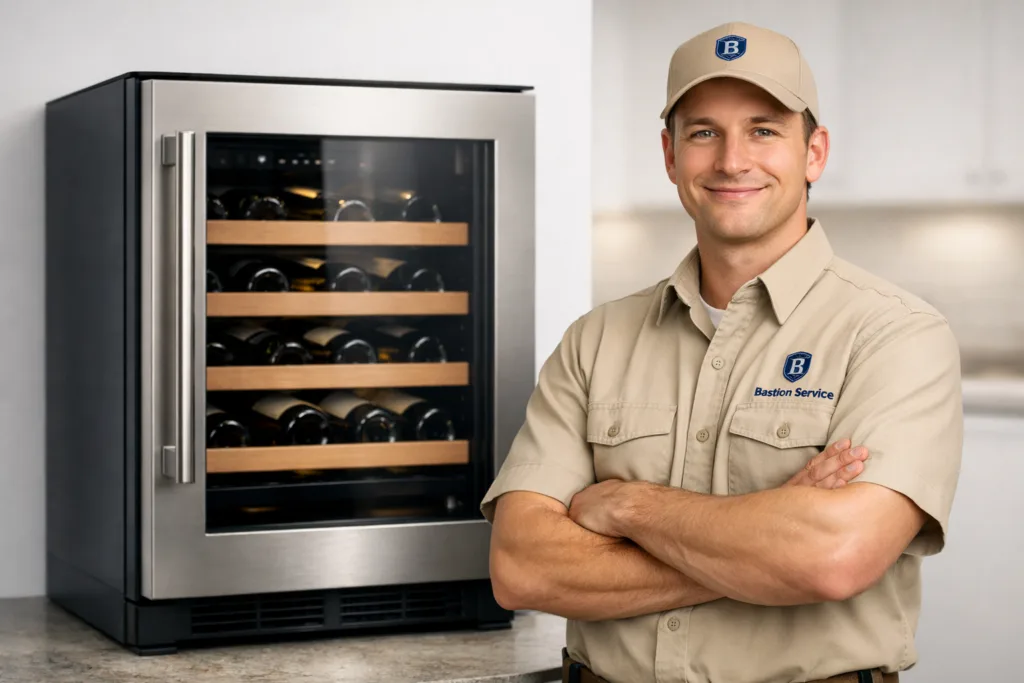
Temperature instability in a wine cooler usually starts as a small annoyance and then becomes easier to notice: bottles feel warmer than expected, the cabinet runs longer than usual, or moisture begins collecting where it did not before. With a U-Line unit, those symptoms can come from several different causes, so it helps to evaluate the pattern rather than assume one failed part is responsible.
Related U-Line and wine cooler service paths in Century City include U-Line Appliance Repair in Century City, Wine Cooler Repair in Century City, and U-Line Refrigerator Repair in Century City.
In many Century City homes, wine coolers are built into kitchens, bars, or entertainment areas where ventilation, door alignment, and surrounding cabinet conditions can affect performance. That makes symptom-based troubleshooting especially important when deciding whether the problem is minor, moderate, or a sign of broader refrigeration trouble.
Common U-Line wine cooler problems homeowners notice first
Not cooling enough
A wine cooler that is running but not holding set temperature may have an airflow problem, condenser-related heat exchange issue, fan failure, sensor error, control fault, or compressor-related weakness. If the cabinet is only slightly off target, it may still seem usable, but ongoing operation under that condition can put extra stress on the system and lead to larger temperature swings.
Signs this problem is becoming more serious include:
- Bottles no longer feeling consistently cool
- The display showing a normal temperature while the interior feels warm
- The unit running for long periods without recovering
- Cooling performance dropping after the door has been opened
Overcooling or freezing bottles
If a U-Line wine cooler starts getting too cold, the issue may involve a thermostat or sensor that is reading incorrectly, a control problem, or an airflow imbalance inside the cabinet. This is more than a convenience issue. Overcooling can affect flavor, serving quality, and in some cases the condition of the bottles themselves.
Freezing in one section of the cabinet while the rest stays closer to normal often points to uneven air movement or inaccurate temperature regulation rather than a simple setting mistake.
Water inside the cabinet or on the floor
Moisture problems can come from blocked drainage, excess condensation, a door that is not sealing well, or installation and leveling issues that change how water moves through the unit. In a built-in setup, this kind of problem may go unnoticed until nearby surfaces begin showing signs of damage.
Homeowners often call for service after seeing:
- Water pooling under shelves or at the bottom of the interior
- Condensation around the door opening
- Dampness under the appliance
- Recurring moisture after wiping the cabinet dry
Fan noise, buzzing, or unusual cycling
A wine cooler that suddenly sounds louder can be reacting to restricted airflow, a failing fan motor, vibration from mounting or leveling issues, or strain within the cooling system. Short cycling, constant running, or repeated start-stop behavior can also indicate that the unit is working harder than it should to maintain temperature.
Noise matters because it often shows up before complete cooling loss. A fan that is wearing out, for example, may first become intermittent or noisy before airflow drops enough to affect cabinet temperature.
Display, lighting, or control issues
If the display is blank, settings do not respond properly, or the temperature shown does not match actual cabinet conditions, the problem may involve controls, sensors, or electrical components. These symptoms may appear minor at first, but they can directly affect cooling behavior if the unit is no longer regulating temperature accurately.
What these symptoms often mean in real use
Wine coolers are designed for consistency. A refrigerator may tolerate more day-to-day variation, but a wine cooler that drifts, runs erratically, or develops condensation is no longer doing the job it was intended to do. Even when the unit still powers on, it may not be protecting the contents the way it should.
That is why repair decisions are usually based less on whether the cooler is technically running and more on whether it is maintaining a stable environment. If the cabinet cannot hold temperature reliably, if moisture keeps returning, or if the controls are no longer trustworthy, the issue has moved beyond routine inconvenience.
Why the same symptom can have different causes
One of the more confusing parts of wine cooler repair is that similar symptoms can come from very different failures. A warm cabinet does not automatically mean compressor failure. Condensation does not always mean a serious leak. Excess noise does not always mean a motor is about to seize. The useful next step is to evaluate how the appliance is cooling, cycling, draining, and responding to settings before making a repair decision.
That matters with built-in U-Line models because cabinet placement can influence airflow and heat dissipation. In Century City homes where the cooler is installed under counters or within custom millwork, service should consider both the appliance itself and the conditions around it.
When to schedule service instead of waiting
It is usually smart to schedule service when the wine cooler is still operating but clearly not performing normally. That is often the point when a repair is simpler and less likely to involve additional wear from continued strain.
Common reasons to book service include:
- The cabinet temperature will not stabilize
- The interior feels warmer than the display suggests
- The unit is much louder than before
- Water or condensation keeps appearing
- Frost forms where it should not
- The controls behave inconsistently or reset unexpectedly
Waiting can turn a manageable issue into a more expensive one, especially if the compressor is overworking or moisture is affecting nearby cabinetry and flooring.
When continued use can make the problem worse
Some wine cooler problems are not neutral if ignored. Running a unit that is short cycling, overheating, leaking, or freezing contents can add stress to the refrigeration system and increase the chance of a larger breakdown. It can also put the stored wine at risk from repeated temperature swings.
If the door is not sealing well, the cabinet is collecting visible condensation, or the cooler is no longer holding a reasonable storage temperature, reducing use until the issue is checked is often the safer choice. Repeatedly adjusting settings or powering the unit off and on may not help and can make the symptom pattern less clear.
Repair versus replacement for a U-Line wine cooler
Many U-Line wine cooler issues are repairable, especially when they involve fans, sensors, controls, gaskets, drainage, or isolated cooling-performance faults. Replacement becomes more likely when the appliance has major sealed-system trouble, repeated expensive failures, substantial age-related wear, or cabinet deterioration that affects reliability.
A sensible decision usually depends on:
- The exact failed component or system
- The overall condition of the appliance
- Whether repair is likely to restore stable temperature control
- Whether recent repairs suggest a recurring pattern
For most homeowners in Century City, the goal is straightforward: restore predictable wine storage without putting more money into a unit that is already moving toward repeated failure.
What a useful service visit should accomplish
A worthwhile appointment should do more than react to a single complaint. It should identify why the wine cooler is running warm, overcooling, making noise, leaking, or behaving unpredictably, then explain what that means for repair options. That gives the homeowner a practical repair plan instead of guesswork.
For a residential U-Line wine cooler, the best outcome is not just getting the unit to turn back on. It is restoring consistent operation, protecting the contents inside, and helping the homeowner understand whether the current issue is isolated or part of a larger reliability concern.