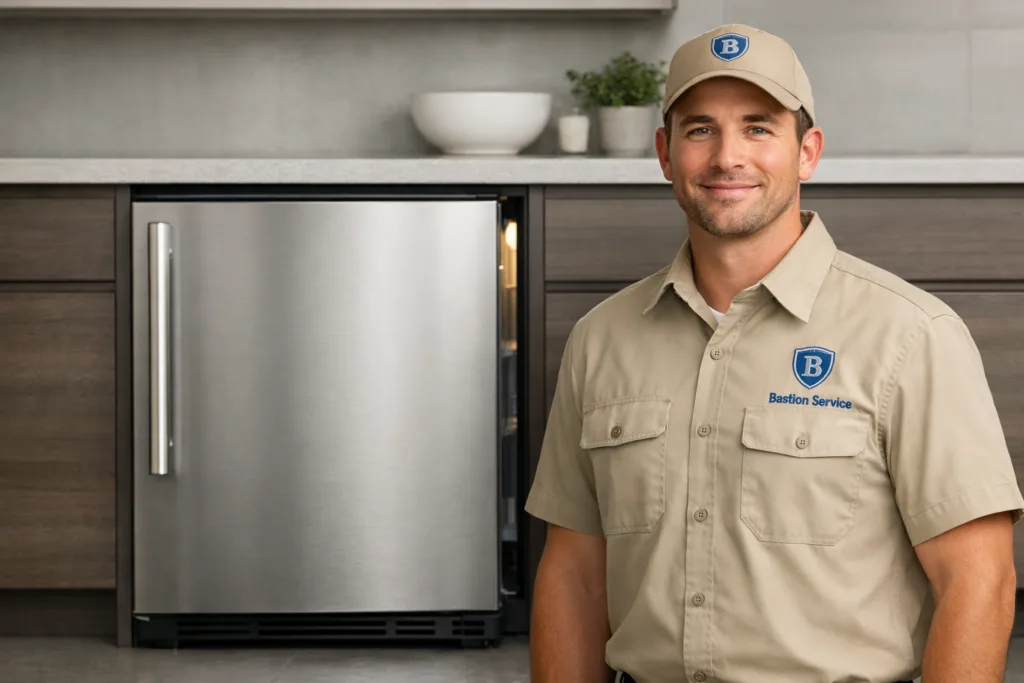
U-Line refrigerators are often installed where size, appearance, and steady performance all matter. When one starts running warm, leaking, or collecting frost, the symptom alone does not always reveal the failed part. A temperature problem can come from airflow restrictions, a weak fan, a control issue, poor door sealing, or a deeper cooling-system fault. Sorting that out early helps avoid unnecessary part replacement and reduces the risk of food loss.
How U-Line refrigerator problems usually show up
Most refrigerator failures begin with a pattern rather than a full shutdown. You may notice drinks are not as cold, produce spoils faster, the cabinet runs louder at night, or moisture starts showing up where it did not before. Those early signs matter because refrigeration problems tend to spread. A minor drain issue can turn into recurring leaks, and a small frost problem can eventually block airflow enough to affect the entire compartment.
In Hermosa Beach homes, built-in and undercounter refrigeration also has less margin for poor airflow around the unit. If heat is not dissipating properly, the refrigerator may run longer, struggle to recover temperature after the door opens, and place extra wear on key components.
Common symptom groups and what they can mean
Refrigerator not cooling enough
If the interior feels cool but not cold enough, start by noticing whether the issue is constant or intermittent. A unit that stays slightly warm may have restricted condenser airflow, dirty coils, or a door gasket that is no longer sealing tightly. A unit that swings between normal and warm often points more toward fan operation, sensors, controls, or frost interfering with airflow.
Other clues help narrow the cause:
- Items near vents freeze while the rest of the compartment feels warm
- The compressor seems to run for very long periods
- The cabinet cools better at night than during the day
- The temperature improves after a manual reset, then slips again
Those patterns often indicate that cooling is being produced but not distributed or regulated correctly.
Temperature swings and inconsistent performance
Temperature swings are frustrating because the refrigerator may appear to fix itself for a few hours or a day. In many cases, that behavior suggests a component that works intermittently rather than one that has failed completely. Fans can slow down or stop and restart. Sensors can send incorrect readings. Defrost-related issues can gradually build up and then temporarily clear enough for cooling to return.
If food life seems shorter than normal, or the refrigerator sounds like it is always trying to catch up, it is usually worth having the unit checked before the fluctuation becomes a complete no-cool condition.
Water leaks inside or under the unit
Water near the front of the refrigerator or under nearby cabinetry is often traced to drainage or condensation management. A partially blocked drain can allow water to back up and reappear elsewhere. A door that does not close evenly can let humid air in, creating excess moisture that later drips or pools. Leveling can also matter, especially if water is not moving to the drain area as intended.
Leak symptoms should not be dismissed as cosmetic. Repeated moisture can affect flooring, trim, and adjacent cabinet surfaces. If the leak appears along with frost or warm temperatures, the underlying problem may be more than a simple drain blockage.
Frost buildup and reduced airflow
Frost usually points to one of two issues: warm air is entering the cabinet, or the refrigerator is not defrosting as it should. In either case, the result is often the same. Ice accumulates where it should not, airflow becomes restricted, and temperatures begin to rise.
Watch for these warning signs:
- Frost collecting along interior panels or vents
- The door needing extra force to close fully
- A fan noise that changes as ice buildup grows
- Cooling that weakens after several days of otherwise normal use
Once airflow is blocked, the refrigerator may run longer while cooling less effectively, which can place more stress on the system.
Unusual noise or nonstop running
A change in sound matters more than the exact sound itself. A new rattle may be installation-related, but clicking, buzzing, fan scraping, or much longer run cycles can indicate developing trouble. Some U-Line refrigerators become noticeably louder when a fan blade is striking ice, when the compressor is struggling to start, or when the unit is compensating for heat gain caused by poor sealing or restricted airflow.
If the noise appears together with warm temperatures, frost, or leaks, it is usually part of the same failure pattern rather than a separate issue.
Interior light works but cooling does not
This is a common point of confusion because the refrigerator still appears to have power. In reality, lighting and cooling rely on different parts of the system. If the light is on but food is warming up, the issue may involve the control side, the evaporator fan, start components, or the sealed cooling system. In that situation, continued operation can be misleading because the unit looks alive while failing to maintain safe storage conditions.
What homeowners can check before scheduling repair
A few basic observations can make the next step easier and may help determine how urgent the problem is:
- Confirm whether the door closes flush and stays closed without popping back open
- Look for visible frost, standing water, or moisture around the gasket
- Listen for fan movement and note any repeated clicking or humming
- Check whether the unit feels unusually hot around ventilation areas
- Notice whether the problem affects all contents equally or only certain zones
These checks do not replace service, but they help distinguish between a likely airflow or sealing problem and a more serious cooling fault.
When to stop waiting and book service
It makes sense to schedule repair when the refrigerator no longer holds a stable temperature, leaks more than once, develops recurring frost, or runs so often that the change becomes obvious in daily use. Intermittent operation also deserves attention. Appliances rarely return to normal for long when a fan motor, sensor, defrost component, or control issue is starting to fail.
Prompt service is especially important when:
- Food spoils earlier than expected
- The cabinet feels warm despite long run times
- Water repeatedly appears on the floor
- Ice buildup keeps returning after being cleared
- The unit becomes much louder than its normal operating sound
When continued use may make the repair worse
Some refrigerator issues stay localized for a while, but others create secondary problems. A gasket that leaks air can lead to frost accumulation. Frost can block airflow. Blocked airflow can force longer compressor runtime. A drain issue can spread moisture to surrounding materials. What begins as one failed function can quickly affect several others.
If the refrigerator is not holding a safe temperature, limit door openings and move sensitive food elsewhere until the problem is addressed. That reduces additional heat gain and helps prevent spoilage while the unit is being evaluated.
Repair or replace?
The answer depends on what failed and how the refrigerator has been performing overall. Repairs are often reasonable when the issue is isolated to a fan, gasket, drain path, control-related part, or another targeted component. Replacement becomes a more serious consideration when there are multiple developing faults, repeated cooling complaints, or major sealed-system concerns that affect long-term reliability.
For many Hermosa Beach homeowners, the real question is not just cost today but whether the repair is likely to restore stable, everyday use. A proper assessment should consider the symptom history, the condition of the cabinet and seals, the age of the appliance, and whether the current failure appears isolated or part of a larger decline.
Why symptom-based diagnosis matters with refrigeration
Refrigerators do not always fail in a straightforward way. The same warm-cabinet complaint can result from very different causes, and those causes can require very different repairs. That is why the most useful service call is one that follows the symptom pattern closely instead of jumping straight to a parts guess.
With U-Line refrigerator repair in Hermosa Beach, the goal should be simple: identify why the unit is losing temperature control, explain the likely repair path, and help the household decide whether repair is the sensible next step.