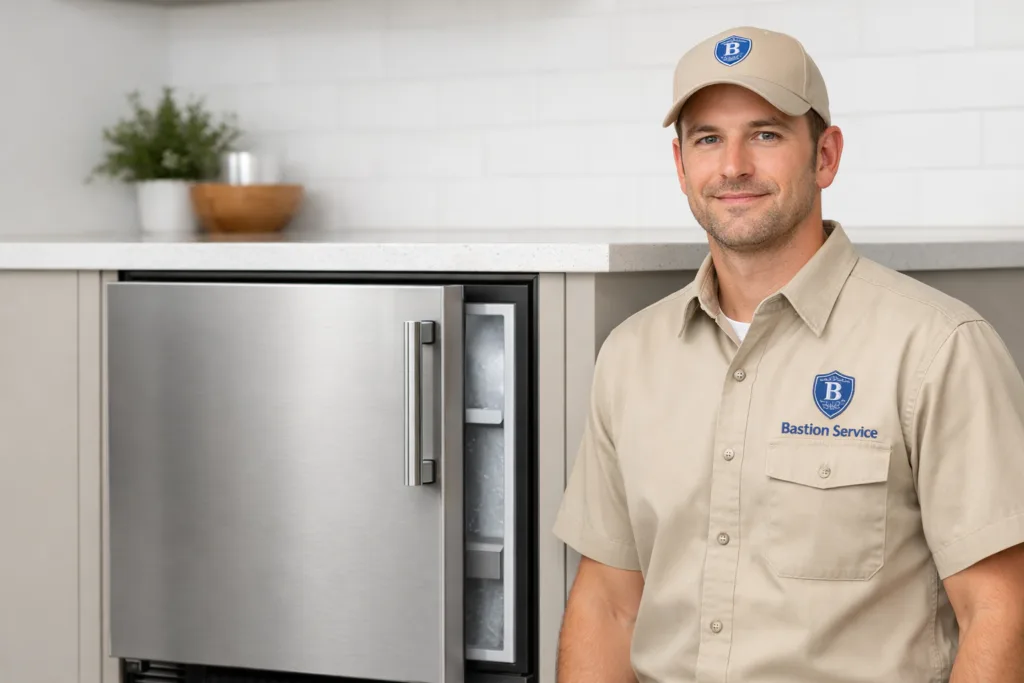
Food loss usually starts before a freezer fully stops working. Soft items near the door, frost creeping over the back panel, puddling under drawers, or a louder-than-normal hum can all signal that the cooling system is no longer operating the way it should. In Century City homes, catching those changes early often makes the difference between a targeted repair and a larger failure.
Related U-Line and freezer service paths in Century City include U-Line Appliance Repair in Century City, Freezer Repair in Century City, and U-Line Refrigerator Repair in Century City.
Common U-Line freezer symptoms and what they can mean
Freezer problems are easier to solve when the symptom pattern is matched to the system involved. A temperature complaint, for example, may come from airflow trouble, a defrost fault, a sealing issue at the door, a control problem, or a refrigeration fault. Looking at how the problem appears day to day helps narrow the cause.
Not freezing well or thawing intermittently
If frozen food feels soft, ice cream is no longer firm, or temperatures seem to swing, the unit may have restricted airflow, frost blocking the evaporator area, a weak fan motor, sensor or control trouble, or a compressor-related issue. Sometimes the freezer runs for long stretches without recovering temperature, which usually means the problem is more than a simple setting adjustment.
A useful clue is whether warming happens all the time or mainly after the door has been opened. Constant poor cooling points more toward a mechanical or refrigeration problem, while uneven temperature after normal use can suggest airflow restriction or a door that is not sealing consistently.
Frost buildup on shelves, drawers, or the back wall
Heavy frost usually means moisture is entering the compartment or the freezer is not defrosting as designed. A worn gasket, misaligned door, or damaged bin that keeps the door from closing fully can let warm air in. A failed defrost heater, sensor, or control can also allow ice to accumulate until airflow is blocked.
Frost is more than a cosmetic issue. As ice builds, cold air cannot circulate properly, and the freezer may begin to warm even while the compressor keeps running.
Running constantly or cycling in an unusual way
A U-Line freezer that rarely shuts off is often trying to compensate for a loss of efficiency somewhere in the system. Common reasons include air leaks at the door, dirty heat-dissipating surfaces, blocked airflow, or a deeper cooling issue. Short cycling, by contrast, can point to a control fault, sensor problem, or compressor start issue.
How the unit sounds during these cycles matters. Repeated clicking, brief starts, or a compressor that struggles to stay on can help identify whether the problem is electrical, airflow-related, or tied to the sealed system.
Water inside the cabinet or on the floor
Moisture around a freezer often comes from a blocked drain path, excess condensation, or melting frost collecting where it should not. If water keeps returning after cleanup, the cause should be addressed rather than treated as a one-time spill. Ongoing moisture can create more ice, damage nearby surfaces, and add to temperature instability.
Buzzing, humming, rattling, or fan noise
Some operating sound is expected, but a noticeable change usually means something has shifted. A fan blade striking ice, a worn evaporator fan motor, compressor start trouble, or cabinet vibration can all create new noise. When sound changes appear together with poor cooling or frost buildup, they become an important diagnostic clue.
Why symptom-based diagnosis matters
Two freezers can show the same complaint and still need very different repairs. “Not cold enough” might be caused by a door gasket that leaks warm air, a defrost failure that blocks circulation, or a sealed-system fault that changes the repair decision entirely. That is why testing matters before parts are replaced.
A thorough diagnosis looks at temperature behavior, frost pattern, fan operation, compressor performance, drain condition, and door sealing. That approach helps avoid guesswork and gives homeowners a clearer picture of whether the problem is isolated and repairable or serious enough to reconsider the appliance.
Signs the issue should not be ignored
Scheduling service sooner makes sense when the freezer cannot maintain a stable freezing temperature, frost returns shortly after being cleared, or the compressor seems to run almost nonstop. Those patterns often get worse with continued use.
- Food is thawing and refreezing
- Ice appears repeatedly on the back interior panel
- The door does not close tightly without being pushed
- Water keeps pooling inside or underneath the unit
- A new clicking, buzzing, or scraping sound has started
Waiting can turn a manageable airflow or defrost problem into a larger cooling failure, especially if the compressor is forced to run longer than normal.
Repair or replace: how homeowners usually decide
For many Century City households, the real question is whether the repair is worthwhile once the fault is confirmed. A repair is often sensible when the issue is tied to a fan motor, sensor, thermostat, defrost component, door gasket, drain problem, or another single serviceable part and the cabinet remains in good condition.
Replacement becomes more likely when diagnosis points to major sealed-system trouble, repeated breakdowns, severe internal wear, or a repair cost that no longer makes sense for the appliance. The condition of the unit as a whole matters just as much as the current symptom.
What to note before a service visit
A few observations from daily use can help narrow the problem faster. It helps to note whether the freezer is warm all the time or only at certain times of day, whether frost appears in one specific area, whether the door pops open slightly after closing, and whether unusual sound starts with the fan or with the compressor.
If possible, pay attention to these details before the appointment:
- Whether the temperature problem is constant or intermittent
- Where frost forms first
- Whether drawers or shelves interfere with door closure
- If moisture appears after defrosting or after normal use
- What type of noise is present and when it begins
If food is already softening, protecting the contents should come first. After that, a service evaluation can determine whether the issue is a straightforward repair, a larger refrigeration problem, or a point where replacement is the better path.
Focused help for U-Line freezer problems in Century City
Because the same symptom can come from several different faults, U-Line freezer repair in Century City is most effective when the problem is evaluated by pattern rather than assumption. Temperature loss, frost, leaks, and fan noise each tell part of the story. Once those clues are tested against actual freezer performance, the next step is much easier to choose with confidence.