
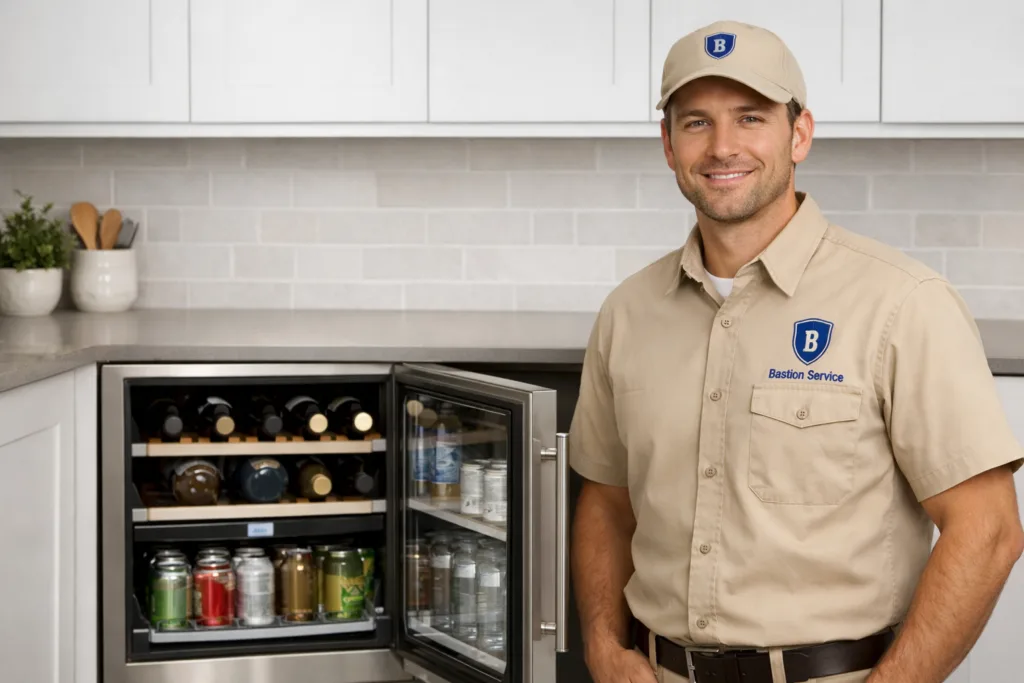





U-Line appliances are often installed where temperature control matters every day, whether that means protecting groceries, keeping frozen items solid, maintaining steady ice production, or storing wine at a consistent range. When one of these units starts acting differently, the symptom itself is only the starting point. Warm temperatures, moisture, frost, cycling changes, and new noises can each point to several different faults, so the most useful next step is to match the repair plan to the way the problem is actually showing up.
Start with the symptom, not the assumption
A built-in appliance can seem to have one obvious problem while the real cause sits elsewhere. A refrigerator that feels warm may have an airflow issue rather than a major cooling failure. An ice maker that stops producing may be dealing with water flow, sensor behavior, or a temperature condition inside the unit. A wine cooler that drifts a few degrees may have a door-seal issue, a fan problem, or a control-related fault rather than a complete loss of cooling.
For homeowners in West Hollywood, that difference matters. Guessing often leads to unnecessary part replacement, while careful diagnosis usually narrows the issue faster and gives a better sense of whether repair is straightforward or whether the appliance is showing signs of broader wear.
Refrigerator problems that usually need attention
Cabinet feels warm or temperatures fluctuate
If a U-Line refrigerator is not holding temperature, common causes include restricted airflow, dirty condenser areas, fan trouble, thermostat or sensor faults, door gasket leakage, or compressor-related issues. Temperature instability often starts subtly. Drinks may not feel as cold as usual, items near the back may cool differently than items near the door, or the unit may recover slowly after opening.
That kind of inconsistency is worth addressing early. Continued operation while the refrigerator struggles can lead to food spoilage and can place extra strain on the cooling system.
Water inside the compartment or on the floor
Pooling water can come from a blocked drain path, excess condensation, an installation angle issue, or a door that is allowing humid air to enter. Even when the amount seems small, repeated moisture should not be ignored. Water can affect nearby cabinetry or flooring and may also point to an underlying temperature or sealing problem.
Runs too long or sounds different than before
A refrigerator that rarely seems to stop running may be compensating for warm air intrusion, dirty heat-exchange surfaces, fan wear, or declining cooling efficiency. Noise changes can also be important. Buzzing, clicking, rattling, or a stronger hum than usual can be an early warning sign, especially if it appears before obvious cooling loss.
Freezer symptoms that can signal more than frost
Frost buildup on walls, shelves, or stored items
Heavy frost often points to warm air entering the compartment, a door that is not sealing tightly, or a defrost-related issue. In everyday use, that may show up as ice crystals on food packages, visible frost at the edges of the compartment, or drawers that become harder to open and close smoothly.
Frost is not just a cosmetic issue. It can reduce airflow, make the freezer work harder, and interfere with stable temperatures over time.
Frozen food softening or partial thawing
If items are no longer staying fully frozen, the cause may involve fan failure, blocked airflow, a sensor or control problem, or a more serious cooling-system concern. This is one of the clearest signs that continued use without service can lead to food loss. A freezer does not have to go completely warm to have a repairable fault that needs prompt attention.
Odd cycling, clicking, or louder operation
Many freezer problems begin with behavior changes rather than total failure. Louder cycling, repeated clicking, or vibration that was not there before may reflect a worn fan, a start-related component issue, or another mechanical problem developing under load.
Ice maker issues that homeowners notice first
No ice production
When the bin stays empty, the problem may be tied to water supply, fill components, freezing conditions, sensors, or the harvest cycle. Some units stop producing gradually, while others seem to quit at once. A useful clue is whether the appliance is otherwise cooling normally. If it is, the issue may be more isolated. If not, the ice problem may be part of a broader temperature fault.
Small, hollow, or misshapen cubes
Ice quality often says a lot about what is happening inside the machine. Poor cube formation can suggest inadequate water fill, scale buildup, unstable temperatures, or trouble with the freeze-and-release process. If the shape of the ice changes at the same time output drops, inspection usually makes more sense than repeated setting adjustments.
Leaking or overflowing
Water around an ice maker should be addressed quickly. Overflow, loose connections, drain issues, or internal blockages can all lead to repeated leaking. Besides the appliance itself, nearby finishes can be affected if the issue continues.
Wine cooler performance problems to watch closely
Temperature drifting from the set range
Wine storage depends on consistency more than extremes. If a U-Line wine cooler starts running too warm, too cold, or unevenly, likely causes include control faults, sensor issues, fan problems, blocked airflow, door gasket wear, or cooling-system trouble. Even a modest drift matters when it keeps returning instead of correcting normally.
Condensation on the glass or inside the cabinet
Moisture can build up when humid air enters through a poor seal, when the door is opened frequently, or when the cooling pattern is off balance. In a living space, this is often one of the first visible signs that the unit is no longer operating as evenly as it should.
Fan noise, vibration, or rattling
Wine coolers are usually expected to operate quietly. If the sound profile changes, it may indicate fan wear, mounting issues, or a component under stress. Persistent vibration is worth checking before it develops into a larger cooling complaint.
Signs the problem is getting worse
Some appliance issues stay minor for a while, but others tend to progress. It is usually time to schedule service when symptoms become repeatable rather than occasional, or when multiple symptoms begin appearing together.
- Temperatures no longer stay stable from day to day
- Frost or condensation keeps returning after being cleared
- The unit runs almost constantly or shuts off unpredictably
- Water appears more than once inside or around the appliance
- Ice output drops, stops, or becomes inconsistent
- New noise continues through several cycles
When those patterns show up together, the issue is less likely to resolve on its own and more likely to increase wear or energy use.
What you can note before booking service
A few observations can make troubleshooting much more direct. It helps to note whether the appliance is fully down or only inconsistent, whether the problem is constant or intermittent, whether there is visible frost or leaking, and whether the change happened suddenly or developed over time. If there is noise, it is useful to notice whether it happens during startup, during long run cycles, or near shutdown.
For built-in U-Line units, avoid forcing doors closed, chipping away ice with sharp tools, or repeatedly changing settings in search of a quick fix. Those steps can mask the original fault or create additional damage that complicates the repair.
Repair or replacement depends on the actual failure
Many U-Line problems are repairable when the fault is limited to a fan motor, gasket, drain issue, valve, switch, sensor, or control component. In other situations, diagnosis may point to larger cooling-system trouble or to a unit with several overlapping problems that have developed over time. That is usually when replacement becomes part of the discussion.
The key is not to assume that a warm refrigerator, inconsistent freezer, silent ice maker, or drifting wine cooler automatically means the appliance is at the end of its life. In many West Hollywood homes, a symptom that seems major at first turns out to be a more focused repair once the cause is identified correctly.
Why built-in appliance problems feel urgent at home
U-Line appliances are commonly integrated into kitchens, entertainment areas, and other lived-in spaces where a single failure quickly affects daily routines. A refrigerator problem can interrupt meal planning. A freezer issue can put stored food at risk. An ice maker failure becomes noticeable during normal household use, and a wine cooler problem can undermine storage conditions even before the unit stops cooling altogether.
That is why a clear diagnosis and practical repair guidance matter most. When the symptom pattern is understood early, homeowners can make a more informed decision about timing, repair value, and whether the issue is isolated or part of a bigger appliance decline.


