
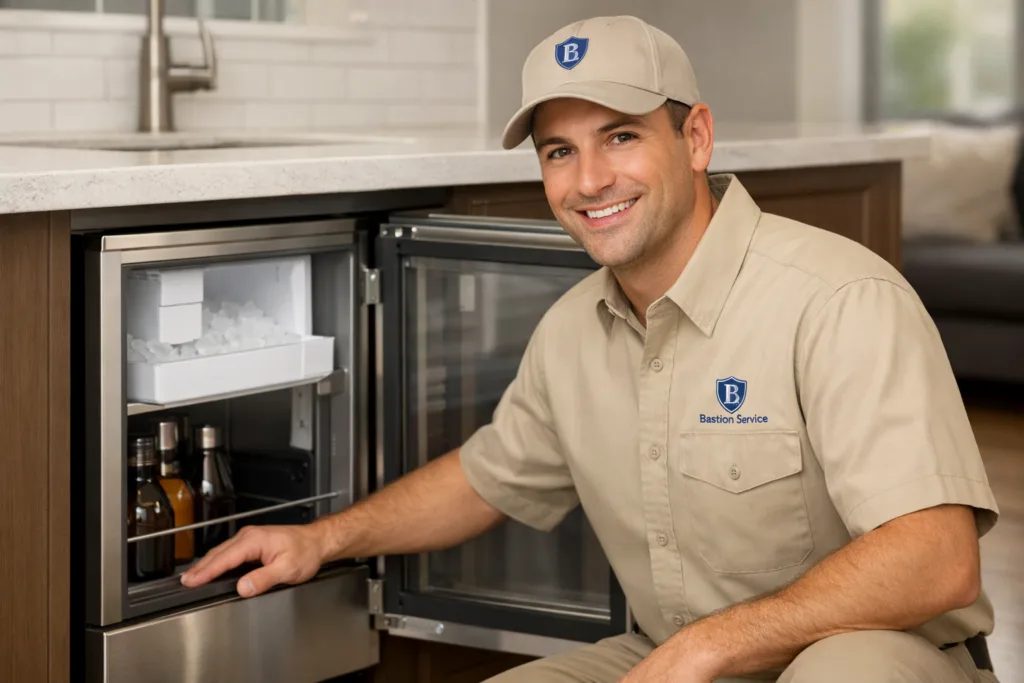




Small changes in a U-Line appliance often show up before a full breakdown. A refrigerator may run longer, a freezer may collect frost along the door edge, an ice maker may slow down, or a wine cooler may drift a few degrees warmer than usual. Those early patterns matter because they help narrow the cause before food storage, flooring, or surrounding cabinetry are affected.
Start with the symptom pattern
U-Line units are designed around steady cooling performance, so even minor inconsistency is worth paying attention to. The same outward symptom can come from very different causes. A warm compartment might point to restricted airflow, a fan problem, a weak door seal, a control issue, or a more serious cooling-system fault. Water under the appliance could be a drain issue, excess condensation, or a problem tied to how the unit is cycling.
For homeowners in Venice, the most useful approach is to look at what the appliance is doing over time instead of guessing from a single moment. Ask whether the problem is constant or intermittent, whether it gets worse after the door has been opened, whether unusual sounds happen during startup or all day, and whether temperature swings are affecting food, ice production, or wine storage. That symptom-based view usually gives a better repair direction than replacing parts based on assumption.
Refrigerator problems that deserve attention
When a U-Line refrigerator stops cooling properly, the issue is not always a complete loss of power or a major component failure. Many refrigerator complaints begin with food not staying as cold as expected, moisture collecting inside, louder running sounds, or water appearing below the unit. In some cases, the refrigerator still seems active, but it never reaches a stable temperature.
Common causes can include blocked airflow, dirty condenser areas, fan motor trouble, sensor or thermostat problems, gasket wear, or drainage problems. If the unit is running almost constantly without getting cold enough, that is a sign to act sooner rather than later. Continued operation in that condition can increase wear on the cooling system while still failing to protect food.
Signs a refrigerator problem is becoming more serious
- Food temperatures vary noticeably from one day to the next
- Condensation appears on shelves or walls inside the compartment
- The motor seems to run almost nonstop
- Clicking, buzzing, or fan noise is louder than normal
- Water is collecting inside the cabinet or under the appliance
Freezer issues that often point to airflow or defrost trouble
A U-Line freezer can appear cold while still having a real performance problem. Homeowners sometimes notice frost building up on interior surfaces, frozen foods softening slightly, or uneven freezing from shelf to shelf. These symptoms often suggest trouble with airflow, defrost components, sensors, door sealing, or controls rather than a simple one-time fluctuation.
Heavy frost is especially important to watch. If frost quickly returns after being cleared, the freezer usually needs more than a reset. Likewise, food that partially thaws and refreezes may indicate the unit is cycling outside its intended temperature range. That can lead to food quality concerns and may place extra strain on the appliance if ignored.
Freezer warning signs to watch
- Frost repeatedly forms on walls, shelves, or around the door
- Packages feel softer than they should
- The door does not seem to seal evenly
- The unit clicks, hums, or buzzes more often than before
- Some sections freeze well while others do not
Ice maker problems are not always just an ice maker failure
U-Line ice maker issues often show up as low production, small or hollow cubes, clumping, leaking, or no ice at all. It is easy to assume the ice-making assembly itself has failed, but water supply problems, inlet valve issues, temperature instability, or faults in the harvest cycle can all create similar symptoms.
If the machine makes a few irregular batches and then stops, the underlying problem may be inconsistent fill, an internal sensing issue, or cooling conditions that are no longer correct for normal ice production. If water is dripping into the bin or spilling around the unit, it is best not to let the problem continue. Repeated leaking can create sheet ice, overflow, or damage around the appliance.
Typical ice maker symptoms that usually merit service
- No ice production for an extended period
- Very slow output despite normal settings
- Misshapen, hollow, or unusually small cubes
- Water leaking into the bin or onto nearby surfaces
- Grinding or mechanical noises during the ice cycle
Wine cooler performance problems are often subtle at first
Wine coolers rarely fail in a dramatic way at the beginning. More often, the temperature slowly drifts, the unit vibrates more than usual, interior humidity changes, or the controls no longer seem to match actual storage conditions. Because wine storage depends on consistency, a unit that is only slightly off can still be a problem over time.
Likely causes include sensor issues, fan problems, restricted airflow, worn gaskets, control board faults, or cooling-system trouble. If bottles no longer feel consistently cool, the unit seems damp inside, or it cycles erratically, those symptoms are worth evaluating before the problem becomes a complete loss of cooling.
What to check before scheduling repair
There are a few basic checks that can help rule out simple causes. Confirm the appliance has power, verify the settings have not changed, make sure the door closes fully, and look for obvious blockage around vents or interior airflow paths. If the appliance has visible debris on accessible cooling surfaces or around the door seal, gentle cleaning may also help.
However, if the same symptom keeps returning after those checks, the problem usually goes beyond routine upkeep. Recurring temperature swings, repeat frost, unexplained water, or persistent noise are stronger indicators that the unit needs repair attention rather than another reset.
When continued use can make the problem worse
Some U-Line issues are inconvenient but manageable for a short time. Others become more expensive if the appliance is left running in a failing state. A refrigerator or wine cooler that struggles to hold temperature may overwork its compressor. A freezer with ongoing frost can lose efficiency and storage reliability. An ice maker leak can spread moisture to surrounding surfaces.
It is wise to be cautious if any of the following are happening:
- The appliance runs but does not maintain the correct temperature
- Leaks are reaching flooring or cabinetry
- Frost returns quickly after clearing
- The unit is short cycling or running constantly
- Controls respond inconsistently or show unexplained errors
Repair versus replacement depends on the type of failure
Not every U-Line problem points to replacement. Many issues involving fans, valves, sensors, door gaskets, drains, or control components can be reasonable to repair when the appliance is otherwise in good condition. On the other hand, a unit with repeated cooling problems, multiple failing systems, or indications of major sealed-system trouble may be harder to justify repairing.
The useful question is not just whether the appliance still turns on, but what kind of fault is actually present. A targeted component problem is very different from a broader cooling-system issue. That distinction matters when deciding whether repair is likely to restore dependable performance or whether replacement should be considered instead.
What homeowners in Venice should keep in mind
U-Line appliances often give warning signs before they stop working completely. If your refrigerator, freezer, ice maker, or wine cooler is showing temperature inconsistency, leaks, unusual noise, frost buildup, or control problems, it helps to address the pattern early. A practical repair guidance process starts by matching the symptom to the likely system involved, which makes it easier to decide how urgent the problem is and whether repair makes sense for the unit you have.


