




Temperature drift, slow ice production, interior moisture, and new noises often look like separate problems, but they frequently trace back to a small number of systems: airflow, controls, water supply, drainage, or cooling performance. With U-Line appliances, the most useful starting point is to match the symptom pattern to how the unit is actually behaving over time rather than guessing from one visible sign.
For specific U-Line appliance paths in Beverly Hills, review U-Line Refrigerator Repair in Beverly Hills, U-Line Freezer Repair in Beverly Hills, and U-Line Ice Maker Repair in Beverly Hills.
How U-Line problems usually show up in real homes
In Beverly Hills households, these appliances are often expected to stay ready without much attention. A refrigerator may quietly run longer each day before anyone notices food is not staying as cold. A freezer may begin with light frost around the door and later develop heavier buildup that affects storage space and airflow. An ice maker may still produce ice, just not enough to keep up. A wine cooler may appear to work normally until bottles feel warmer than the display suggests.
Those changes matter because early symptoms are often the easiest stage to evaluate. When performance shifts gradually, homeowners sometimes try repeated resets, temperature adjustments, or extra cleaning. That can be reasonable for simple maintenance issues, but if the same symptom returns, the next step should focus on identifying the failed part or system rather than repeating temporary workarounds.
Symptom patterns that often point to the real issue
Runs warm or cannot hold temperature
If a U-Line refrigerator, freezer, or wine cooler is running but not maintaining the expected temperature, several causes are possible. Dirty condenser areas can reduce heat release. Weak door gaskets can allow warm air to enter. A fan problem can prevent even air circulation. Sensors or controls may send incorrect signals. In some cases, the issue is more serious and involves the sealed cooling system.
What matters is the pattern. A unit that cools well at night but struggles during normal use may have an airflow or door-seal problem. A unit that never recovers, even after being left closed, may be dealing with a component failure that needs testing. A cabinet that feels only slightly off can still be important if food quality or beverage storage has become unreliable.
Frost, condensation, or unexplained water
Moisture symptoms should not be dismissed as cosmetic. Frost inside a freezer can reduce airflow and eventually interfere with normal operation. Condensation on shelves, liners, or around the door often suggests warm air intrusion or an uneven temperature cycle. Water under or inside the appliance may point to a blocked drain, an ice maker-related issue, or a leak tied to supply components.
One helpful distinction is where the moisture appears. Frost concentrated near the door may suggest sealing issues. Water collecting at the bottom of a compartment can indicate drainage trouble. Broad, repeated condensation may reflect a cooling or control issue that is letting temperatures swing too far.
Ice maker slows down, stops, or leaks
Ice makers are especially symptom-driven. Small cubes, hollow cubes, slow batches, clumping, or a full stop can come from different causes even when the problem looks similar from the outside. Water supply restrictions, fill valve trouble, temperature issues, scale buildup, and harvest-cycle faults can all affect production.
Leaks deserve prompt attention. Even a minor drip can damage surrounding finishes if it continues. If the machine still makes some ice but leaves wet residue, forms irregular cubes, or starts missing cycles, that usually indicates a fault worth addressing before it turns into complete failure.
New clicking, buzzing, humming, or rattling
Not every sound means something is wrong, but a noticeable change in sound pattern often means a component is working harder or cycling abnormally. Fans can become noisy before they fail. Ice maker mechanisms can click or stall. Compressors can sound louder when the system is struggling to reach temperature. Loose mounting or vibration can also create rattling that seems minor but points to stress or wear.
If the noise appears along with poor cooling, frost, or water, it is usually part of the same diagnosis rather than a separate issue.
Appliance-specific considerations
Refrigerators
With a U-Line refrigerator, the priority is steady food-safe cooling. Common complaints include a warm fresh-food compartment, uneven shelf temperatures, excess runtime, moisture near produce drawers, or a door that no longer seals tightly. If items spoil faster than expected or the interior feels inconsistent from top to bottom, airflow and control checks become important.
A refrigerator that is only slightly warm can still be a meaningful problem. Gradual losses in performance often continue until the unit can no longer recover at all.
Freezers
Freezer problems often show up as soft frozen food, packed frost, or long run times. Because heavy frost can imitate other failures, it is important not to assume the compressor is always at fault. Defrost components, fans, sensors, and door sealing can all affect freezer performance.
If drawers become hard to open because of ice buildup, or if frozen items begin to soften and refreeze, the appliance is no longer operating normally and should be evaluated before food loss becomes more likely.
Ice makers
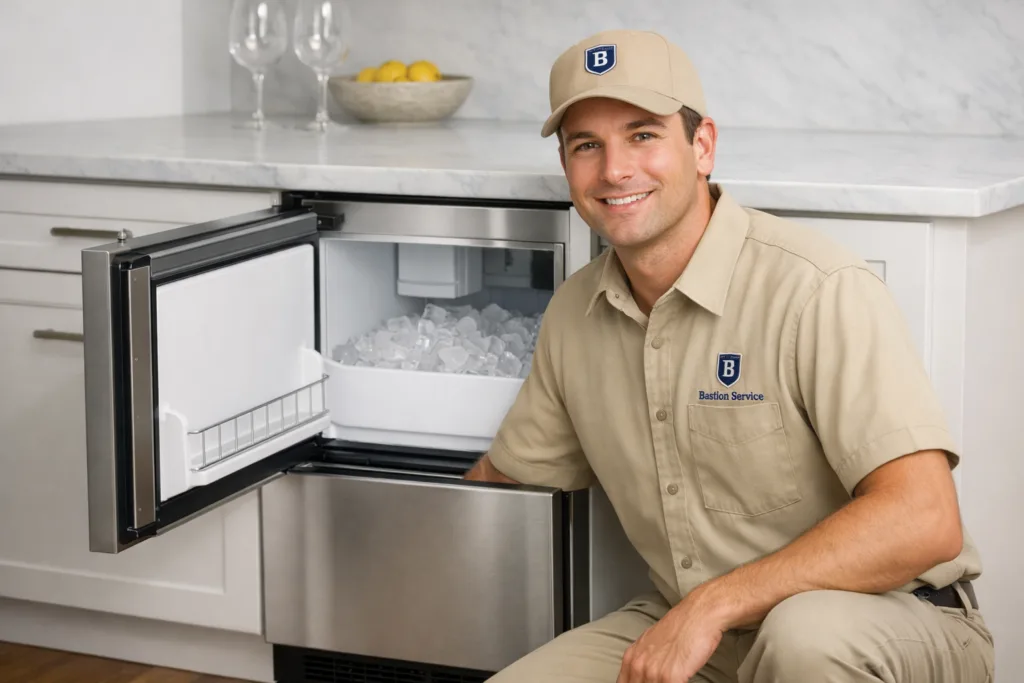
U-Line ice makers depend on both water delivery and correct cabinet conditions. A machine that fills but does not harvest, makes cloudy or undersized cubes, or shuts down intermittently may need more than cleaning. If the same production problem returns after basic maintenance, a proper diagnosis is usually the fastest way to stop the cycle of partial fixes.
Wine coolers
Wine coolers tend to reveal problems more subtly than food appliances. Instead of obvious spoilage, the signs may be temperature drift, condensation on the glass, short cycling, or a display reading that does not match actual cabinet conditions. Because wine storage depends on consistency, even moderate fluctuation matters when it continues over time.
In Beverly Hills homes where a wine cooler is part of regular household use, stable operation is the goal. A cooler that becomes noisy, damp inside, or inconsistent should be checked before a small control or airflow issue grows into a larger repair.
When waiting usually makes the problem worse
Some symptoms justify faster scheduling because continued use can add strain or cause secondary damage. Examples include:
- Food or beverages no longer staying at a dependable temperature
- Water leaking onto flooring, cabinetry, or surrounding surfaces
- Frost buildup that keeps returning after manual clearing
- An ice maker that cycles irregularly or overfills
- A compressor or fan that sounds noticeably louder than before
- A unit that runs constantly or starts and stops too often
Even when the appliance still partly works, ongoing operation under those conditions can increase wear. What begins as a gasket, fan, drain, or control issue can eventually place more stress on the entire system.
Repair or replacement depends on the failure, not just the symptom
Homeowners often try to make the repair-versus-replacement decision before the unit has been properly checked. In practice, that decision usually depends on what testing reveals. Many U-Line issues are repairable when they involve a specific component such as a fan motor, valve, gasket, sensor, drain-related part, or control fault. Replacement becomes more likely when the appliance has a major sealed-system issue, repeated breakdown history, or repair costs that no longer make sense for the age and condition of the unit.
That is why symptom review alone is not always enough. Two appliances with the same warming complaint can lead to very different outcomes once the underlying cause is identified.
What homeowners can note before scheduling service
A few simple observations can make diagnosis easier and help the visit stay focused:
- Whether the problem started suddenly or developed gradually
- If the display temperature matches actual cabinet performance
- Whether the unit is running constantly or cycling differently than usual
- Where frost, water, or condensation appears
- What kind of sound changed and when it happens
- Whether resets or cleaning helped only briefly or not at all
These details can help separate a door-seal or maintenance issue from a control, airflow, water, or cooling-system problem.
What a useful repair visit should answer
For U-Line appliance repair in Beverly Hills, the visit should do more than confirm that something is wrong. It should identify which system is failing, explain why the symptom is happening, and clarify whether continued use is safe in the short term. It should also help you understand whether the issue appears isolated or part of broader wear across the appliance.
That kind of guidance is especially helpful with refrigerators, freezers, ice makers, and wine coolers because the daily impact is different for each one. The right outcome is not just a part recommendation, but a realistic next step based on how the appliance is performing now and what is most likely to happen if the issue is left alone.



