





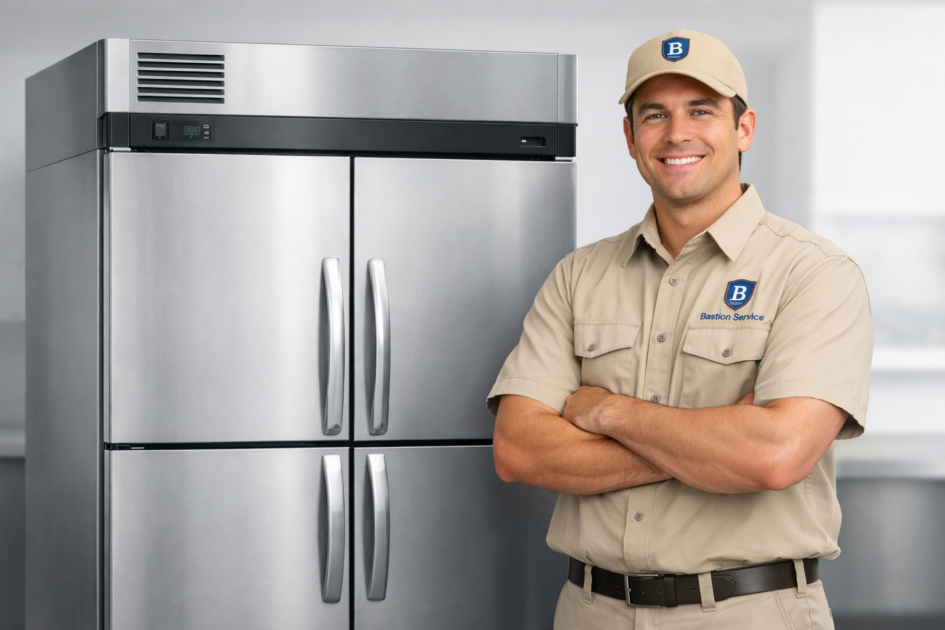
Equipment downtime can escalate quickly when a Turbo Air refrigerator starts running warm, icing over, leaking, or cycling erratically. For businesses in Venice, the most useful next step is service that identifies the actual fault, explains how it affects temperature stability and recovery, and helps determine whether the unit should stay in limited use, be unloaded, or be scheduled for prompt repair. Bastion Service works with symptom-driven Turbo Air refrigerator issues so operators can make repair decisions based on operating risk instead of guesswork.
Related commercial service paths in Venice include Turbo Air Commercial Repair in Venice, Commercial Refrigerator Repair in Venice, and Turbo Air Freezer Repair in Venice.
How Turbo Air refrigerator problems usually show up in daily operations
Refrigeration faults often appear first as workflow problems before they are recognized as equipment failures. Staff may notice slower pull-down after loading, product temperatures drifting during busy periods, excess condensation around the door, louder fan noise, or frost that keeps returning after manual clearing. In kitchens, food-service businesses, hotels, and other workplaces that rely on steady cold storage, these warning signs usually mean the refrigerator is no longer operating normally even if it still seems to be running.
Turbo Air units can develop similar visible symptoms for very different reasons. A warm cabinet might be caused by poor condenser heat exchange, an evaporator airflow restriction, a failing fan motor, a sensor or control issue, door sealing loss, or a larger sealed-system problem. That is why symptom pattern matters. Good repair planning starts with how the refrigerator behaves over time, not just whether it is on or off when someone looks at it.
Why a Turbo Air refrigerator may not be holding temperature
Temperature complaints are one of the most common reasons service gets scheduled. If the cabinet cannot hold target range, the cause may involve one failed component or several smaller issues working together. A refrigerator that looks only slightly off during a quick check can still be recovering too slowly for normal business use.
Airflow restrictions inside the cabinet
Blocked evaporator airflow can prevent even cooling from front to back or top to bottom. Frost buildup, overloaded shelves, damaged fan blades, or weak evaporator fans can all reduce circulation. When airflow drops, the refrigerator may run longer, develop cold and warm zones, and struggle after door openings.
Condenser-related heat buildup
If the condenser is dirty or the condenser fan is not moving air properly, the system may run hot and lose cooling efficiency. This often shows up as long run times, poor temperature recovery, and hotter-than-normal cabinet conditions during heavier use. Left alone, high heat stress can lead to broader component wear.
Control or sensor problems
A faulty sensor, thermostat issue, or control board problem can cause inaccurate temperature regulation. The refrigerator may overcool, undercool, or cycle at the wrong times. In some cases, staff respond by repeatedly changing settings, but that does not correct the underlying control failure.
Door gasket and door-closing issues
Air leaks around the door allow warm, moist air to enter the cabinet. That can create temperature swings, condensation, and frost formation at the same time. A worn gasket, sagging door, or poor door alignment may seem minor, but it can affect holding performance all day long.
Frost buildup, ice, and blocked airflow
Repeated frost is more than a cosmetic issue. When ice builds on the evaporator section or around the air path, the refrigerator can lose circulation and start running warm even though cooling components are still active. Operators may see a cabinet that alternates between acceptable temperatures and sudden performance drop-offs.
Common causes include defrost failure, moisture intrusion through bad gaskets, fans not moving enough air, or conditions that keep the evaporator area too cold for too long. If the unit is manually defrosted and the frost returns quickly, that usually indicates the root problem was never corrected. Continuing to load the refrigerator under those conditions can lead to product risk and heavier strain on motors and controls.
Leaks, condensation, and water where it should not be
Water pooling inside or under a Turbo Air refrigerator can come from several sources. A blocked drain, frozen drain path, drain heater problem, door seal issue, or abnormal moisture load can all produce leaking symptoms. In a business setting, leaks are not only a refrigeration concern but also a floor safety issue.
Condensation on surfaces or around the door can also point to warm air intrusion or a cabinet that is struggling to manage humidity correctly. If water problems appear together with temperature complaints, both symptoms should be treated as part of the same diagnostic picture rather than separate problems.
Noisy operation and short cycling
New buzzing, rattling, clicking, or fan noise often signals wear before a full breakdown happens. A Turbo Air refrigerator that starts and stops too frequently may have control issues, airflow problems, electrical stress, or compressor-related trouble. Noise by itself does not always mean major failure, but noise paired with unstable temperature is a stronger warning sign.
Short cycling is especially important to address because repeated starts can increase wear and reduce cooling consistency. If staff are hearing unusual sounds while also noticing warmer product, frost, or poor recovery, repair should be scheduled before the refrigerator drops into a full no-cool condition.
When service should be scheduled without delay
Prompt service makes sense when the refrigerator:
- cannot maintain safe holding temperature
- has an evaporator section packed with frost or ice
- is leaking enough water to affect the surrounding work area
- shows fan failure, weak airflow, or hot condenser conditions
- is tripping power, shutting down unexpectedly, or requiring repeated resets
- is running continuously with little or no temperature improvement
These symptoms usually indicate more than a small operating nuisance. They can lead to product loss, workflow disruption, and secondary damage if the refrigerator keeps running in a stressed condition.
What to check before the service visit
Basic observations can make the repair process more efficient. It helps to note whether the problem is constant or intermittent, whether it became worse during busy hours, and whether frost, water, or unusual noise appeared before the temperature issue. If possible, track the cabinet temperature trend rather than relying only on the control display.
It is also useful to check for obvious loading or door-related conditions. Overpacked shelves, blocked air paths, and doors that do not close fully can affect performance, though they may not be the only cause. For service planning, the most helpful information is what staff are seeing in real use: slow recovery, warm spots, repeated icing, or changes in cycling behavior.
Repair or replacement: how the decision is usually made
Not every Turbo Air refrigerator issue points to replacement. Many problems involving fans, controls, gaskets, drains, defrost parts, or isolated electrical faults can be good repair candidates when the cabinet and core system are otherwise in solid condition. The decision becomes more complicated when there is major sealed-system trouble, repeated compressor-related failure, or a history of recurring downtime.
For businesses in Venice, the real comparison is usually broader than the invoice total alone. It includes the effect on stored product, staff workarounds, interruption to normal operations, and the likelihood of reliable performance after the repair. A symptom-based diagnosis helps clarify whether the issue is a targeted fix or a sign of deeper equipment decline.
What a service-oriented diagnosis should accomplish
A useful visit should do more than confirm that the refrigerator is not cooling properly. It should narrow the problem to the most likely failed part or operating condition, explain why the symptom pattern developed, and outline what happens next. That may include immediate repair, short-term operational precautions, or a recommendation not to keep using the unit until the fault is corrected.
For a Turbo Air refrigerator in Venice, that approach keeps the process focused on uptime, temperature reliability, and the next practical step. When the cabinet starts showing warm temperatures, frost buildup, leaks, airflow trouble, or abnormal noise, timely repair evaluation can prevent a manageable problem from becoming a much larger interruption.


