
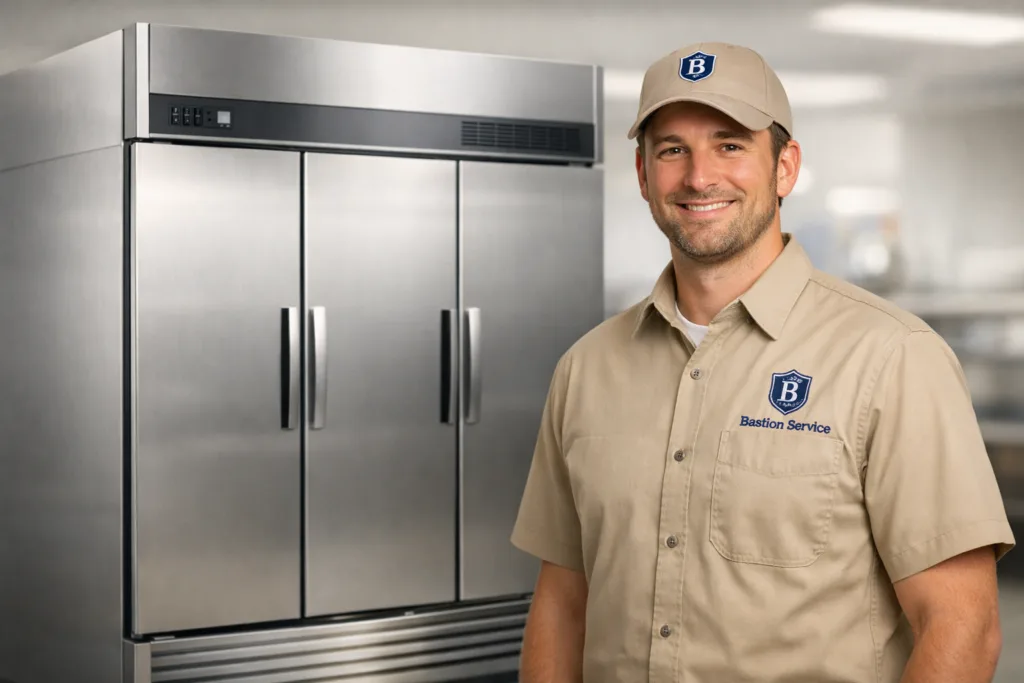




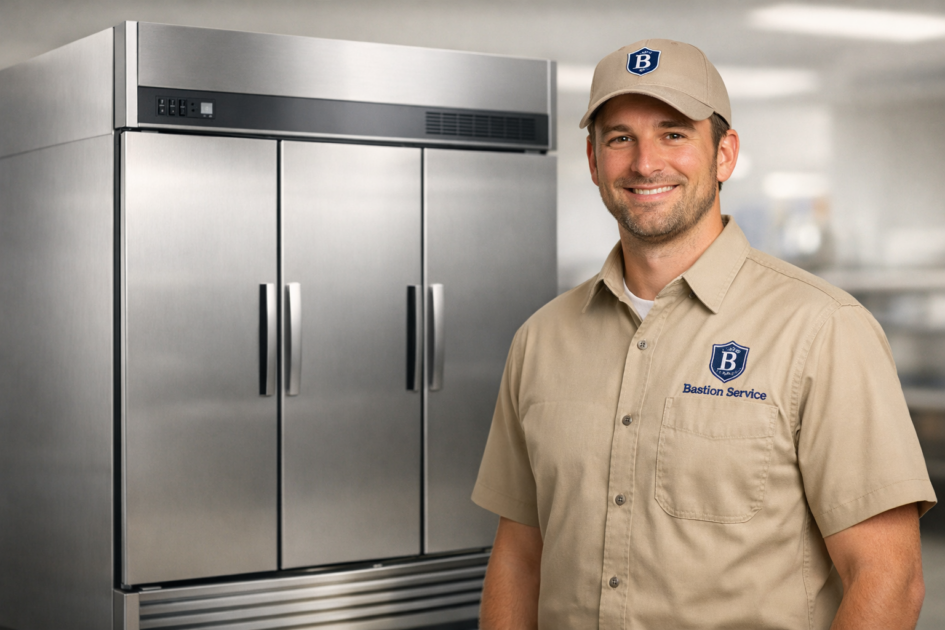
When a Turbo Air refrigerator starts running warm, building frost, leaking, or short cycling during business hours, the priority is to get the symptom tied to the actual failure before inventory is put at risk. For businesses in Mar Vista, refrigerator problems can disrupt prep, storage, service timing, and daily workflow, so service should focus on what is failing now, what damage may follow if the unit keeps running, and how quickly the equipment can be stabilized. Bastion Service handles Turbo Air refrigerator issues with a service-oriented approach that helps operators move from symptoms to scheduling and repair decisions without unnecessary guesswork.
Related commercial service paths in Mar Vista include Turbo Air Commercial Repair in Mar Vista, Commercial Refrigerator Repair in Mar Vista, and Turbo Air Freezer Repair in Mar Vista.
Common Turbo Air Refrigerator Problems
Cabinet not holding temperature
If the refrigerator is set correctly but product temperatures are still rising, the cause may be restricted condenser airflow, weak evaporator fan operation, a control problem, door seal leakage, ice blocking circulation, or declining refrigeration-system performance. Some units cool acceptably during light use and then drift out of range during busy periods. That pattern often points to airflow strain, dirty coils, or a system that can no longer keep up with normal demand.
When temperature loss is persistent rather than occasional, the problem may be more serious. A refrigerator that never fully pulls down, struggles after every door opening, or runs for long periods without recovery should be checked before added strain affects the compressor or other core components.
Frost buildup and evaporator icing
Frost inside the cabinet or heavy ice around the evaporator section usually means air is not moving the way it should. Defrost faults, failed fan motors, damaged gaskets, doors not sealing fully, or control issues can all create conditions that lead to icing. Once airflow is blocked, the refrigerator may seem cold in one area while other sections run warm.
This type of problem often gets worse quickly. What begins as light frost can turn into reduced airflow, longer run times, uneven temperatures, and eventual cooling failure if the source is not corrected.
Water leaks and excess condensation
Water on the floor or pooling inside the cabinet can come from a blocked drain, frozen drain path, gasket wear, or cooling problems that create excess moisture. In a business setting, leakage is more than a housekeeping issue. It can affect sanitation, create a slip hazard, and signal that temperature control is already off balance.
If water appears repeatedly after being cleaned up, the issue usually needs more than a simple reset or wipe-down. Recurrent condensation and drain problems often show that airflow, defrost function, or cabinet sealing needs attention.
Noisy operation, short cycling, or nonstop running
Buzzing, clicking, rattling, fan noise, or a refrigerator that seems to run without resting can indicate fan wear, loose mounting hardware, condenser blockage, start-component trouble, or control faults. Short cycling is especially important to address because repeated starts can add wear while still failing to maintain proper cooling.
A unit that suddenly sounds different from its normal operating pattern should be checked sooner rather than later. New noises often appear before a larger cooling failure becomes obvious.
Why a Temperature Problem Can Mean Several Different Things
One of the most common service requests is a Turbo Air refrigerator that is “not cold enough,” but that symptom can come from several different failure paths. A warm cabinet does not automatically mean low refrigerant, and frost does not automatically confirm a defrost heater issue. Similar symptoms can come from very different parts of the system.
Useful diagnosis typically includes checking actual cabinet temperature, airflow through the evaporator and condenser sections, coil condition, fan performance, door closure, drain condition, sensor response, and how the refrigeration system behaves under load. That process helps determine whether the repair is likely to be straightforward or whether the equipment may be entering a more serious stage of failure.
Signs the Refrigerator Should Be Scheduled for Service Soon
- Product temperatures are creeping up even though settings have not changed.
- The cabinet is colder in one section and warm in another.
- Frost keeps returning after manual clearing.
- Water is collecting inside or around the unit.
- The refrigerator is running almost constantly.
- There are recurring alarms, error conditions, or repeated resets.
- Fans, compressor starts, or cabinet noises sound different than usual.
These are the kinds of symptoms that often begin as performance issues and then turn into downtime, inventory loss, or a larger repair. If the refrigerator temporarily improves after a reset but fails again, that usually points to an unresolved control, fan, sensor, or start-related problem rather than a one-time interruption.
When Continued Operation Can Make the Repair More Expensive
A struggling refrigerator often runs longer and harder to maintain temperature. If airflow is blocked by ice, coils are dirty, or fan operation is weak, the system may stay on continuously in an attempt to recover. That extra run time can increase wear on the compressor, motors, and electrical components.
For businesses in Mar Vista, it is worth treating repeated warm periods, rapid frost buildup, and nonstop operation as warning signs rather than minor inconveniences. In many cases, early service helps prevent a manageable issue from turning into a more disruptive failure during normal operations.
Repair Decisions Based on Symptom Pattern
Many Turbo Air refrigerator service calls involve parts and conditions that can be addressed effectively when caught early, such as fan motors, sensors, controls, door gaskets, drain blockages, condenser-related performance loss, or ice-restricted airflow. The best repair decision depends on what is failing, how often the problem has returned, and how critical the unit is to the business.
Replacement becomes a more serious consideration when there are repeated major cooling failures, broader system wear, or a repair scope that no longer makes sense for the condition of the refrigerator. In a working kitchen, hotel, café, market, or other food-service setting, the decision is rarely about one part alone. It is about reliability after repair, downtime exposure, and whether the equipment can return to stable daily use.
How to Prepare for a Service Visit
Operators can make a repair visit more productive by noting what the refrigerator is doing and when the problem occurs. Helpful details include whether the cabinet runs warm all day or only during peak use, whether frost is localized or widespread, whether the issue began after cleaning or loading changes, and whether alarms, clicks, or unusual sounds happen before the cooling drops.
It also helps to know whether the unit has been manually reset, unplugged, defrosted, or temporarily recovered before failing again. Those patterns can narrow the diagnosis and help identify whether the problem is tied to controls, defrost behavior, airflow, or the refrigeration cycle itself.
Service-Focused Next Steps for Mar Vista Businesses
If a Turbo Air refrigerator is affecting temperature control, airflow, sanitation, or workflow, the most useful next step is to schedule service before the problem spreads to inventory or leads to a more significant system failure. For businesses in Mar Vista, repair should be centered on how the refrigerator is actually performing in day-to-day use, how urgent the downtime risk is, and what path will restore stable operation with the least disruption.


