
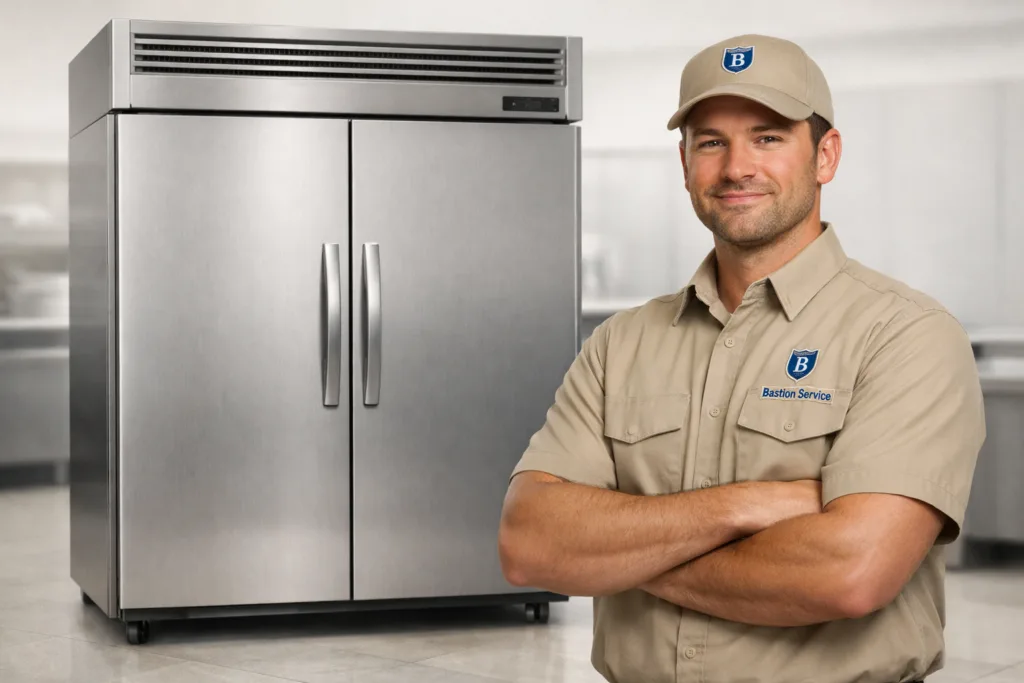




When a Turbo Air refrigerator starts running warm, icing over, leaking, or short cycling, the impact on daily operations in Inglewood can be immediate. Similar symptoms can come from very different faults, including restricted airflow, fan failure, control issues, door seal problems, drainage trouble, or a sealed-system problem. Bastion Service handles Turbo Air refrigerator repair for businesses in Inglewood with an emphasis on symptom-based diagnosis, repair planning, and scheduling that helps reduce unnecessary downtime.
Related commercial service paths in Inglewood include Turbo Air Commercial Repair in Inglewood, Commercial Refrigerator Repair in Inglewood, and Turbo Air Freezer Repair in Inglewood.
Turbo Air refrigerator problems that disrupt business operations
Refrigeration issues rarely stay minor for long. A temperature complaint can quickly turn into product loss, uneven holding conditions, added stress on the compressor, or workflow disruption for staff. With Turbo Air refrigerators, the most useful starting point is to match the symptom to how the unit is actually performing during normal use.
Cabinet not holding temperature
If the interior is warmer than the setpoint, the cause may be as simple as blocked condenser airflow or as serious as a failing compressor or refrigerant-related issue. Other possibilities include bad sensors, control faults, weak fan motors, or doors that are not sealing tightly. A refrigerator that is only a few degrees off can still create inventory risk, so temperature drift is worth addressing early.
Frost buildup or icing
Ice on interior panels, evaporator covers, or around airflow paths usually points to a defrost issue, air leakage, moisture intrusion, or fan trouble. In many cases, staff first notice weak airflow before they notice a warmer cabinet. If the ice continues to build, the refrigerator may lose capacity and run harder while cooling less effectively.
Water leaking inside or around the refrigerator
Water on shelves or on the floor can come from a clogged drain, defrost drainage problem, damaged gasket, or melting ice that is no longer moving to the proper drain path. In active kitchens, prep areas, and storage rooms, even a small leak can interfere with safe movement and cleanup routines.
Noise, constant running, or frequent cycling
Buzzing, rattling, hard-start sounds, fan noise, and long run times often indicate developing mechanical or airflow problems. Dirty coils, worn fan motors, start component issues, and control problems can all make a Turbo Air refrigerator run longer than it should. When the unit never seems to satisfy, energy use rises while temperature consistency often gets worse.
Why a symptom-based diagnosis matters
One visible problem does not always point to one obvious repair. A warm cabinet may be caused by poor condenser airflow, but it can also be tied to fan failure, control issues, frequent door opening, or low cooling capacity. Frost may suggest defrost trouble, but it can also be related to gaskets, airflow, or operating habits that let too much moisture into the cabinet.
That is why repair decisions should follow testing rather than guesswork. For businesses in Inglewood, a proper diagnosis helps answer the questions that actually matter: whether the unit is safe to keep running, whether product should be moved, which components are affected, and whether repair is likely to restore stable performance without repeat downtime.
Signs service should be scheduled soon
It is smart to arrange service when the refrigerator is still operating but no longer behaving normally. Waiting can turn a manageable repair into a larger one, especially when poor airflow, icing, or fan problems are forcing the system to run under added strain.
- Temperatures rise during busy periods and recover slowly
- Airflow feels weak or uneven from one section of the cabinet to another
- Frost returns shortly after being cleared
- Door gaskets are torn, loose, or no longer sealing evenly
- The compressor runs hot or seems to run nearly all the time
- The refrigerator cools intermittently instead of maintaining a steady range
- Water or ice around the unit is affecting safe access
- New noises start during startup, shutdown, or normal operation
These symptoms often show that the refrigerator is still working, but only with reduced efficiency or reduced reliability. Scheduling service before a full cooling loss can help protect product and simplify the repair path.
Common causes behind Turbo Air refrigerator performance issues
Turbo Air refrigerators used in restaurants, hotels, food-service businesses, and other workplaces in Inglewood are often opened frequently and expected to recover quickly. That kind of daily use can expose weak components or maintenance-related problems faster than light-duty operation would.
Airflow restrictions
Dirty condenser coils, blocked ventilation space, or failing condenser fans can trap heat in the system and reduce cooling performance. This often shows up as longer run times, warmer temperatures during peak use, or a cabinet that struggles to pull down after restocking.
Evaporator and circulation issues
If the evaporator fan is weak or the coil is iced over, cold air cannot move properly through the cabinet. The refrigerator may feel colder in one section and warmer in another, leading to inconsistent holding conditions and confusing symptom reports.
Door and gasket problems
Worn gaskets, misaligned doors, and poor closure allow warm air and moisture into the cabinet. That can create frost, sweating, longer run cycles, and unstable temperature control. Door-related issues are often underestimated, but they can have a major effect on performance.
Controls and sensors
A refrigerator may appear to have a major cooling problem when the real issue is inaccurate sensing or a control fault. If the control system is not reading cabinet conditions correctly, it may cycle the system improperly or fail to trigger normal cooling behavior.
Drainage and defrost faults
When water cannot drain correctly or the defrost cycle is not working as intended, ice and moisture start affecting airflow, surfaces, and surrounding floor conditions. Left unresolved, this can lead to repeated callbacks and worsening operating conditions.
Repair or replacement: how businesses usually decide
Not every Turbo Air refrigerator with cooling problems needs to be replaced, and not every older unit is automatically a good candidate for repair. The better decision depends on the confirmed fault, overall cabinet condition, parts investment, history of recent breakdowns, and how critical that refrigerator is to the operation.
Repair is often worthwhile when the issue involves fans, controls, gaskets, drainage, door hardware, or maintenance-related cooling trouble and the cabinet itself remains in solid shape. Replacement becomes a stronger consideration when the refrigerator has repeated breakdowns, major sealed-system problems, poor structural condition, or repair costs that are hard to justify against remaining service life.
How to prepare for a service visit
A few details from staff can make the service process more efficient and help narrow the problem faster. Before the visit, it helps to note when the problem started, whether it is constant or intermittent, and whether it gets worse during busy periods or after heavy loading.
- Record the temperatures being observed, not just the display setting
- Note whether the issue affects the whole cabinet or specific sections
- Watch for ice patterns, water leaks, or visible gasket damage
- Listen for new noises from fan areas or compressor startup
- Identify whether the refrigerator has recently been cleaned, moved, or heavily restocked
This kind of information helps connect the symptom to likely causes and supports a faster repair decision once the unit is inspected.
Service support for Turbo Air refrigeration in Inglewood
Turbo Air refrigerators are expected to maintain steady holding conditions under real business use, not just cool intermittently when demand is light. When performance changes, timely service helps prevent product loss, operating disruption, and added strain on major components. For businesses in Inglewood, the next step is to schedule repair when symptoms first appear, document what the unit is doing, and have the refrigerator evaluated before a smaller fault turns into a larger interruption.





