






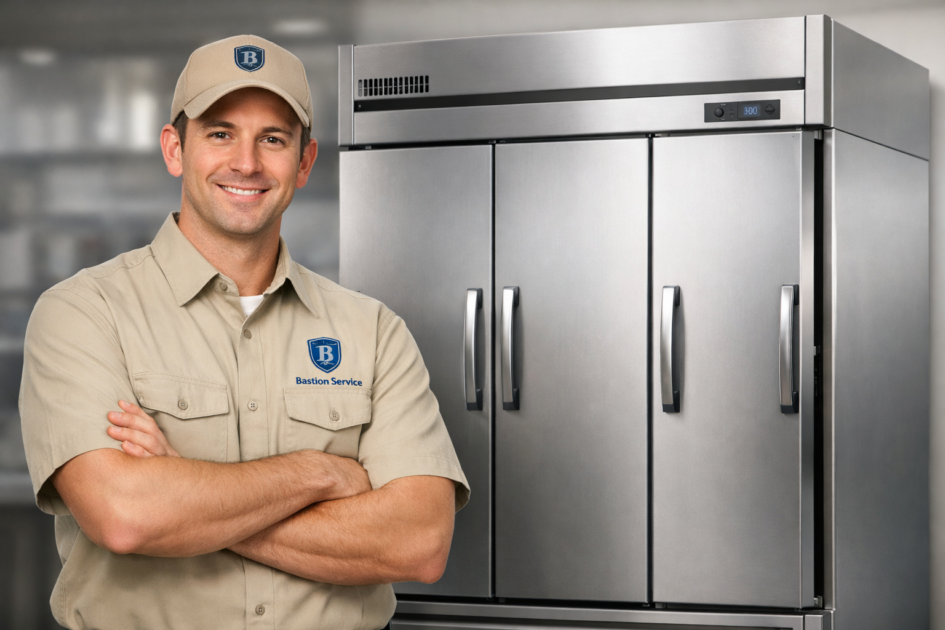
Turbo Air refrigerator problems can disrupt prep schedules, inventory protection, and daily workflow quickly, especially when temperature control starts slipping during normal use. For businesses in El Segundo, the most effective next step is service that identifies the actual cause of the failure, explains how serious it is, and helps determine whether the unit should be repaired immediately, monitored briefly, or taken out of use. Bastion Service handles Turbo Air refrigerator issues with attention to downtime, product risk, and repair scheduling that fits operating needs.
Related commercial service paths in El Segundo include Turbo Air Commercial Repair in El Segundo, Commercial Refrigerator Repair in El Segundo, and Turbo Air Freezer Repair in El Segundo.
Common Turbo Air Refrigerator Problems
Not holding temperature
A Turbo Air refrigerator that runs warm or struggles to recover after the door opens may have more than one possible cause. Dirty condenser coils, weak evaporator airflow, sensor issues, thermostat problems, door gasket leakage, defrost faults, and compressor stress can all produce similar symptoms. If temperatures vary from shelf to shelf or drift during the day, the problem may involve airflow restriction or a component that is no longer responding correctly under load.
This symptom should be addressed early because ongoing temperature instability can lead to food loss, longer run times, and added strain on the refrigeration system.
Frost or ice buildup inside the cabinet
Excess frost on interior surfaces, around the evaporator section, or near the door opening usually points to moisture entering the cabinet or a defrost-related problem. Worn gaskets, doors not closing fully, blocked airflow, and failed defrost components are common causes. Even when the refrigerator still seems cold, heavy frost can reduce airflow and make the cabinet cool unevenly.
What starts as an ice problem often turns into a temperature problem, so it is worth scheduling service before cooling performance drops further.
Constant running or short cycling
If the unit seems to run nearly nonstop, it may be compensating for heat load, poor airflow, dirty coils, refrigerant-side weakness, or leaking door seals. Short cycling, where the system turns on and off too frequently, can point to control faults, sensor problems, or electrical issues. Both patterns increase wear and can shorten the life of key components if ignored.
Water leaks or interior condensation
Water under the refrigerator or pooling inside the cabinet often comes from clogged drains, defrost drainage problems, sweating caused by gasket failure, or uneven cooling conditions. In a business setting, leaks are more than a nuisance. They can create slip hazards, affect flooring, and signal a refrigeration issue that is getting worse.
Unusual noise or vibration
Rattling panels, louder fan noise, buzzing, or a noticeable change in compressor sound can all be signs that service is needed. Sometimes the issue is minor, such as loose hardware or a fan blade obstruction. In other cases, noise appears alongside poor cooling, which can indicate developing mechanical stress that should not be left alone.
Why Accurate Diagnosis Matters
Turbo Air refrigerator symptoms often overlap. A warm cabinet could come from a failed evaporator fan motor, a control problem, restricted condenser airflow, a defrost issue, or declining sealed-system performance. Replacing one visible part without confirming the root cause can lead to repeat calls, more downtime, and unnecessary expense.
A proper diagnosis helps answer the questions that matter most to operators in El Segundo: Is the refrigerator safe to keep running? Is the issue isolated to a serviceable part? Will continued operation cause more damage? Is repair likely to restore stable performance, or is replacement planning becoming the better option?
Signs Service Should Be Scheduled Soon
- Cabinet temperature is above setpoint or fluctuating through the day
- Product near the front or top is warmer than expected
- Frost keeps returning after being cleared
- The unit runs longer than normal or rarely seems to shut off
- Water is collecting inside the cabinet or on the floor
- Doors do not close tightly or gaskets are cracked, loose, or torn
- Fans sound louder than usual or airflow feels weak
- The refrigerator trips power, shuts off intermittently, or shows control issues
These warning signs often appear before a full cooling failure. Calling for service during that earlier stage can reduce the chance of product loss and help avoid a more disruptive breakdown.
When Continued Use Can Make the Problem Worse
Some refrigerator problems can escalate quickly if the unit stays in operation. A compressor working against poor airflow, heavy frost, or high head pressure may overheat. A blocked drain can turn into a leak that affects nearby surfaces. A weak fan motor can cause uneven temperatures that become harder to manage during busy periods.
Continued use is especially risky when the cabinet cannot maintain safe holding temperature, ice buildup is restricting airflow, breaker trips are occurring, or the refrigerator is making new mechanical noises. In those situations, service should be treated as urgent rather than routine.
What Often Causes Temperature and Airflow Problems
Many Turbo Air refrigerator complaints come back to a few core systems. Understanding them helps staff describe the problem more clearly when scheduling service.
Condenser-side airflow issues
When condenser coils are dirty or airflow is restricted, the system may run hotter and longer than normal. That can show up as warm temperatures, poor recovery, or a refrigerator that seems to struggle more during heavier use.
Evaporator airflow restrictions
If the evaporator fan is weak, blocked, or affected by frost, cold air may not move evenly through the cabinet. This often leads to hot spots, slow pull-down, and product temperatures that do not match the control setting.
Door seal and closure problems
Damaged gaskets or doors that do not close squarely let warm, moist air enter the cabinet. That can cause frost, longer run times, condensation, and unstable temperature performance.
Defrost system faults
When the defrost cycle is not working properly, ice can build around the evaporator area and gradually choke off airflow. The refrigerator may still run, but cooling becomes less effective and the cabinet can turn warm despite the system operating constantly.
Controls and sensor failures
If sensors or controls are reading incorrectly, the refrigerator may cycle at the wrong times, fail to maintain set temperature, or display behavior that seems inconsistent from one shift to another.
Repair or Replace?
Repair is often the right choice when the issue is limited to fan motors, sensors, controls, gaskets, drain problems, defrost components, or other serviceable parts and the cabinet remains structurally sound. Replacement becomes a more serious consideration when the refrigerator has repeated cooling failures, major system wear, or repair needs that no longer support reliable operation.
The goal of a service visit is not just to identify a failed part. It is to clarify whether the current unit can return to stable service and what that repair path looks like for the business using it.
How to Prepare for a Service Visit
Before the technician arrives, it helps to note the actual symptom pattern rather than a general description like “not cooling.” Useful details include whether the cabinet is warm all the time or only at certain points in the day, whether frost is visible, whether the fans are running, whether water is present, and whether the issue started suddenly or gradually. If available, recording temperature readings from different areas of the cabinet can also help narrow the diagnosis.
Staff should also avoid repeated resets or adjustments unless necessary for temporary operation. Frequent changes can make the original failure pattern harder to identify.
Turbo Air Refrigerator Service for Businesses in El Segundo
Businesses in El Segundo rely on refrigeration equipment that can keep pace with daily operations, not equipment that needs constant attention just to stay functional. When a Turbo Air refrigerator starts showing signs of temperature drift, airflow trouble, leaking, frost buildup, or noisy operation, prompt service helps protect inventory and reduce avoidable downtime. The best next step is to have the symptom checked, the failure confirmed, and the repair plan matched to the actual condition of the unit so scheduling and operational decisions can be made with confidence.


