
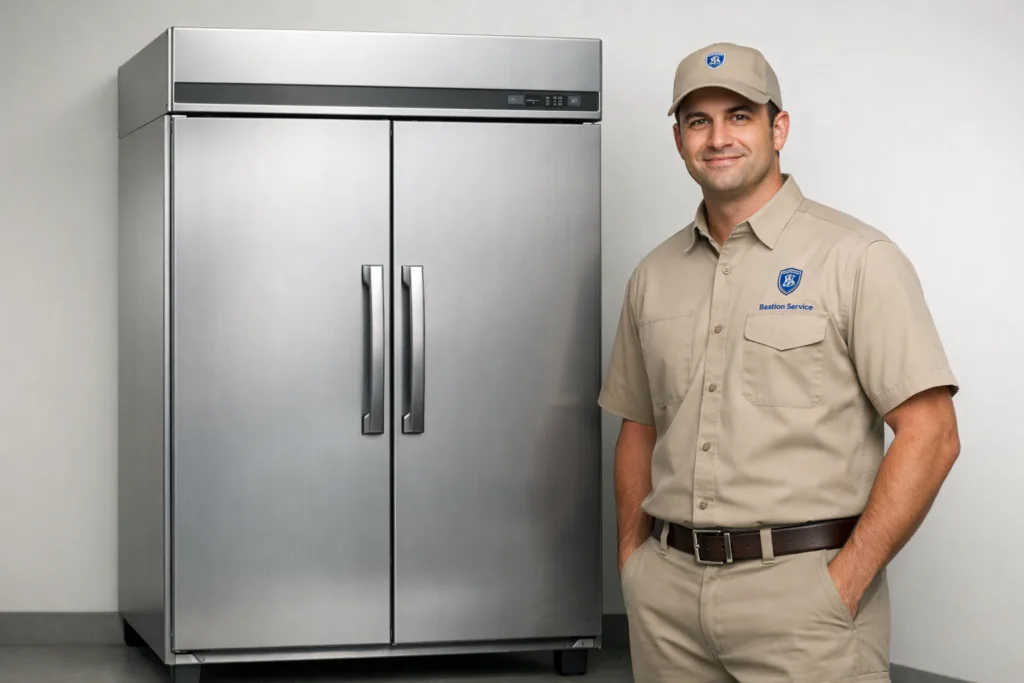




Freezer problems can disrupt prep schedules, storage plans, and daily workflow long before a unit fully stops cooling. When a Turbo Air freezer begins running warm, building ice, leaking, or making unusual noise, the most effective next step is service built around the symptom pattern, operating condition, and likely point of failure. In Rancho Palos Verdes, Bastion Service helps businesses troubleshoot Turbo Air freezer issues, identify what is causing the loss of performance, and schedule repair based on urgency, parts needs, and downtime impact.
Related commercial service paths in Rancho Palos Verdes include Turbo Air Repair in Rancho Palos Verdes, Commercial Freezer Repair in Rancho Palos Verdes, and Turbo Air Fridge Repair in Rancho Palos Verdes.
Common Turbo Air freezer problems that point to repair
A freezer may show one obvious symptom while the actual fault is happening somewhere else in the system. Temperature loss, frost, airflow complaints, and nonstop running can all overlap, which is why testing matters before any repair decision is made.
Not freezing or not holding temperature
If product is soft, cabinet temperature is rising, or recovery after door openings is unusually slow, the problem may involve condenser airflow, evaporator fan operation, controls, sensors, a defrost issue, or a refrigeration fault. A freezer that still cools somewhat can be especially misleading because it may appear usable while performance continues to decline.
This type of issue should be addressed quickly when the unit is storing high-value inventory or supporting constant kitchen use. The longer a freezer runs above its normal holding range, the more stress it places on critical components.
Frost buildup on shelves, walls, or around the evaporator area
Heavy frost often points to air entering where it should not, or moisture failing to clear properly during the defrost cycle. Worn door gaskets, poor door closure, defrost heater problems, sensor faults, or restricted internal airflow are all common reasons a Turbo Air freezer starts icing over.
As frost thickens, airflow drops and the unit has to work harder to maintain temperature. That can lead to uneven freezing, blocked storage space, and longer run times.
Freezer runs constantly or cycles erratically
A unit that seems to run all day may be compensating for heat gain, dirty coils, weak airflow, a door sealing problem, or declining cooling performance. Short cycling can indicate control issues, electrical faults, or compressor starting trouble. Either pattern is a warning sign that the freezer is no longer operating as intended.
Water leaks or ice forming in the wrong places
Water around the cabinet, ice near the door, or pooling below interior panels can be related to defrost drainage problems, excess condensation, gasket leaks, or ice interfering with normal airflow and drainage. Leaks should not be ignored just because the freezer still appears cold enough, since they often signal a larger performance problem.
Fan noise, buzzing, clicking, or alarm conditions
Changes in sound can help narrow the issue. A grinding or rattling noise may suggest fan motor wear or ice contact. Clicking may point to a starting problem. Alarms and display irregularities can indicate sensor or control faults, but they can also appear when the freezer is struggling to reach set temperature for another reason. Proper diagnosis helps separate a smaller component repair from a deeper system problem.
Why diagnosis matters before replacing parts
Turbo Air freezer symptoms often overlap. A warm cabinet could be caused by a fan issue, restricted coil, bad gasket, failed defrost component, control problem, or sealed-system concern. Replacing parts based only on the most visible symptom can waste time and extend downtime.
Service is most productive when the freezer is checked as a full operating system: actual cabinet temperature, airflow, fan operation, frost pattern, coil condition, compressor behavior, controls, door seal condition, and defrost function. That process helps determine whether the repair is relatively straightforward or whether the unit is showing signs of a larger refrigeration problem.
Why is my Turbo Air freezer not staying cold enough?
When a Turbo Air freezer is not staying cold enough, the cause is usually one of a few core problems: poor heat removal at the condenser, restricted evaporator airflow, a door that is not sealing tightly, a defrost failure that allows ice to choke airflow, a faulty control or sensor, or a refrigeration issue that reduces cooling capacity.
Businesses in Rancho Palos Verdes often notice this problem first as soft product, temperature swings during busy periods, or a freezer that takes too long to recover after the door closes. If the problem is intermittent, that does not mean it is minor. Intermittent cooling loss often becomes a full no-cool failure if the root cause is left uncorrected.
Symptoms that mean service should be scheduled soon
- Product is not staying fully frozen
- The cabinet temperature keeps drifting upward
- Frost returns quickly after manual clearing
- The door does not close or seal cleanly
- The freezer runs almost nonstop
- There is water on the floor or ice around the cabinet base
- The fan is louder than usual or sounds obstructed
- The controller shows errors, alarms, or unstable readings
These symptoms usually indicate a condition that is already affecting performance, not just a minor inconvenience. Early service can help prevent product loss and reduce the chance that a smaller repair turns into a major failure.
What businesses can check before the service visit
Basic observations can help speed up troubleshooting. Check whether the door is closing fully, whether boxes are blocking interior airflow, whether frost is light or severe, and whether the noise is coming from inside the cabinet, near the compressor section, or during startup. It also helps to note whether the problem is constant or worse at certain times of day.
You do not need to disassemble panels or attempt parts replacement. The most useful preparation is simply documenting the pattern: warming, icing, leaking, loud fan operation, alarm behavior, or failure to recover after normal use.
Repair or replace?
Many Turbo Air freezer issues are repairable when the cabinet is in good condition and the failure is limited to components such as fan motors, controls, sensors, gaskets, drains, or defrost parts. In those cases, repair is often the practical option because it targets the actual cause without changing out otherwise functional equipment.
Replacement becomes a more serious discussion when the freezer has repeated major breakdowns, significant cabinet wear, extensive refrigeration-system trouble, or repair costs that no longer fit the unit’s age and role in the operation. The right decision depends on current condition, expected reliability after repair, and how essential that freezer is to daily business use in Rancho Palos Verdes.
What a service-oriented repair visit should accomplish
For most businesses, the goal is not just to hear that something is wrong. They need to know what failed, how it affects operation, whether continued use risks product or further damage, and what the next repair step should be. That is especially important when the freezer supports food storage, back-of-house workflow, or tightly timed production.
If your Turbo Air freezer is warming up, icing over, leaking, or showing unstable performance in Rancho Palos Verdes, scheduling a focused diagnostic visit is the best way to move from symptoms to an informed repair plan. The sooner the issue is evaluated, the easier it is to protect inventory, reduce disruption, and restore normal freezer operation.


