
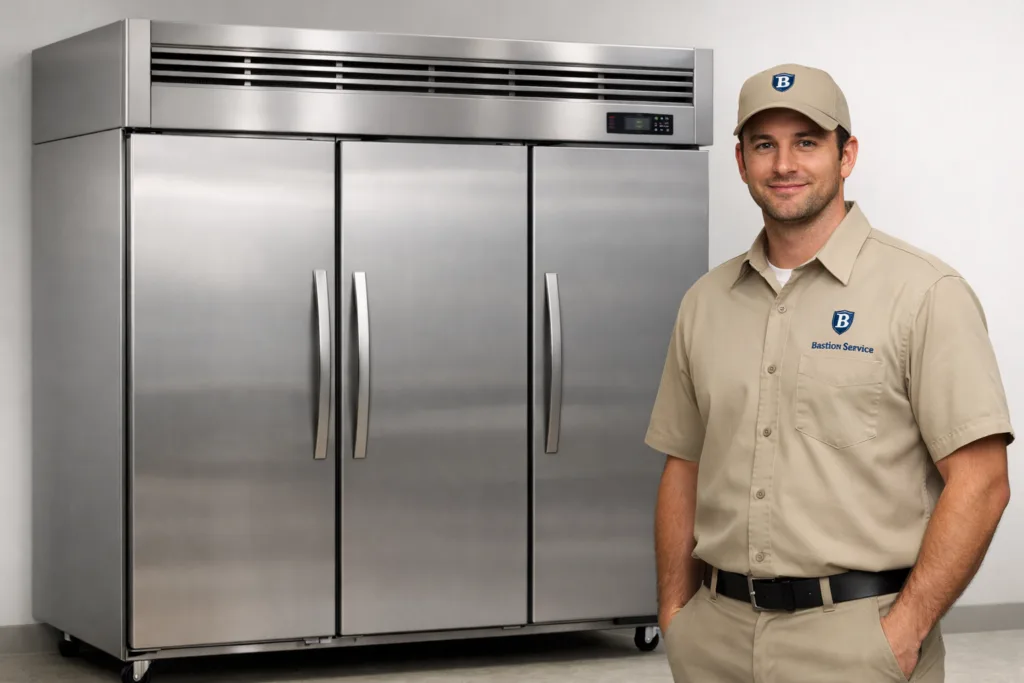




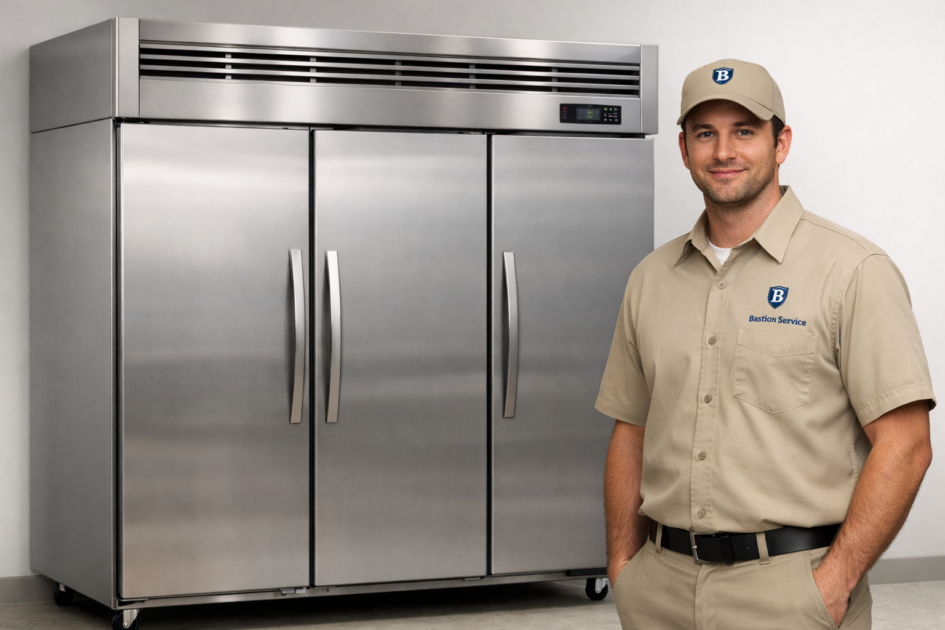
When Turbo Air refrigeration equipment starts affecting daily operations, the most useful next step is service that connects the symptom to the business risk. A refrigerator running warm, a freezer building ice, or a cabinet with weak airflow can quickly interrupt prep, storage, and service timing. In Redondo Beach, businesses often need more than a general inspection—they need to know what is failing, how urgent it is, and whether the unit should stay in use until repair is completed.
For specific equipment paths in Redondo Beach, review Turbo Air Refrigerator Repair in Redondo Beach, Turbo Air Freezer Repair in Redondo Beach, and Commercial Appliance Repair in Redondo Beach.
Bastion Service helps businesses in Redondo Beach troubleshoot Turbo Air refrigerator and freezer problems with attention to uptime, product protection, and repair scheduling. That matters when equipment issues are no longer occasional and start becoming part of the workday.
Turbo Air refrigerator and freezer symptoms that usually need repair
Most equipment calls begin with a symptom pattern rather than a confirmed part failure. Some issues appear gradually, while others show up suddenly during busy hours. In either case, recurring performance changes are a strong sign that service is needed.
Cabinet temperatures drifting out of range
If the cabinet is warmer than normal, takes too long to recover after doors open, or cannot maintain stable temperatures through the day, the problem may involve airflow restrictions, fan motor trouble, controls, sensors, dirty coils, defrost issues, or sealed-system concerns. A unit that still cools somewhat can still be risky to operate if recovery is poor or temperatures swing too widely.
For businesses, this usually becomes noticeable through soft product, warmer internal sections, frequent temperature checks, or a cabinet that seems to run constantly without reaching normal holding conditions.
Weak airflow or uneven cooling from top to bottom
When some shelves stay colder than others or product near one area warms faster, airflow should be checked. Turbo Air refrigerator and freezer equipment depends on consistent circulation to move cold air through the cabinet. Frost buildup, blocked vents, evaporator fan issues, damaged panels, and control problems can all reduce airflow and create warm zones.
Uneven cooling is especially important to address early because it may look like a minor loading issue while the actual fault continues to worsen.
Frost buildup that keeps coming back
Excess frost is more than a housekeeping problem. It can choke airflow, force longer run times, affect door sealing, and make temperature control less reliable. Repeated frost often points to defrost failures, gasket leakage, sensor problems, fan issues, or doors not closing the way they should.
If staff members are repeatedly clearing ice just to keep the unit usable, repair is usually the better move than continuing to work around it.
Water leaks, moisture, or pooling inside the cabinet
Leaks around the base of the unit or water collecting inside can come from drain line blockages, ice melt problems, door seal issues, or condensation related to cooling faults. Moisture problems are easy to dismiss at first, but they often signal a larger issue affecting temperature performance or defrost operation.
In busy kitchens and storage areas, leaks also create a facility problem, not just an equipment problem, so they are worth addressing quickly.
Freezers that no longer recover properly
A freezer that falls behind after normal door openings, struggles to pull product back down, or runs for long stretches without reaching expected conditions may have airflow, defrost, control, fan, or refrigeration system trouble. Slow recovery tends to become more serious as product load increases and operating demands stay high.
This is one of the clearest signs that a service call should not wait, especially when inventory depends on stable frozen storage through the workday.
How these problems affect day-to-day operations
Refrigeration problems rarely stay isolated to the machine itself. They affect prep timing, product rotation, staffing decisions, and confidence in storage conditions. A refrigerator that is slightly warm may force constant checking. A freezer with heavy frost may reduce usable space and slow door operation. Weak airflow can create uncertainty about where product is safe to store inside the cabinet.
For businesses in Redondo Beach, the repair decision often comes down to two practical questions:
- Can the unit continue running without creating a bigger failure or product risk?
- Is the current symptom likely to worsen before the next available service window?
Those answers usually depend on actual temperature behavior, recovery time, frost pattern, fan operation, compressor cycling, and whether the issue is isolated or spreading into other systems.
What a service visit should determine
A useful repair visit should do more than confirm that the cabinet is not cooling correctly. It should identify the likely fault area, check whether related components have been affected, and help the business decide how to handle the unit until repair is complete.
For Turbo Air refrigeration equipment, that may include evaluating:
- Whether the problem is control-related, airflow-related, defrost-related, or part of the refrigeration system
- Whether frost, leaks, or warm temperatures are symptoms of one root cause or multiple issues
- Whether continued operation may strain the compressor or create additional downtime
- Whether the repair is contained or whether broader wear suggests rising future risk
This kind of diagnosis is especially helpful when managers are balancing product movement, staff workflow, and limited repair windows.
When a refrigerator or freezer should be taken more seriously
Some symptoms justify faster scheduling because they tend to escalate rather than stabilize. If a Turbo Air unit is showing any of the following, delaying service may increase downtime:
- Cabinet temperatures consistently trending warm
- Compressor running almost nonstop
- Frost returning soon after being cleared
- Fan noise, reduced circulation, or no airflow in part of the cabinet
- Visible leaks or repeated internal moisture buildup
- Freezer temperatures recovering too slowly after normal use
Even if the equipment is still partially cooling, these patterns often mean the unit is operating under stress or no longer protecting stored product the way it should.
Repair versus replacement considerations
Not every Turbo Air issue means the equipment should be replaced. Many refrigerator and freezer problems are tied to parts or systems that can be repaired without replacing the cabinet. Fan motors, controls, sensors, defrost components, gaskets, drains, and certain airflow-related failures may be repairable when the equipment is otherwise in solid condition.
Replacement may be worth discussing when breakdowns are becoming frequent, temperature control remains inconsistent after prior repairs, or overall wear suggests that future interruptions are likely. The value of proper diagnosis is that it helps turn a frustrating symptom into a realistic decision based on condition, urgency, and operating impact.
Choosing the next step for Turbo Air equipment in Redondo Beach
If a Turbo Air refrigerator or freezer is showing warm cabinet temperatures, weak airflow, frost, moisture, or slow freezer recovery, scheduling service early is usually the best way to limit disruption. A repair appointment can clarify whether the problem is contained, whether temporary operation is reasonable, and what repair path makes the most sense for the business. For businesses in Redondo Beach, timely service helps reduce guesswork, protect stored product, and get refrigeration equipment back into reliable use with a plan that fits the actual symptom pattern.


