
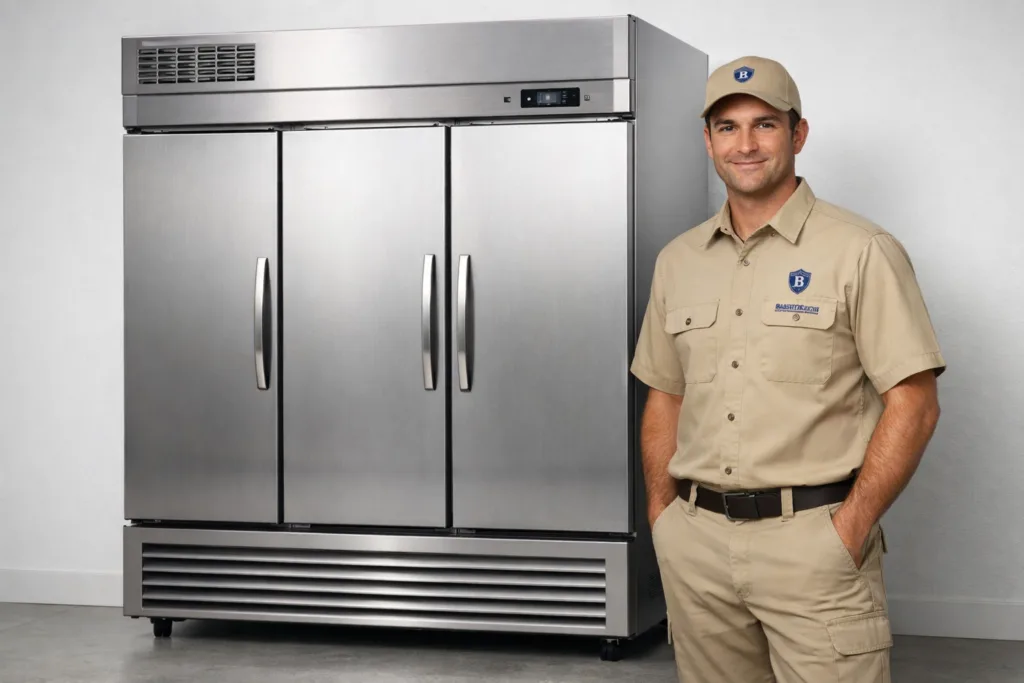




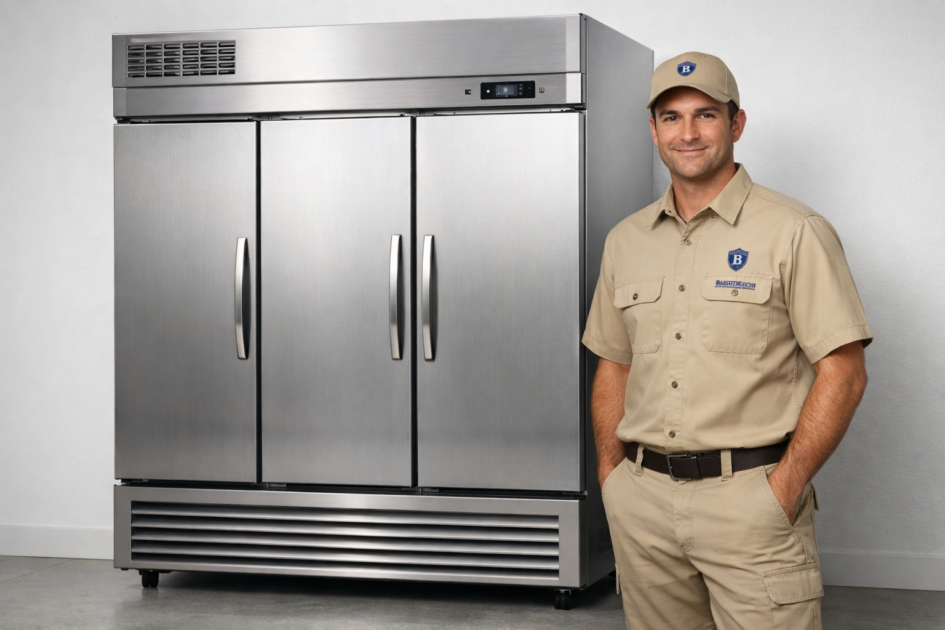
When Turbo Air refrigeration equipment starts affecting daily operations, the priority is to identify the fault quickly, understand the risk to stored product, and schedule repair based on how the unit is actually performing. For businesses in Playa Vista, a service visit helps determine whether the issue is isolated, whether the equipment can remain in use safely for a short period, and what repair path makes the most sense for uptime.
For specific equipment paths in Playa Vista, review Turbo Air Refrigerator Repair in Playa Vista, Turbo Air Freezer Repair in Playa Vista, and Commercial Appliance Repair in Playa Vista.
Bastion Service works with Playa Vista businesses that rely on Turbo Air refrigerators and freezers for steady holding temperatures, product protection, and smooth kitchen or storage flow. Instead of treating every symptom the same, the goal is to match the repair plan to the actual behavior of the equipment, the urgency of the temperature problem, and the impact on day-to-day service.
What Turbo Air refrigeration equipment problems do you troubleshoot?
Turbo Air refrigerator and freezer problems often begin with symptoms that seem minor but point to larger cooling or control issues. Common service calls involve warm cabinets, temperature swings, frost buildup, water leaks, blocked airflow, noisy operation, units that run constantly, and freezers that do not recover properly after normal door openings.
These symptoms can be tied to several different causes, including fan motor failure, restricted airflow, faulty sensors, control problems, gasket wear, defrost system faults, drainage issues, compressor trouble, or refrigerant-related performance loss. Because similar symptoms can come from very different failures, repair decisions are most effective when based on testing rather than guesswork.
Refrigerator temperature problems that need prompt attention
If a Turbo Air refrigerator is drifting above its set temperature, struggling to pull down after loading, or showing uneven cooling from one section to another, that usually means the equipment is no longer operating efficiently. In business-use refrigeration, even a small loss of performance can affect ingredient quality, prep timing, and confidence in storage conditions.
Warm cabinet conditions
A warm interior can develop because of dirty coils, weak condenser performance, evaporator fan issues, faulty controls, sensor inaccuracies, or compressor strain. Sometimes the refrigerator still appears to be running normally, but cabinet temperature tells a different story. That is why a running unit should not automatically be assumed to be a healthy unit.
Inconsistent temperature from shelf to shelf
Uneven temperature inside the cabinet often points to airflow problems, blocked product placement, fan trouble, icing near the evaporator area, or door sealing issues. In a busy setting, this can create a situation where some product stays cold while other areas trend too warm, making the equipment unreliable even before a full failure occurs.
Slow recovery after normal use
If the refrigerator takes too long to return to target temperature after door openings, loading, or normal service traffic, the system may be losing cooling capacity. This symptom matters because it often shows up before a shutdown and may indicate that the unit is working harder than it should just to maintain minimum performance.
Freezer symptoms that often signal deeper cooling trouble
Turbo Air freezers usually reveal trouble through product texture changes, frost patterns, excessive run time, or poor recovery. A freezer that is technically cold but not holding consistently can still create serious storage problems, especially when the temperature rises and falls through the day.
Soft product or unstable freezing
If product is softening, cabinet temperature is climbing, or the freezer cannot maintain expected conditions, service should be arranged quickly. These symptoms may be tied to sealed-system performance, airflow restriction, fan motor issues, control faults, or frost buildup that is reducing heat exchange inside the unit.
Freezer recovery issues
A freezer that recovers too slowly after the door is opened can be dealing with weak cooling output, excessive frost, poor door sealing, or components that are no longer responding correctly. Recovery problems tend to get worse under normal business traffic, which is why they should be addressed before they turn into stock loss or emergency downtime.
Frost buildup, ice, and blocked airflow
Frost on interior panels, ice around the evaporator section, or reduced air movement inside the cabinet usually indicates more than a housekeeping issue. In many cases, the root cause is a failed defrost component, a door that is not sealing properly, a fan issue, or moisture entering the cabinet more than the system can handle.
Blocked airflow can create a chain reaction: temperatures become uneven, the system runs longer, frost gets heavier, and cooling performance continues to fall. Clearing visible ice without correcting the underlying cause usually leads to the same interruption returning again. For businesses in Playa Vista, this is one of the most common patterns behind repeated refrigeration complaints.
Leaks, condensation, and moisture around the unit
Water around a Turbo Air refrigerator or freezer may come from a clogged drain, a frozen drain line, condensation caused by door seal problems, or frost melt connected to a larger cooling issue. Even when the leak seems small, it can indicate that internal conditions are no longer stable.
Moisture problems should be taken seriously for three reasons:
- They may signal a hidden airflow or defrost problem.
- They can create slip hazards around work areas.
- They often get worse as cooling performance declines.
When water, condensation, or repeated icing appears around the same unit, the most useful next step is to determine whether the problem is limited to drainage or part of a broader refrigeration failure.
Unusual noise, nonstop running, and short cycling
A Turbo Air unit that buzzes, clicks, hums louder than normal, or cycles on and off too frequently should be evaluated before the symptom turns into a no-cool event. Refrigeration equipment often gives early warning signs through sound and run pattern changes long before it stops cooling completely.
Constant running
If the equipment rarely shuts off, it may be struggling to reach target temperature because of dirty coils, low cooling capacity, door leaks, icing, fan problems, or control issues. Constant operation increases wear and can drive a manageable repair into a more disruptive one if the strain continues.
Short cycling
A unit that starts and stops repeatedly may be dealing with electrical component issues, thermostat or sensor faults, compressor-related problems, or overheating conditions. Short cycling is especially important to address early because it can affect both performance and long-term system reliability.
How service decisions are made when equipment is still running
One of the most important parts of refrigerator and freezer repair is deciding whether the equipment should stay in use while service is pending. That decision depends on actual cabinet temperature, how stable the temperature remains during normal use, the type of product being stored, and whether continued operation could cause additional damage.
In some cases, the issue may allow for limited monitored use until repair is completed. In other cases, taking the unit offline is the safer business decision. The key is not whether the lights are on or the fans are moving, but whether the equipment is still protecting product and operating without creating more serious repair risk.
Repair versus replacement considerations
Not every Turbo Air refrigeration problem points to replacement. Many issues involving fan motors, controls, sensors, door gaskets, drain lines, and defrost components are repairable when diagnosed promptly. On the other hand, recurring cooling loss, major sealed-system trouble, or multiple overlapping failures can change the cost-benefit picture.
What matters most is understanding:
- what failed,
- whether the current symptom is isolated or part of a repeated pattern,
- how the equipment is performing under normal load, and
- how much downtime the business can reasonably absorb.
That information helps operators make a sound decision instead of reacting after another interruption.
When to schedule Turbo Air refrigerator or freezer repair in Playa Vista
Scheduling service early is usually the better move when you notice warm holding, frost returning after being cleared, inconsistent temperature, visible leaks, unusual noise, or a freezer that is no longer recovering as expected. Waiting for a complete shutdown can reduce repair options and make it harder to protect product during busy hours.
If your Turbo Air refrigerator or freezer is already showing a repeat symptom pattern, repair scheduling should be treated as an operations decision, not just a maintenance task. A timely diagnosis helps clarify downtime exposure, whether temporary adjustments are needed, and what the next step should be to restore reliable cooling in Playa Vista.


