
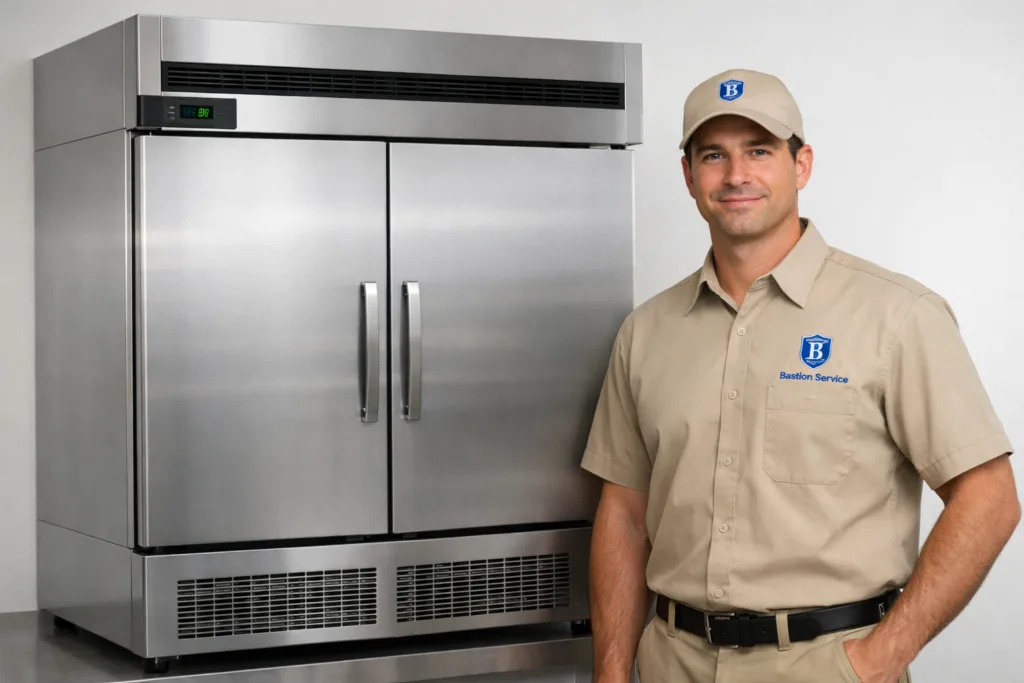




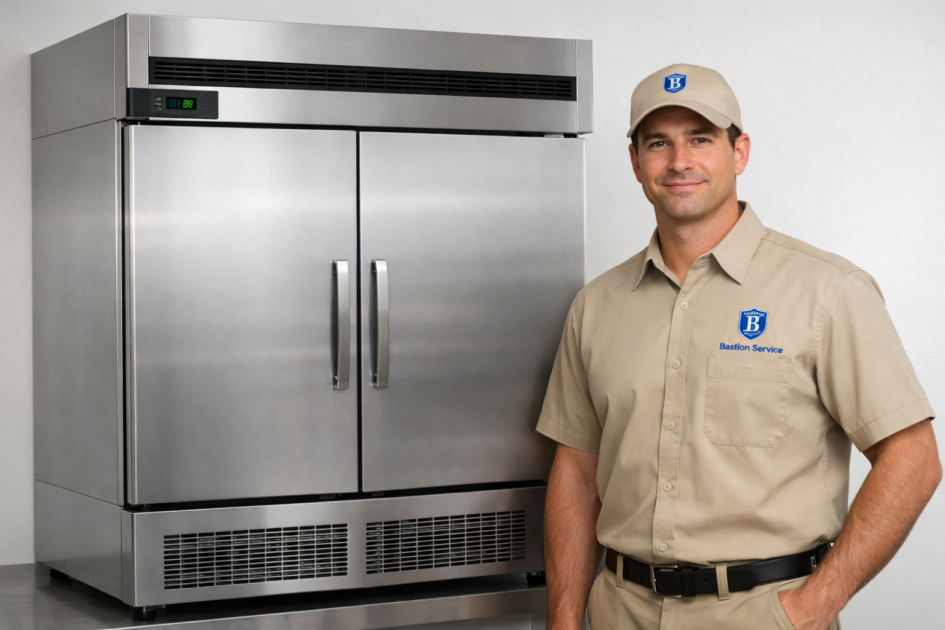
Refrigeration problems can disrupt prep schedules, product holding, and daily service long before a unit stops completely. When a Turbo Air refrigerator or freezer begins running warm, collecting frost, leaking water, or showing uneven cabinet temperatures, service should focus on what the pattern is actually telling you. Bastion Service helps businesses in Palos Verdes Estates evaluate those symptoms, determine the source of the problem, and schedule repair based on downtime risk, product exposure, and the condition of the equipment.
For specific equipment paths in Palos Verdes Estates, review Turbo Air Fridge Repair in Palos Verdes Estates, Turbo Air Freezer Repair in Palos Verdes Estates, and Commercial Appliance Repair in Palos Verdes Estates.
For many operators, the key question is not just what failed, but whether the unit can keep running safely until repair is completed. That answer depends on the symptom group. A cabinet that is slightly inconsistent may point to airflow or control issues, while a freezer that is softening product or a refrigerator that no longer recovers after door openings may need faster attention. Early service can prevent a manageable issue from turning into a larger cooling failure.
What Turbo Air refrigeration symptoms usually mean
Turbo Air refrigeration equipment often shows warning signs before a full breakdown. Those signs matter because the same visible symptom can come from different underlying causes. Good repair planning starts by matching the symptom to the likely system involved rather than replacing parts based on guesswork.
Warm cabinet temperatures and poor recovery
If a refrigerator is not holding its set temperature or a freezer takes too long to pull back down after normal use, the issue may involve condenser airflow, evaporator fan performance, sensors, control response, door sealing, defrost operation, or a developing sealed-system problem. Warm conditions that appear only during busy periods can still indicate a repair issue, especially if the unit used to recover normally under the same workload.
Operators should pay attention to whether the problem affects the whole cabinet or only certain sections. A full-cabinet temperature rise often points to broader cooling or airflow trouble, while isolated warm spots may suggest fan, circulation, loading, or internal blockage issues.
Frost buildup inside the freezer or on internal components
Frost that keeps returning is rarely something to ignore. In freezers, it can indicate a defrost failure, air infiltration from worn gaskets or misaligned doors, or restricted airflow caused by ice accumulation. Excess frost reduces usable space, interferes with circulation, and forces the equipment to run longer to maintain temperature.
If frost is appearing around the evaporator area, along door openings, or in patterns that change quickly, service is usually the smarter next step. Waiting too long can turn a correctable defrost or sealing problem into a deeper cooling complaint.
Weak airflow and uneven cooling
One of the most common complaints with refrigerator and freezer equipment is uneven performance from shelf to shelf or section to section. Product near one area may stay colder while another area drifts out of range. That symptom can be tied to evaporator fan issues, blocked air channels, frost interference, sensor placement, or loading practices that reduce circulation.
Uneven cooling is important because it affects more than comfort with the display reading. It can create inconsistent holding conditions inside the same cabinet, making it harder to trust the unit during normal operations.
Water leaks, condensation, and moisture around the unit
Water around refrigeration equipment may come from a clogged or frozen drain, defrost drainage problems, heavy condensation, door seal failure, or melting ice caused by unstable temperature performance. In refrigerator units, repeated condensation can also suggest that warm air is entering the cabinet more often than it should.
Moisture should be treated as both a performance issue and an operations issue. It can create slip hazards, damage surrounding surfaces, and signal that another cooling-related fault is already developing.
Refrigerator and freezer issues often overlap
Although refrigerators and freezers operate differently, many repair calls involve the same system groups. Fans, controls, defrost components, door hardware, gaskets, drains, and airflow pathways all affect day-to-day performance. That is why a freezer with frost buildup and a refrigerator with warm sections may both trace back to related airflow or control failures.
For businesses in Palos Verdes Estates, it helps to look at the operational effect of the symptom:
- Product temperatures are becoming harder to maintain consistently
- The cabinet runs longer than normal or seems to cycle poorly
- Frost, ice, or water returns after being cleared
- Door closures feel less reliable or seals look worn
- One section performs differently from the rest of the unit
- The equipment no longer recovers as expected during daily use
When those signs appear together, the unit usually needs more than observation. A service visit can determine whether the problem is limited to one repairable component or whether multiple conditions are affecting performance at the same time.
When a problem is likely getting worse
Some refrigeration problems remain relatively stable for a short period, while others escalate quickly. The most concerning signs are temperature drift that keeps returning, constant running, repeated frost accumulation, water that reappears after cleanup, and cabinets that feel noticeably less effective during normal use.
Businesses should be especially cautious when:
- A freezer begins softening stored product
- A refrigerator shows rising temperatures during routine door openings
- The unit sounds like it is running almost continuously
- Manual adjustments no longer improve holding performance
- The same symptom has returned after prior service or temporary fixes
In those situations, continued operation can increase strain on major components and make scheduling more urgent later. It may also complicate diagnosis if the original problem begins affecting additional parts of the system.
How repair decisions are usually made
Effective repair planning starts with the equipment’s actual operating behavior. A technician typically looks at temperature control, fan operation, frost pattern, door condition, drainage, sensor response, and overall cooling performance. That information helps narrow down whether the issue is primarily electrical, mechanical, airflow-related, or part of a larger cooling-system failure.
From there, the next practical questions are:
- Can the unit remain in service while repair is arranged?
- Is the fault likely isolated or part of a broader decline in performance?
- Will the repair restore reliable operation, or is the equipment showing repeated age-related issues?
- Does the current symptom create a product-risk or workflow problem that requires faster scheduling?
That approach is especially useful when the equipment is still running but no longer performing normally. Many units fail gradually, and those are often the cases where a symptom-based service assessment has the most value.
Scheduling service with less disruption to operations
Businesses often wait until a refrigerator stops cooling or a freezer fails completely, but many service calls can be made earlier based on warning signs. Scheduling repair when symptoms first become consistent may help reduce lost product, rushed inventory moves, and unplanned interruptions during the workday.
If your Turbo Air refrigeration equipment in Palos Verdes Estates is showing warm temperatures, weak airflow, frost buildup, moisture, or unreliable recovery, the best next step is to arrange a diagnostic visit and confirm the repair path. A symptom-based service call can help you decide whether the unit should stay in use, how urgent the repair is, and what action makes the most sense for daily operations.


