





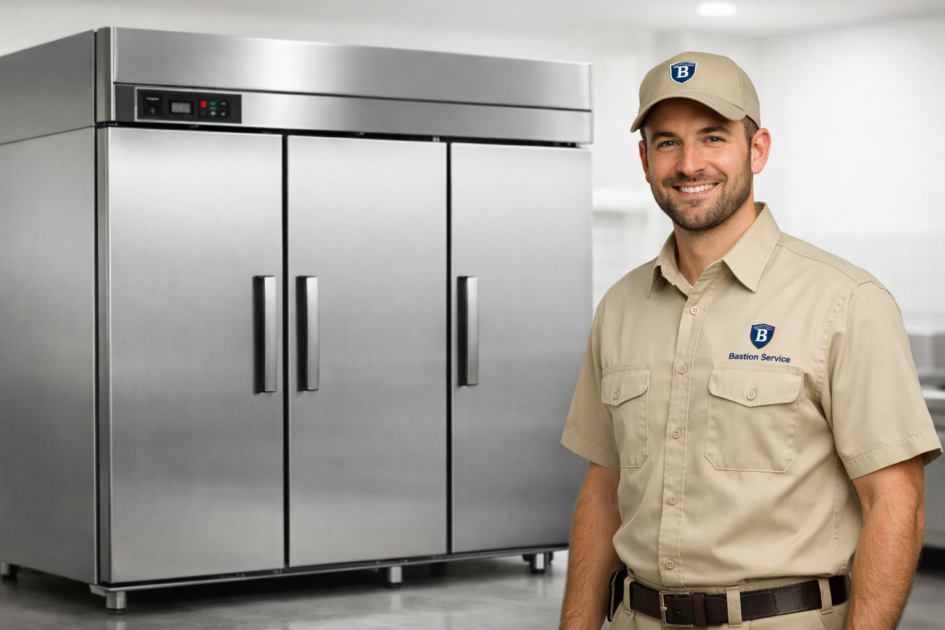
Turbo Air refrigerators and freezers that begin missing target temperatures, building frost, leaking, or losing airflow can disrupt prep, storage, and service long before the unit fully stops. For Del Rey businesses, the right response is to tie the symptom pattern to a repair decision quickly so inventory risk, staff workarounds, and equipment strain do not keep growing. Bastion Service provides Turbo Air refrigeration equipment repair for local business operators who need diagnosis, scheduling, and next-step guidance based on how the unit is actually performing.
For specific equipment paths in Del Rey, review Turbo Air Refrigerator Repair in Del Rey, Turbo Air Freezer Repair in Del Rey, and Commercial Appliance Repair in Del Rey.
What Turbo Air refrigeration equipment problems usually need service
Many refrigeration calls begin with a unit that still powers on but no longer performs the way it should. A refrigerator may cool unevenly from top to bottom, while a freezer may take too long to pull back down after normal door openings. In both cases, the visible symptom is only the starting point. Similar complaints can come from airflow restrictions, fan trouble, frost buildup, controls, door sealing problems, drain issues, or larger cooling system faults.
Common repair concerns include:
- Cabinet temperatures drifting above the normal range
- Warm sections inside a refrigerator or freezer
- Slow recovery after loading or frequent door use
- Heavy frost, ice accumulation, or blocked evaporator areas
- Water leaking inside the cabinet or onto the floor
- Fans running with weak airflow
- A unit running constantly, cycling too often, or becoming unusually noisy
- Doors that do not close or seal correctly
These issues affect more than temperature alone. They also influence product rotation, line efficiency, cleanup, and the ability to keep the equipment in service safely until repairs are completed.
Refrigerator and freezer temperature problems
When the cabinet is on but product is not staying cold enough
If a Turbo Air refrigerator or freezer is warming up, the cause may be as simple as poor door sealing or as involved as a failing fan, sensor, defrost problem, dirty condenser condition, or compressor-related issue. What matters for business owners is not guessing from the symptom alone. Temperature loss in one compartment, uneven readings from shelf to shelf, or repeated struggles to recover after normal use usually means the problem is already affecting system performance.
Refrigerators often show the issue first as soft cooling, warm corners, or inconsistent storage results. Freezers may show it through soft product, ice changes, or a cabinet that never seems to return to normal after doors are opened. In either case, a repair visit helps determine whether the unit can stay in limited use, whether inventory should be moved, and whether the fault is likely to worsen during continued operation.
Airflow complaints and uneven cooling
Why a unit can sound normal and still cool poorly
Weak airflow is one of the most common reasons a Turbo Air unit starts producing hot spots. Staff may hear the equipment running and assume cooling is happening normally, but internal circulation can still be restricted by ice, blocked air channels, evaporator fan trouble, or system conditions that prevent the cabinet from moving cold air where it needs to go.
In a refrigerator, that may show up as one shelf staying colder than another or product near the door warming faster than expected. In a freezer, it can lead to inconsistent holding across the compartment and longer pull-down times. Because airflow problems often get worse before they get obvious, early repair can prevent a manageable issue from turning into wider cooling loss.
Frost buildup and ice formation
Recurring frost usually points to an operating fault, not a one-time inconvenience
Frost inside Turbo Air refrigeration equipment can indicate warm air entering through a poor seal, a defrost system issue, sensor problems, or circulation trouble around the evaporator section. In freezers, heavy ice can choke airflow and push temperatures out of range. In refrigerators, moisture and frost can interfere with consistent cycling and create additional drain or condensate problems.
Repeatedly clearing frost without correcting the source usually leads to the same interruption again. If ice continues returning, the important question is whether the underlying problem is causing reduced airflow, extra compressor load, or unstable cabinet performance. Service is especially important when frost appears alongside temperature drift, water leaks, or fans that seem to run without normal cooling results.
Water leaks, moisture, and drain-related symptoms
Leaks often connect to cooling performance
Water around or under a Turbo Air refrigerator or freezer may come from a blocked or frozen drain, excess condensation, door gasket problems, or defrost-related issues that are no longer managing moisture correctly. For busy kitchens and food-service businesses, leaks are not just a housekeeping annoyance. They can create slip hazards, affect sanitation, and signal that the equipment is no longer cycling the way it should.
Moisture inside the cabinet also matters. Pooled water, damp product areas, or repeated condensation can point to the same underlying issues that later become airflow and temperature complaints. When a leak appears with frost, warm cabinet sections, or longer run times, it makes sense to treat it as a broader refrigeration repair problem rather than an isolated cleanup issue.
Run-time changes, noise, and signs of system strain
A Turbo Air unit that runs almost constantly, short cycles, or becomes louder than normal is often telling you that it is struggling to maintain proper conditions. Sometimes the reason is airflow restriction or a dirty heat-exchange area. In other cases, fans, controls, or cooling components are not performing as they should. The visible symptom may be noise or longer run time, but the business impact is higher energy use, less stable holding, and a greater chance of a service interruption during operating hours.
These calls are worth scheduling before complete failure. A refrigerator or freezer that is working too hard today often becomes the unit that cannot recover tomorrow.
When to keep using the equipment and when to stop
Not every issue requires immediate shutdown, but some symptoms should move to the top of the schedule. If temperatures are clearly rising, product is softening, frost is blocking airflow, water is repeatedly pooling, or the unit is running hard without restoring normal conditions, continued use may increase both inventory loss and repair severity.
If the complaint is milder, such as a door not sealing well or airflow seeming weaker while temperatures remain close to normal, prompt service can still help avoid escalation. The key is matching the urgency to the actual symptom pattern instead of assuming that a powered-on unit is still operating safely enough for daily demand.
Repair planning for Del Rey business operators
For restaurants, hospitality settings, and other local businesses using Turbo Air refrigeration equipment, repair decisions are rarely about parts alone. Operators need to know what failed, how that failure affects safe use, whether the unit can remain in service temporarily, and how quickly the problem should be addressed to limit downtime. That is especially true when the same refrigerator or freezer has had repeat temperature issues, recurring frost, or inconsistent performance during busy periods.
A useful service call should answer practical questions: whether the problem is isolated or system-wide, whether operation should be limited, and whether the repair makes sense based on the unit’s workload and condition. That gives managers a better basis for scheduling, product handling, and next-step planning.
Turbo Air refrigerator and freezer repair support in Del Rey
When Turbo Air refrigeration equipment starts affecting storage conditions, prep flow, or daily service timing in Del Rey, the most productive next step is to schedule repair around the actual symptoms rather than wait for total cooling failure. Fast evaluation helps determine whether the issue involves airflow, frost, drainage, controls, sealing, or a larger cooling fault, and it helps businesses make informed decisions before downtime spreads further into operations.


