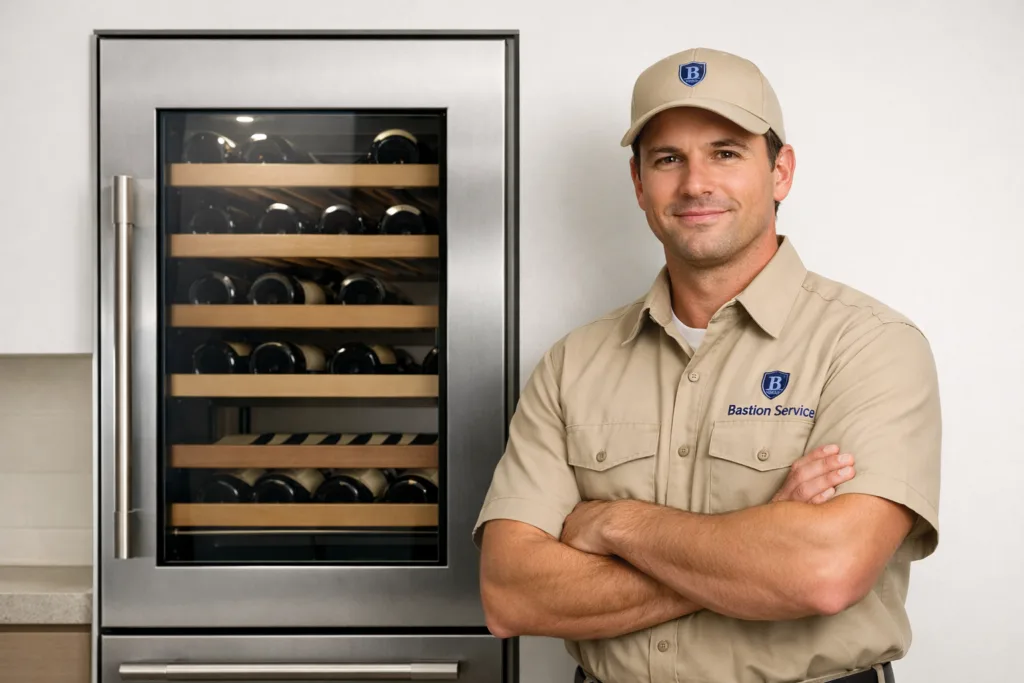
A True wine cooler that starts warming up, icing over, or running nonstop can put a collection at risk faster than many homeowners expect. What looks like one simple problem can come from several different causes, including weak airflow, a failing fan motor, a sensor reading incorrectly, a door seal leak, or trouble within the cooling system. The useful first step is identifying the actual fault so the repair decision is based on the cooler’s condition rather than guesswork.
Related True and wine cooler service paths in Century City include True Appliance Repair in Century City, Wine Cooler Repair in Century City, and True Refrigerator Repair in Century City.
Common True wine cooler problems in Century City homes
Wine cooler issues often begin with subtle changes. A cabinet that feels slightly warm, a little more condensation on the glass, or a new vibration sound may be the first sign that performance is slipping.
Not cooling enough
If the display is set correctly but bottles are not staying at the expected temperature, possible causes include restricted condenser airflow, evaporator fan problems, inaccurate temperature sensing, control failures, or compressor-related trouble. In some cases the unit still runs and sounds normal, which can delay service even while the interior temperature keeps drifting upward.
This symptom matters because wine storage depends on stability, not just reaching a cold reading once in a while. If the cabinet cools inconsistently or takes much longer than usual to recover after the door opens, the underlying issue is usually already affecting performance.
Too cold or freezing bottles
Overcooling is often tied to a faulty thermistor, control board problem, or airflow imbalance inside the cabinet. Instead of a steady storage temperature, the unit may create cold pockets that freeze bottles near certain shelves while other areas stay closer to normal.
Freezing can damage labels, affect corks, and compromise the contents. If a True wine cooler is holding temperatures below the setting, continued use is usually not a good idea until the cause is confirmed.
Condensation, water, or interior moisture
Water inside the cabinet or around the base can come from a blocked drain, excess frost that later melts, warm air leaking through the gasket, or a door that is not sealing fully. In built-in installations, moisture problems are easy to miss until flooring or surrounding cabinetry is affected.
Condensation on glass alone does not always mean a major failure, but repeated moisture inside the cabinet usually means something is off with sealing, airflow, or temperature control.
Fan noise, rattling, or constant running
A change in sound is one of the most useful clues. Buzzing, clicking, rattling, or a fan that sounds rough can point to motor wear, mounting vibration, blade interference, start component issues, or compressor strain. A wine cooler that seems to run almost all the time may be trying to compensate for a cooling or airflow problem.
Even when the cabinet is still somewhat cool, nonstop operation usually means the system is working harder than it should. That extra strain can turn a manageable repair into a more expensive one if the problem is left alone.
How symptom patterns help narrow the cause
The most helpful details are often the ones homeowners notice day to day. For example, a cooler that starts warm in the morning but seems better later may be responding to intermittent fan or control issues. A unit that cools after being unplugged and restarted but fails again can suggest a problem that is cycling in and out rather than a simple settings issue.
- Warm cabinet with little noise: possible control, power, or compressor-start problem
- Warm cabinet with obvious fan or motor sound: possible sealed-system weakness or poor heat transfer
- Frost buildup along with temperature swings: possible gasket leak, airflow issue, or sensor fault
- Water appearing after periods of icing: likely drainage or defrost-related moisture path problem
- New rattling in a built-in unit: possible vibration, fan wear, or mounting issue
These patterns do not replace service, but they help explain why the same visible symptom can lead to different repair paths.
What makes built-in wine cooler problems harder to ignore
Many residential wine coolers are installed into cabinetry, where airflow and door alignment matter more than homeowners realize. If surrounding panels are tight, vents are obstructed, or the unit is slightly out of level, cooling performance can suffer and noise can increase. A built-in cabinet can also hide small leaks or recurring condensation until there is staining, odor, or swelling in nearby materials.
In Century City homes, this is one reason small wine cooler issues often deserve quicker attention than owners initially expect. Performance problems do not always stay contained to the appliance itself.
When service is worth scheduling
It is usually time to schedule repair when the interior temperature does not match the setting, bottles feel warmer than normal, frost keeps returning, condensation builds up repeatedly, or the unit develops a new sound that does not go away. A cooler that works normally for a short stretch and then slips again also deserves attention, because intermittent failures tend to become more frequent over time.
Service is especially important when the unit is leaking, freezing contents, or running continuously. Those symptoms can lead to bottle loss, excess wear on major components, and moisture damage around the installation area.
What homeowners can check before a visit
A few basic checks can help rule out simple operating issues:
- Make sure the power supply is stable and the outlet is working properly.
- Confirm the temperature setting was not changed accidentally.
- Check that bottles or shelves are not blocking interior airflow.
- Inspect the door for anything preventing a full seal.
- Look for visible dust buildup in accessible venting areas.
- Notice whether the noise changes when the door opens or closes.
These steps are not a substitute for repair, but they can provide useful clues and help separate a loading or airflow issue from a component failure.
Repair or replace a True wine cooler?
The answer depends on the failed part, the unit’s age, the overall cabinet condition, and whether the problem is limited to serviceable components or involves major cooling-system work. Repairs often make sense when the issue is isolated to fans, sensors, controls, gaskets, or drainage. Replacement becomes more likely when performance has been declining for a long time, several faults are showing up together, or the cost of a major repair approaches the value of the unit.
For homeowners in Century City, the best decision usually comes after the fault is identified and the expected reliability of the repair is weighed against the age and condition of the cooler.
What a practical repair plan should answer
Most people do not need a long technical explanation. They need to know what is failing, whether continued use could make things worse, and whether the repair is likely to restore stable operation. A good service recommendation should also account for whether the symptom is isolated, recurring, or part of a broader cooling decline.
When a True wine cooler starts showing temperature swings, fan noise, condensation, or control-related behavior, a focused evaluation helps turn a vague symptom into a clear next step for the home and the collection stored inside.