
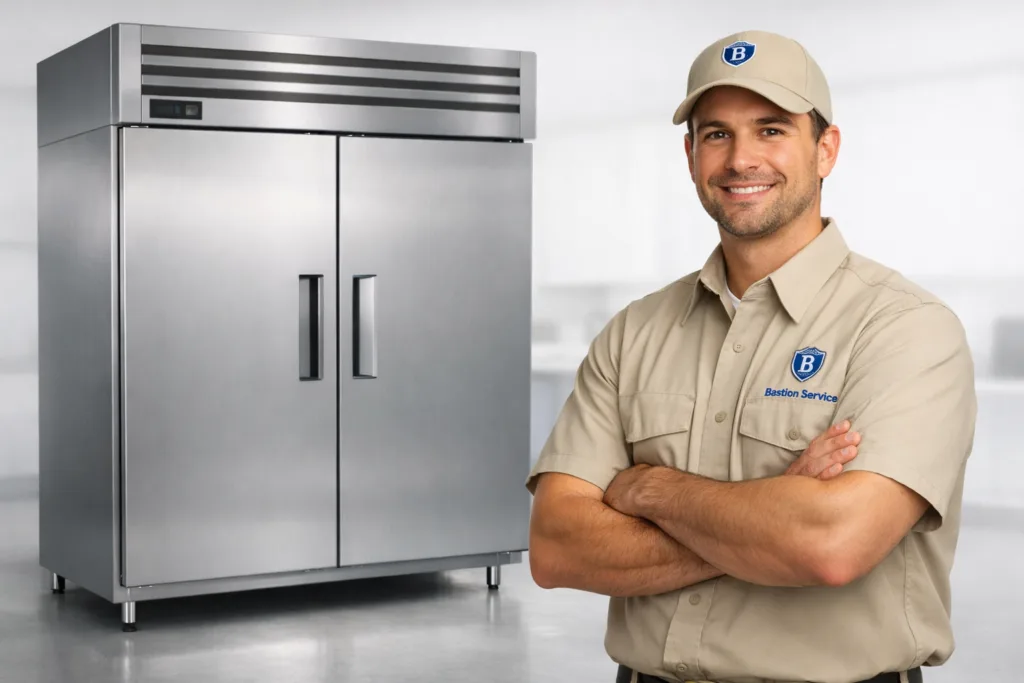




A True freezer that starts running warm, icing over, leaking, or making new noise should be evaluated before the problem spreads to stored product, prep schedules, and staff workflow. For businesses in Venice, repair service is most useful when the visit is centered on the actual symptom pattern, the urgency of the downtime, and what needs to happen next to stabilize the unit. Bastion Service works with businesses in Venice to inspect True freezer failures, identify the cause, and schedule repair based on how the equipment is affecting day-to-day operations.
Related commercial service paths in Venice include True Commercial Repair in Venice, Commercial Freezer Repair in Venice, and True Refrigerator Repair in Venice.
Common True Freezer Problems That Call for Service
Not freezing hard enough
If product is softening, cabinet temperature is drifting upward, or recovery is slow after the door closes, the issue may involve restricted airflow, evaporator icing, a weak fan motor, dirty condenser coils, control problems, or sealed system trouble. What matters is that a freezer can look like it is still operating while no longer protecting inventory at the level your business needs.
Frost buildup inside the cabinet
Heavy frost on panels, around the evaporator area, or near the door opening usually means warm air is getting in or the defrost process is not clearing ice as it should. A worn gasket, a door that does not close cleanly, a defrost component failure, or poor air movement can all create the same visible result. Excess frost reduces usable space, disrupts circulation, and can turn a manageable repair into a larger one if ignored.
Constant running or short cycling
A True freezer that seems to run all the time may be struggling to remove heat, move air, or reach the target temperature. A unit that starts and stops too often may point to a control issue, a start component problem, or operating stress elsewhere in the system. Either pattern increases wear and often shows up before a full cooling failure.
Fan noise, rattling, or vibration
Grinding, buzzing, rattling, or intermittent fan noise can indicate motor wear, blade interference, loose mounting, or ice contacting moving parts. These sounds are easy to postpone when the cabinet is still cold, but unusual noise is often one of the earliest signs that a freezer needs attention before it drops out of service completely.
Leaks or moisture around the unit
Water on the floor or condensation where it should not be can come from drain restrictions, defrost issues, door sealing problems, or internal icing that later melts. In a busy work area, moisture around refrigeration equipment is not just messy. It can create safety concerns, sanitation issues, and added stress on the unit if the underlying cause is left in place.
Why Is My True Freezer Not Staying Cold Enough?
This is one of the most common service calls because several failures can produce the same result. A freezer that is not staying cold enough may have blocked airflow, frost-covered evaporator coils, a weak evaporator or condenser fan, dirty heat-rejection surfaces, a thermostat or sensor problem, or a more serious refrigeration-system issue. In some cases, the cabinet pulls down eventually but cannot recover fast enough during normal use. In others, it never reaches the target temperature at all.
The important point is that temperature loss should not be treated as a simple setting issue until the freezer is checked. If the cause is mechanical or electrical, changing controls without diagnosis can delay the real repair and extend downtime.
Symptom Patterns That Help Identify the Cause
Warm cabinet with little or no frost
This can point to airflow loss, fan failure, condenser problems, control issues, or refrigeration performance concerns. If the compressor is running but the cabinet is not pulling down, the system needs to be tested rather than guessed at.
Warm cabinet with heavy ice buildup
When cooling drops and ice is accumulating at the same time, defrost failure or restricted airflow becomes more likely. Ice around the evaporator section can choke circulation and make the freezer appear to have a much larger cooling problem than it first did.
Freezer sounds normal but recovery is too slow
If the unit eventually gets cold but takes too long after loading or door openings, that often suggests reduced efficiency rather than a total failure. Dirty condenser surfaces, weak fans, failing door gaskets, and partial airflow restrictions are common reasons.
Intermittent temperature swings
When the freezer alternates between normal operation and warm periods, controls, sensors, fan motors, or icing conditions may be causing the unit to perform inconsistently. Intermittent symptoms are especially important to document because they can become full failures with little warning.
What a Service Visit Should Evaluate
A useful repair call for a True freezer should go beyond identifying that the cabinet is warm. The inspection should look at overall cooling performance, evaporator condition, fan operation, condenser cleanliness, gasket sealing, drain behavior, control response, and whether there are signs of larger system stress. That process helps determine whether the repair is limited to one failed part or whether several related issues are contributing to the same complaint.
This matters for businesses in Venice because repair decisions affect more than equipment. They affect inventory exposure, staff time, and whether the freezer can remain in controlled use while parts or follow-up service are arranged.
When to Schedule Repair Right Away
- Stored product is soft, sweating, or no longer holding properly
- The temperature display is rising or fluctuating unexpectedly
- Frost is spreading across interior panels or around the evaporator area
- The door is not sealing well or condensation is forming around the opening
- The freezer runs nonstop or repeatedly restarts
- New fan noise, vibration, or compressor-related sounds have appeared
- Water is collecting around the base of the unit
These are signs that the problem has moved past routine observation. Continued operation can increase ice buildup, strain motors, worsen cooling loss, and make recovery more difficult once the repair is started.
Repair or Replace?
Many True freezer issues are repairable, especially when the cabinet is in good condition and the problem is tied to fans, controls, gaskets, drainage, defrost components, or maintenance-related performance loss. In those situations, repair is often the sensible choice because it restores function without replacing the entire unit.
Replacement becomes more likely when the freezer has a history of repeated failures, significant wear, major refrigeration-system problems, or repair costs that no longer match the condition of the equipment. The right recommendation depends on the age of the unit, the severity of the failure, and how essential that freezer is to daily business operations.
Preparing for a True Freezer Repair Appointment
Before service, it helps to note the current temperature, whether the issue is constant or intermittent, when the symptoms first appeared, and whether noise, frost, leaks, or slow recovery happened at the same time. If possible, keep the area around the freezer accessible so key components can be inspected without delay. Clear details about the failure pattern can shorten the diagnostic process and help the repair stay focused.
For businesses in Venice, the best next step is to schedule service when the first meaningful warning signs appear rather than waiting for a complete shutdown. A targeted repair assessment can show whether the issue is isolated, how urgent the correction is, and what path makes the most operational sense for your True freezer.


