
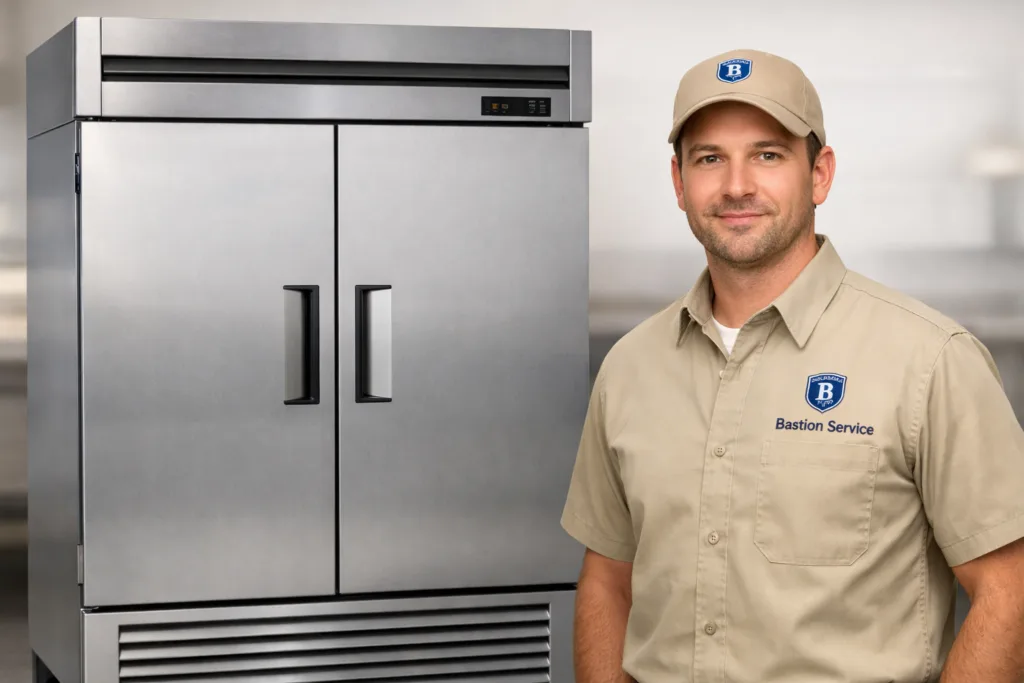




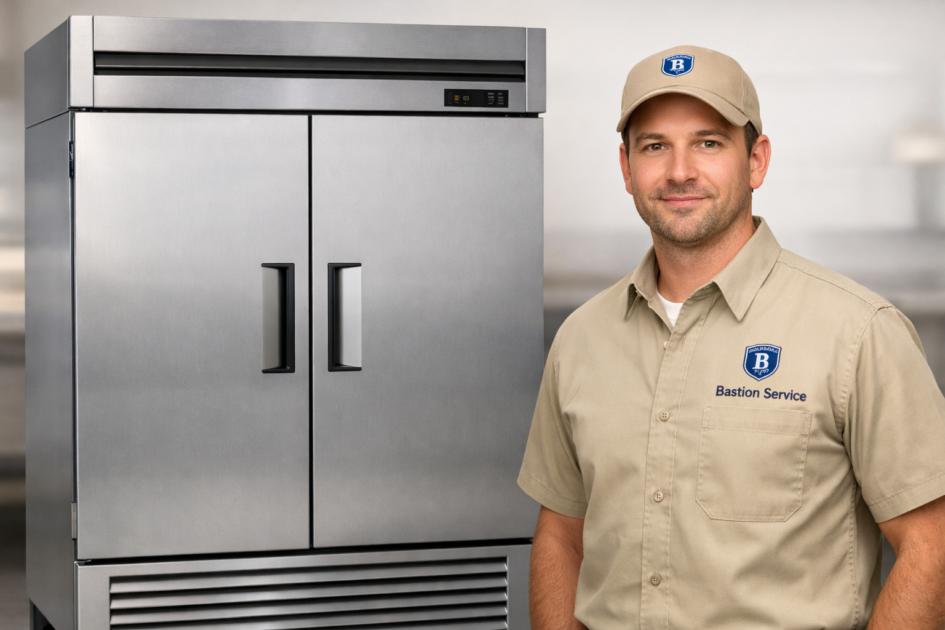
When a True freezer begins running warm, icing over, leaking, or making unusual noise, the priority is to protect product and limit disruption to daily operations. For businesses in El Segundo, the most useful repair visit starts with symptom testing, temperature verification, and a service plan based on what the equipment is actually doing under load. Bastion Service works on True freezer issues with attention to downtime, stored inventory, and whether the unit can stay in operation safely until repairs are completed.
Related commercial service paths in El Segundo include True Commercial Repair in El Segundo, Commercial Freezer Repair in El Segundo, and True Refrigerator Repair in El Segundo.
Some failures are obvious, but many are not. A freezer that looks like it has a simple cooling problem may actually have an airflow restriction, defrost failure, control fault, door seal leak, fan issue, or a more serious refrigeration-system problem. That is why repair decisions should be tied to the symptom pattern, not guesswork. In a business setting, the wrong assumption can mean extra downtime, unnecessary parts replacement, and more risk to stored product.
Common True freezer symptoms and what they can mean
Not staying cold enough
If the cabinet temperature is drifting upward, product is softening, or the freezer recovers too slowly after normal door use, several causes are possible. Dirty condenser coils, weak evaporator airflow, failing fan motors, sensor inaccuracies, control problems, or refrigerant-related issues can all produce similar results. In many cases, the freezer may still appear to be running normally, but the actual box temperature tells a different story.
This is one of the most important symptoms to address quickly because partial cooling can create a false sense that the unit is still protecting inventory. If temperatures are inconsistent from top to bottom or product is no longer holding as expected, service should be scheduled before the problem escalates.
Frost buildup on walls, shelves, or around the evaporator area
Heavy frost usually points to moisture entering the cabinet or a failure in the defrost cycle. Worn door gaskets, doors not closing fully, warped hinges, frequent openings, or a defrost component problem can all lead to frost accumulation. Once ice begins restricting airflow, the freezer often runs longer while cooling less effectively.
That combination matters because ice buildup is rarely just cosmetic. It can interfere with fan movement, reduce temperature stability, and place added strain on the system. If frost is returning quickly after being cleared, the underlying cause needs to be diagnosed rather than managed temporarily.
Fan noise, rattling, buzzing, or clicking
Noise changes often provide an early warning that a True freezer is not operating correctly. A rattling panel may be minor, but grinding or irregular fan noise can suggest ice interference, bearing wear, or a motor beginning to fail. Clicking can point to startup trouble, control issues, or electrical component stress.
If the sound occurs at certain times, such as after defrost, during recovery, or only when the compressor starts, that pattern can help narrow the diagnosis. Intermittent noises are worth documenting because they often become constant after the underlying part deteriorates further.
Water leaks or moisture around the unit
Water on the floor near a freezer can come from blocked drainage, defrost problems, door sealing issues, or heavy condensation caused by warm air infiltration. While a small leak may seem secondary to cooling performance, it often signals a condition that is already affecting internal operation.
For businesses, leaks also create safety concerns and can point to ice formation where it should not be. If moisture is recurring, repair should focus on why the water is forming and where the freezer is failing to manage it properly.
Running constantly or cycling in an unusual way
A freezer that rarely shuts off may be trying to overcome heat gain, restricted airflow, control inaccuracies, or declining refrigeration performance. A unit that short cycles can indicate a different set of concerns, including electrical faults, control problems, or compressor-related issues.
Either pattern matters because abnormal run behavior increases wear and usually appears before a full loss of cooling. If staff notice a change in how often the unit runs, how long it takes to recover, or whether it is operating harder than usual, that change is worth checking promptly.
Why is my True freezer not staying cold enough?
This symptom can come from several different faults, which is why accurate testing matters. In one freezer, the problem may be poor airflow caused by ice or a failing evaporator fan. In another, it may be a door gasket leak allowing warm air inside. In another, it may be a sensor, control board, condenser issue, or refrigeration fault reducing the unit’s ability to pull down and maintain temperature.
The key point is that “not cold enough” is a symptom, not a diagnosis. If the freezer is warming during busy periods, recovering slowly overnight, or showing uneven temperatures within the cabinet, those details help determine whether the issue is related to airflow, controls, heat infiltration, or system capacity. A service visit should verify actual operating conditions before any parts decision is made.
What a symptom-based repair visit should evaluate
A useful freezer service call should do more than confirm that the box feels warm. The technician should evaluate the complaint in context, including temperature behavior, frost pattern, airflow, fan operation, door condition, defrost function, and the way the unit is cycling. In a business environment, the repair decision also needs to account for urgency, product risk, and whether continued operation could cause more damage.
- Cabinet temperature and recovery behavior
- Evaporator and condenser airflow
- Door gasket condition and door alignment
- Frost or ice pattern inside the freezer
- Defrost components and control response
- Fan motor performance and noise
- Compressor startup and run characteristics
- Drain performance and moisture issues
That process helps separate a repairable component issue from a larger performance concern. It also gives the business a better basis for deciding whether to keep the unit running temporarily, reduce load, or take it out of service.
When to schedule service right away
Some freezer problems should not wait for a more convenient time. If product is softening, temperatures are climbing, alarms are recurring, ice is interfering with airflow, or the compressor is struggling to start, the risk to inventory and equipment condition increases quickly. The same applies when the freezer is warm in the morning after running overnight or when staff notice repeated performance drops during normal use.
Prompt repair is also important when the unit appears to be cooling unevenly. A freezer that keeps some sections cold while others drift can still expose stored product to unacceptable conditions. In many cases, the freezer is no longer operating within a stable range even though it has not completely failed.
Repair or replacement depends on the failure, not just the age
Many True freezer issues are repairable, including failed fan motors, temperature controls, sensors, door gaskets, defrost components, drain issues, and other airflow-related faults. Replacement becomes a bigger consideration when the equipment has repeated major failures, poor overall condition, or a high-cost repair that does not support reliable future operation.
The most practical decision usually comes down to three questions:
- What exactly has failed?
- What is the overall condition of the freezer?
- Will this repair support stable operation for the business going forward?
That is why a tested diagnosis is more useful than a quick assumption based only on age or symptom severity. A freezer with one isolated failure may be worth repairing immediately, while a unit with multiple developing issues may call for a broader equipment decision.
How businesses in El Segundo can prepare for a freezer repair visit
Good preparation can speed up diagnosis and help reduce disruption. If possible, note the current box temperature, when the issue started, whether the problem is constant or intermittent, and whether the freezer behaves differently after loading, during peak hours, or overnight. It also helps to identify any recent changes in noise, frost buildup, alarms, or water around the unit.
Staff should also be ready to explain whether the freezer still cools at all, whether certain shelves are warmer than others, and whether doors have been difficult to close or seal. These details often help identify whether the problem is tied to airflow, controls, access-related heat infiltration, or a more significant system fault.
Service decisions should support uptime, not just restore cooling
For businesses in El Segundo, True freezer repair is about more than getting the cabinet cold again for the moment. The goal is to identify why the problem started, what risks remain, and what repair path makes sense for the equipment’s role in daily operations. If your freezer is running warm, building frost, leaking, or showing signs of unstable performance, the next step should be a service-focused diagnosis that helps you protect product, plan repairs, and reduce unnecessary downtime.


