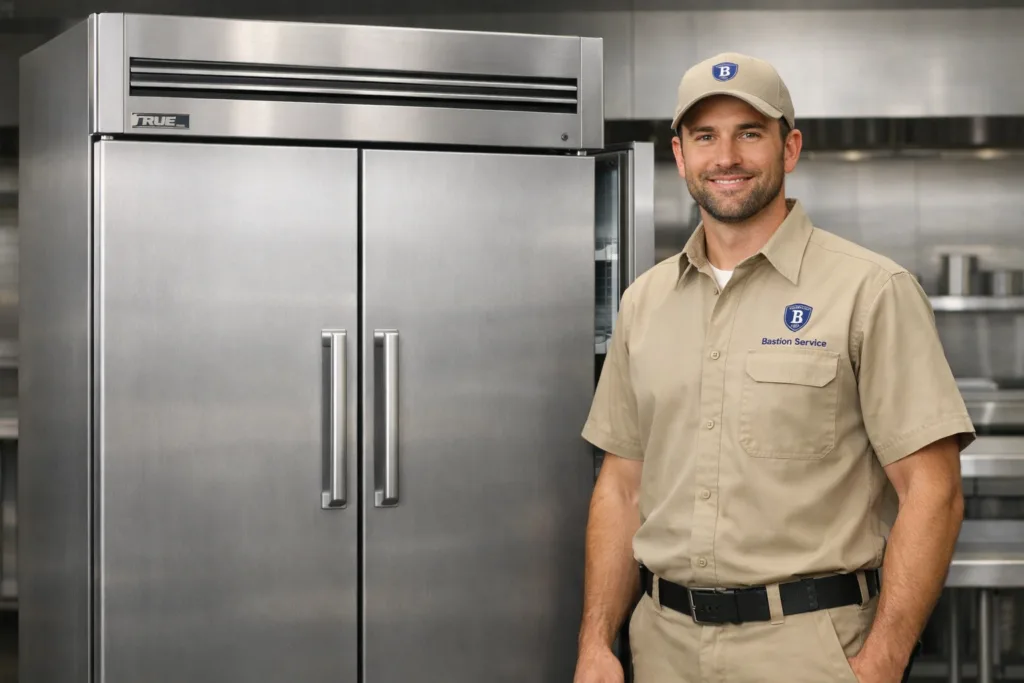




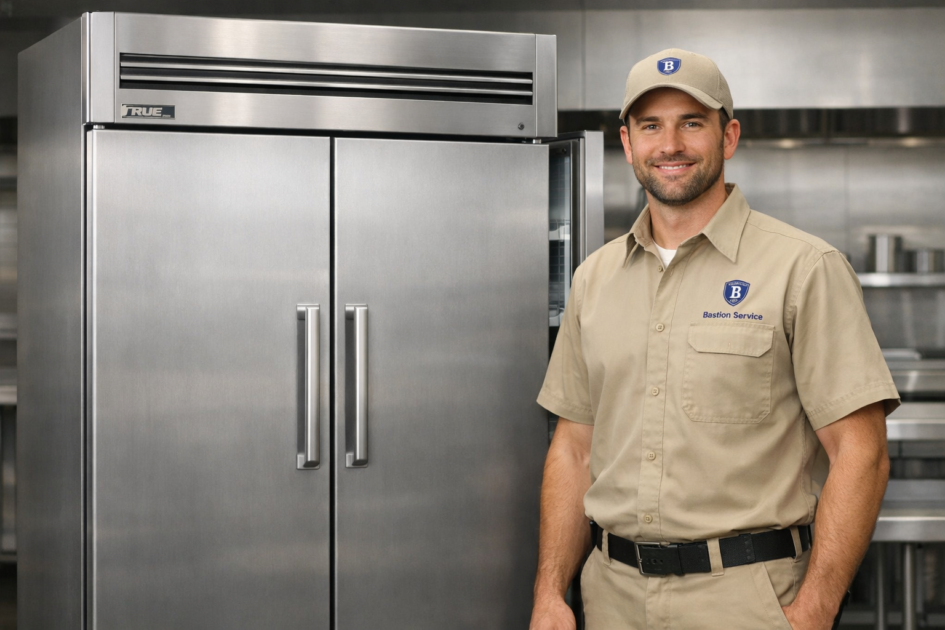
Freezer trouble can disrupt prep schedules, inventory control, and daily workflow fast, especially when temperatures start drifting or frost begins to spread. For businesses in Del Rey, the most effective next step is service that identifies the actual fault before parts are ordered or the unit is pushed harder than it should be. Bastion Service works on True freezer issues with a repair-focused process that helps narrow down whether the problem involves airflow, controls, defrost, door sealing, fan operation, or cooling-system performance.
Related commercial service paths in Del Rey include True Commercial Repair in Del Rey, Commercial Freezer Repair in Del Rey, and True Refrigerator Repair in Del Rey.
A True freezer may still appear to be running while failing to protect product the way it should. That is why symptom patterns matter. A cabinet that is warm in one area, noisy at startup, icing around the evaporator, or taking too long to recover after the door opens can point to very different repair paths. Good service starts by matching the complaint to the condition of the equipment and the way the unit is being used in the business.
Common True Freezer Problems That Need Repair
Freezer not staying cold enough
If the cabinet is not holding temperature, the cause may be as simple as restricted airflow or as serious as a refrigeration-system problem. Dirty condenser coils, failing evaporator fans, sensor issues, weak door sealing, defrost faults, or low cooling efficiency can all produce a similar warm-cabinet complaint. The main service goal is to determine why the freezer is losing capacity and whether the problem is isolated to one component or affecting the unit more broadly.
Frost buildup on panels, product, or inside the evaporator section
Heavy frost usually means moisture is entering where it should not, or the unit is not completing defrost correctly. A torn gasket, misaligned door, damaged heater, failed defrost control, or fan problem can all contribute. Once ice buildup starts restricting airflow, the freezer may begin warming unevenly and running longer than normal. Repair at that stage is often about addressing both the ice condition and the reason it formed in the first place.
Freezer runs constantly
A unit that rarely cycles off is often trying to keep up with heat it cannot remove efficiently. That may be related to coil condition, fan performance, door leakage, sensor misreading, or declining refrigeration output. Constant operation increases wear on major components and can lead to higher energy use, slower recovery, and more noticeable temperature swings during busy periods.
Fan noise, buzzing, clicking, or unusual vibration
Noise complaints are worth paying attention to because they often show up before a full cooling failure. A noisy evaporator fan, condenser fan, loose panel, stressed compressor startup component, or ice contact around moving parts can all create sounds that change over time. When the noise comes with poor cooling or frost, it usually signals that service should not be delayed.
Leaking water or ice around the base
Water near the unit may come from defrost drainage issues, blocked lines, excessive frost melt, or door-related moisture intrusion. In a freezer, leaks are often a warning sign that internal ice formation has already become more severe than staff can see from the outside. It is important to determine whether the leak is a drainage problem, a symptom of poor sealing, or part of a larger cooling issue.
Why Is My True Freezer Not Staying Cold Enough?
This is one of the most common service complaints, and it is also one of the easiest to misread without testing. A True freezer that is not staying cold enough may have one of several underlying problems:
- Airflow blocked by ice, product loading, or coil debris
- Evaporator or condenser fan failure
- Door gaskets leaking warm air into the cabinet
- Defrost system not clearing ice as intended
- Temperature sensor or control problems
- Reduced refrigeration performance
What matters in service is not just that the freezer feels warm, but how it is warming. If the top stays colder than the bottom, if recovery is slow after door openings, or if the issue appears only during heavier use, those details help narrow the diagnosis. That is also why repeated thermostat adjustments rarely solve the real problem for long.
Symptom Patterns That Help Guide Diagnosis
Warm cabinet with little or no frost
When the freezer is warm but not heavily iced, technicians often look first at fan operation, controls, condenser condition, or cooling-system efficiency. This pattern can suggest the unit is running but not moving or removing heat effectively enough to maintain proper freezing temperatures.
Warm cabinet with heavy frost
If temperatures are rising while frost builds quickly, airflow restriction and defrost issues move higher on the list. Ice can choke off circulation across the evaporator and make the freezer look like it has a major cooling failure even when the root cause is tied to moisture intrusion or a failed defrost component.
Intermittent temperature swings
When staff report that the freezer is fine one day and too warm the next, the problem may involve sensors, controls, fan motors that cut in and out, wiring issues, or a door that does not always seal properly. Intermittent problems tend to get worse over time, and they are often easiest to identify when service is scheduled before the unit fails completely.
Slow recovery after loading or door openings
A freezer that eventually gets cold but takes too long to return to temperature may be dealing with reduced airflow, weakened cooling performance, or sealing problems. In a busy kitchen or other high-use setting, slow recovery can become a daily operational issue even if the cabinet does not fully fail.
When Service Should Be Scheduled Promptly
Businesses in Del Rey should arrange repair soon when any of the following signs appear:
- Product is softening or temperatures are drifting above normal range
- Frost buildup returns quickly after being cleared
- The door does not close or seal the way it used to
- The evaporator section appears iced over
- Fan noise, clicking, or buzzing is becoming more noticeable
- The unit is running almost nonstop
- Water or ice is forming around the base of the cabinet
- Controls, alarms, or display behavior seem inconsistent
These issues can move from manageable to disruptive quickly. In business settings, delay often means more stress on the unit, more product risk, and less flexibility in scheduling repair around normal operations.
What Technicians Typically Check on a True Freezer
A proper visit usually involves more than confirming that the freezer is warm. Depending on the symptom, service may include inspection of:
- Condenser coil condition and airflow path
- Evaporator fan and condenser fan operation
- Door gaskets, hinges, and closing alignment
- Defrost components and ice accumulation patterns
- Temperature controls, probes, and wiring connections
- Drain condition where applicable
- Compressor operation and related electrical components
- Overall cooling performance under load
This kind of inspection helps separate a straightforward repair from a more advanced problem. It also helps business owners and managers understand whether they are dealing with a single failed part, a maintenance-related issue, or a unit showing signs of broader wear.
Preparing for a True Freezer Repair Visit
Before service arrives, it helps to note when the issue started, whether it is constant or intermittent, and what staff have observed. Useful details include recent frost buildup, unusual sounds, alarm behavior, whether the door has been sealing correctly, and if product temperature is affected throughout the cabinet or only in certain sections.
If possible, avoid repeatedly changing control settings before the appointment. That can make the symptom harder to track and may delay diagnosis. It also helps to keep the area around the freezer accessible so core components and airflow sections can be checked without extra delay.
Repair or Replacement Considerations
Many True freezer problems are repairable when the cabinet is otherwise in good condition and the failure is limited to a fan motor, gasket, sensor, defrost part, control issue, or similar component. In other situations, repeated cooling complaints, worsening reliability, physical cabinet wear, or multiple system faults may change the conversation.
The right decision usually depends on how the unit is performing now, what has already been repaired, how critical the freezer is to daily operations, and whether one repair is likely to restore stable use or only buy a short amount of time. A service visit should help clarify that difference rather than leave the business guessing.
True Freezer Service for Businesses in Del Rey
When a True freezer starts showing signs of trouble, the best next move is to schedule service before a temperature issue becomes a full downtime event. For Del Rey businesses, repair is most useful when it connects the visible symptom to the actual failed part or system, sets realistic expectations, and helps management decide how quickly the unit needs attention. Whether the issue involves frost, poor airflow, fan noise, leaking, or weak cooling, timely diagnosis gives you a better chance of protecting inventory and getting the freezer back into reliable operation with less disruption.