
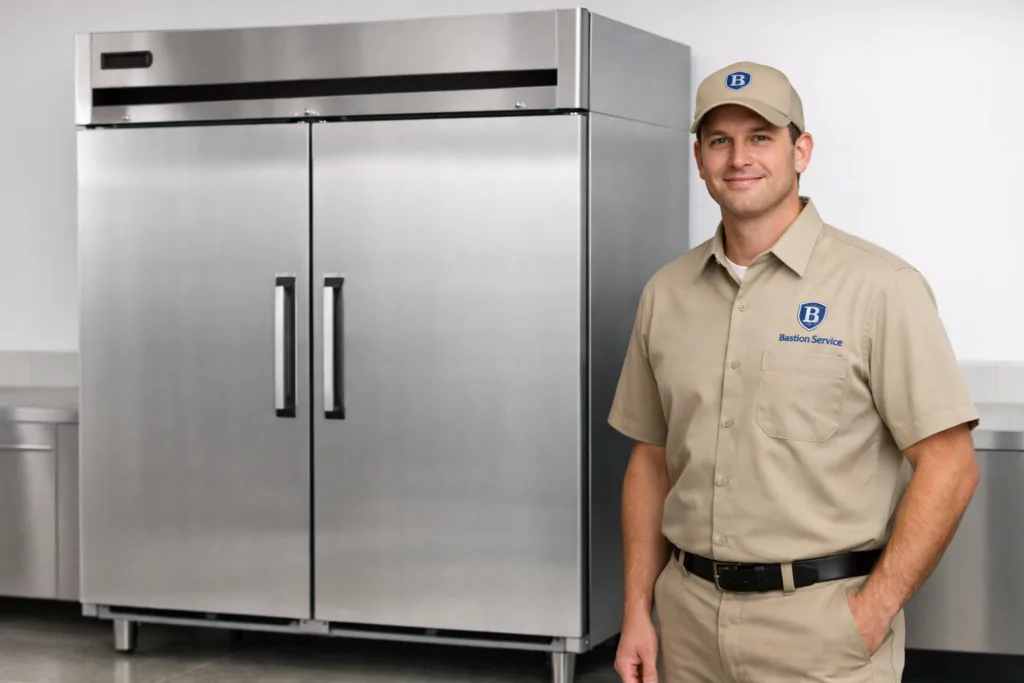




When a True refrigerator or freezer starts drifting out of range, building ice, or recovering too slowly, the next step should focus on protecting product and keeping operations moving. For businesses in West Hollywood, repair decisions usually need to happen quickly: confirm the fault, understand whether the unit can stay in limited use, and schedule the work before a smaller issue turns into a longer outage. Bastion Service helps businesses in West Hollywood troubleshoot True refrigeration equipment with symptom-based diagnosis, repair planning, and scheduling that reflects the real impact on daily operations.
For specific equipment paths in West Hollywood, review True Refrigerator Repair in West Hollywood, True Freezer Repair in West Hollywood, and Commercial Appliance Repair in West Hollywood.
What True refrigeration equipment problems usually need service
True refrigeration equipment is often called in for service when temperature stability starts to change. A refrigerator may hold cool conditions in the morning and run warm later in the day, or a freezer may begin softening product even though the unit is still running. These symptoms can come from airflow restrictions, fan motor trouble, sensor or control issues, frost blocking circulation, condenser problems, or sealed system faults.
Other common service calls involve repeated frost buildup, interior condensation, pooling water, doors that no longer seal well, loud or unusual operating sounds, and cabinets that seem to run constantly without recovering properly. Because different failures can create similar symptoms, the most useful repair visit is one that identifies the actual cause before parts are replaced or the equipment is put back under a full load.
- Refrigerators running warm or showing uneven cabinet temperatures
- Freezers struggling to pull down or maintain frozen storage conditions
- Heavy frost, ice around the evaporator area, or frost near door openings
- Weak airflow, slow recovery, or product zones that cool differently
- Water leaks, excess condensation, or recurring drain-related moisture
- Units that short cycle, run non-stop, or sound different than normal
How refrigerator and freezer symptoms point to different repair paths
Running warm or not cold enough
A warm refrigerator or a freezer that no longer holds product properly is one of the clearest signs that service should be scheduled. In some cases, the issue is tied to dirty heat rejection surfaces, weak condenser performance, airflow loss, or evaporator icing. In others, the problem is related to controls, sensors, compressor performance, or refrigerant loss. Since these faults do not all carry the same urgency or repair scope, temperature complaints should be diagnosed rather than handled through repeated setting adjustments.
Slow recovery after the door opens
If cabinet temperature takes too long to recover after loading, stocking, or normal staff access, the equipment may be losing airflow efficiency or capacity. Businesses often notice this as product taking longer to stabilize, more frequent alarms, or staff needing to monitor the unit more closely during service hours. Slow recovery can indicate fan problems, frost accumulation, door sealing issues, or reduced cooling performance that is becoming more obvious under normal use.
Heavy frost or interior ice
Frost is more than a cosmetic issue. Once ice starts building on interior surfaces or around airflow components, the unit can lose circulation and begin cooling unevenly. That can lead to longer run times, reduced storage confidence, and additional strain on motors and other components. Common causes include gasket leaks, warm air intrusion, defrost failures, drain problems, and temperature imbalance inside the cabinet.
Uneven cooling from one section to another
When one shelf, section, or side of the cabinet stays colder than the rest, airflow usually becomes a major part of the diagnosis. Product placement may temporarily hide the problem, but it does not resolve the cause. Fans, blocked air channels, frost restrictions, and control issues can all create hot spots or inconsistent storage conditions. In a busy kitchen or prep environment, uneven cooling often becomes a daily workflow problem long before the equipment fully fails.
Leaks, condensation, and pooling water
Water under or inside a True unit can come from blocked drains, excess frost melt, sealing problems, or cooling instability that creates abnormal condensation. Repeated leaking should be treated as both an equipment issue and an operational risk. Moisture on the floor affects staff safety, and recurring water inside the cabinet often signals that a larger cooling or defrost problem is developing.
Why airflow problems deserve early attention
Airflow complaints are easy to underestimate because the cabinet may still feel somewhat cold. But weak air movement often sits behind several symptoms at once: slow recovery, uneven temperatures, frost buildup, and product inconsistency from one area to another. In refrigerator and freezer equipment, proper air circulation is what allows the cabinet to hold stable conditions during normal opening and closing.
When airflow is reduced, staff may respond by moving inventory around, lowering the control setting, or reducing how often the unit is opened. Those workarounds may buy time, but they do not address the underlying fault. A service inspection helps determine whether the issue comes from fan failure, blocked passages, evaporator icing, control behavior, or another condition affecting circulation.
When continued operation may increase downtime
Some equipment problems can be managed briefly while service is being arranged, but others should be evaluated before the unit stays in regular use. A freezer that is warming quickly, a refrigerator that no longer recovers temperature, or a cabinet with expanding ice buildup can place extra strain on fans, compressors, and controls. The longer the equipment runs in an unstable condition, the greater the chance of broader failure or product loss.
Warning signs that should not be ignored include:
- Temperature drift that keeps returning after adjustments
- Constant running without reaching the expected cabinet condition
- Freezer product softening or refrigerator contents becoming unreliable
- Growing frost that returns soon after clearing
- Repeated leaks or condensation that staff are cleaning up daily
- New noises, hard starts, or changes in normal operating sound
In these situations, the repair question is not only what part failed. It is also whether the equipment should remain in service, operate with reduced load and close monitoring, or be taken offline until the fault is corrected.
Repair planning for businesses in West Hollywood
For West Hollywood businesses, refrigeration problems affect more than the cabinet itself. They can disrupt prep timing, inventory handling, service flow, and staff confidence in product storage. That is why repair planning should cover the symptom pattern, likely component failures, whether related parts need inspection, and how quickly the work should be scheduled based on downtime risk.
Older True refrigerators and freezers may also need a repair-versus-replacement discussion when multiple major issues appear at once or when repeat failures have already interrupted operations. In many cases, repair remains the right decision when the cabinet is structurally sound and the fault is isolated. In other cases, repeated cooling or control problems may suggest that another repair will not provide enough operating stability. A service assessment helps management make that decision based on condition, urgency, and reliability expectations.
What to watch for before a full cooling failure
Many units show smaller warning signs before they stop protecting product properly. Catching those signs early can reduce emergency downtime and make scheduling easier.
- Cabinet temperatures that fluctuate more than usual during the workday
- Longer pull-down times after restocking
- Fans that seem weaker, louder, or intermittent
- Condensation near doors or around the cabinet frame
- Ice returning in the same area again and again
- Staff noticing that some stored items stay colder than others
When those symptoms begin appearing together, the equipment is usually moving beyond a minor adjustment issue and toward a repair condition that should be confirmed promptly.
Scheduling True refrigeration equipment repair in West Hollywood
Service should be arranged when refrigerator or freezer performance starts affecting product protection, workflow, or confidence in daily use. Waiting for a complete shutdown often creates a harder scheduling situation and a bigger operational hit than addressing the problem while the equipment is still partially functioning. If your True refrigeration equipment in West Hollywood is showing temperature instability, airflow loss, frost buildup, leaks, or slow recovery, the best next step is to schedule a diagnosis, review the repair scope, and decide quickly whether the unit can remain in use while repairs are completed.


