
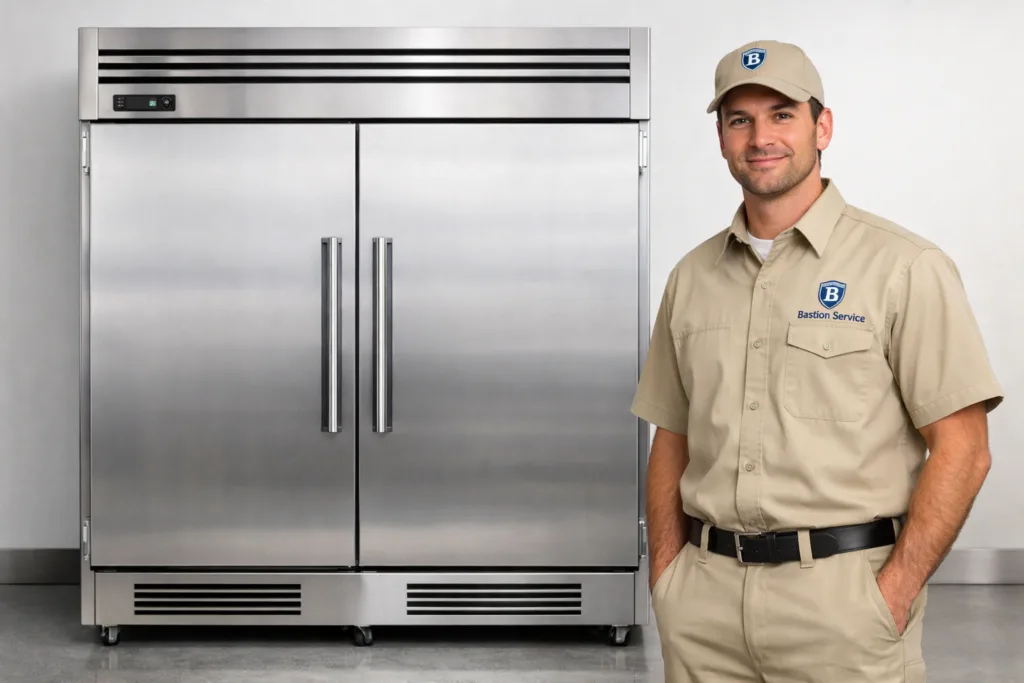




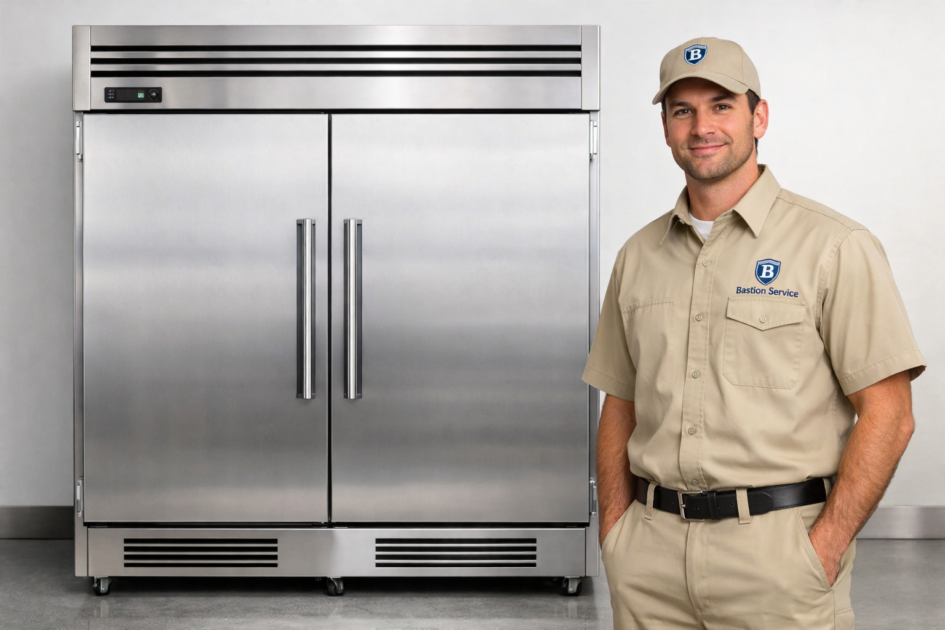
When True refrigeration equipment begins missing temperature targets, collecting frost, leaking water, or struggling to recover during normal use, service decisions usually need to happen quickly. For businesses in Torrance, the most important step is to determine whether the problem is affecting product holding, daily workflow, or component reliability, then schedule repair based on the actual risk to operations. Bastion Service provides True refrigeration equipment repair for refrigerator and freezer issues where diagnosis, repair timing, and downtime planning all matter.
For specific equipment paths in Torrance, review True Refrigerator Repair in Torrance, True Freezer Repair in Torrance, and Commercial Appliance Repair in Torrance.
What symptoms usually mean service should be scheduled
Refrigeration problems often start with a small change in performance and then become harder to manage over the course of a day. A cabinet that seems only slightly warm in the morning may later turn into a stocking problem, a product-loss concern, or an interruption that affects prep, storage, and service flow. Early service is often the best way to keep a manageable issue from becoming a larger failure.
Common signs that a True unit should be evaluated include:
- Cabinet temperatures that drift above target range
- Freezers that take too long to pull back down after door openings
- Frost buildup on interior surfaces or around evaporator areas
- Weak airflow or uneven temperatures from shelf to shelf
- Water pooling inside the cabinet or on the floor
- Long run times, short cycling, or poor recovery
- Warm spots in a refrigerator or soft product in a freezer
These symptoms may be tied to fans, controls, probes, defrost parts, gaskets, drainage components, coils, or refrigeration-system faults. Because several different failures can create similar warning signs, testing on site is what turns a symptom into a repair decision.
Refrigerator problems that affect daily operation
Warm cabinets and temperature drift
If a True refrigerator cannot maintain a stable holding temperature, there may be more than one contributing cause. Dirty condenser coils, weak fan operation, air leaks at the door, sensor issues, control failures, and refrigerant-related problems can all lead to a cabinet that looks like it is running but is not cooling correctly. In business use, that creates uncertainty about what can safely remain in the unit and how long it can stay in service.
Temperature drift also matters when the cabinet eventually cools, but only after long run times. That pattern can point to a system under strain rather than a simple one-time fluctuation. Repair should be scheduled before the unit loses recovery altogether or begins affecting inventory more directly.
Uneven temperatures from top to bottom or front to back
When one section of a refrigerator stays colder than another, airflow should be checked carefully. Product blocking vents, evaporator icing, fan motor problems, damaged gaskets, and cabinet-control issues can all create uneven performance. The result is often a refrigerator that seems partly functional while still putting stored items at risk.
For Torrance businesses, this kind of inconsistency can disrupt normal loading patterns and force staff to constantly move product around the cabinet. Service helps determine whether the issue is mainly air movement, a control problem, or part of a broader cooling failure.
Condensation and water inside the refrigerator
Moisture inside a refrigerator may come from warm-air infiltration, clogged drainage, poor door sealing, or frost that is melting because cooling performance is becoming unstable. If the same water issue keeps returning after cleanup, it usually means the underlying cause has not been corrected. That is when repair becomes more important than repeated maintenance-style cleanup.
Freezer symptoms that often need prompt repair
Soft product and slow temperature recovery
A True freezer that no longer holds hard freeze or takes too long to recover after routine door openings may be dealing with airflow restriction, evaporator icing, fan failure, sensor or control problems, or a refrigeration-system issue. Even when the cabinet still feels cold, slow recovery can be a warning that the equipment is no longer handling normal demand.
This is especially important when freezer use is frequent throughout the day. If the unit falls behind during regular operations, it may continue to deteriorate under load and become unreliable during the next shift.
Frost buildup and ice accumulation
Frost that returns quickly after clearing is one of the most common signs that a freezer needs service. Warm air entering through a bad gasket, a door that is not closing properly, drain issues, fan problems, or defrost failures can all allow ice to build where it should not. What starts as light frost can turn into blocked airflow, longer run times, reduced storage space, and more severe cooling problems.
Once ice begins affecting circulation or access to stored product, it makes sense to stop treating it as a cosmetic issue. Repeatedly removing frost without addressing the cause usually delays the needed repair and allows the freezer to operate under added strain.
Freezing inconsistently or not freezing at all
Some units still cool but do not actually maintain freezer performance. Others may freeze near one area while another section softens. Those symptoms can point to evaporator problems, restricted airflow, controls that are not responding correctly, or larger refrigeration failures. In either case, continued use without evaluation can make product-holding decisions more difficult and increase wear on major components.
Airflow, fans, and door-seal issues across refrigerators and freezers
Many True refrigerator and freezer complaints come back to how air moves through the cabinet. If circulation is reduced, even a running unit can lose consistency. Fans may be slowing down, stopping intermittently, or struggling because of ice buildup. Door gaskets may be leaking enough warm air to upset normal operation without making the problem obvious at first glance.
Typical airflow-related signs include:
- Warm spots near doors or certain shelves
- Product freezing in one area and warming in another
- Excess condensation
- Visible frost near interior panels
- Units that seem to run continuously
Because these symptoms overlap with control and refrigeration faults, proper diagnosis is important before deciding whether the repair is likely to be straightforward or more involved.
Leaks, drainage problems, and moisture that should not be ignored
Water on the floor or inside the cabinet is not always just a drainage issue, but drainage is a common starting point. Defrost water that cannot clear normally, blocked lines, excess condensation, and door-seal problems can all produce recurring leaks. In other cases, moisture appears alongside weak cooling, which suggests a larger problem affecting evaporator performance or cabinet temperature stability.
Separating ordinary cabinet moisture from more serious refrigeration-related concerns requires inspection and testing. If the leak is recurring, spreading, or appearing with frost and temperature loss, the equipment should be evaluated before additional damage develops around the unit or inside the cabinet.
When limited operation may be possible and when it is better to stop use
Not every issue requires immediate shutdown, but not every unit should remain in service while waiting for repair. If temperatures are clearly outside target range, the freezer is not recovering, frost is blocking airflow, or the unit is running excessively without reaching setpoint, reducing load or stopping use is often the safer choice. That can help prevent added compressor strain and reduce the chance of a larger failure.
On the other hand, some gasket problems, early drainage issues, or isolated control symptoms may allow for scheduled service while the unit remains in limited use. The key is whether the equipment is still holding temperature reliably enough for the way it is being used. Testing helps define that boundary so repair scheduling is based on actual operating condition rather than guesswork.
How repair decisions are usually made
Repair planning for True refrigeration equipment is not only about identifying a failed part. The decision also depends on equipment age, symptom history, how severe the current performance loss is, and whether the repair is likely to restore stable operation. Some visits lead to component repairs involving fans, probes, controls, gaskets, drains, or defrost parts. Other visits reveal heavier wear, repeated cooling loss, or compressor-related concerns that affect whether continued repair makes sense.
For businesses in Torrance, that decision often has to balance repair cost against downtime, inventory exposure, and the importance of the unit in daily operations. A useful service visit should leave the customer with a clear understanding of the fault, the urgency, and the next recommended step.
Scheduling True refrigeration equipment repair in Torrance
If a True refrigerator or freezer is running warm, building frost, leaking water, losing airflow, or recovering too slowly, the best next step is to schedule service before the problem spreads into a larger interruption. A local repair visit can confirm the source of the issue, identify whether the equipment can remain in limited use, and outline the repair path based on real operating conditions. For businesses in Torrance, timely diagnosis helps protect uptime, reduce avoidable product loss, and move the equipment back toward reliable day-to-day performance.


