




When True refrigeration equipment starts slipping out of normal operation, the most important step is to identify the fault before inventory loss, workflow disruption, or a harder shutdown forces a rushed decision. For businesses in Rancho Park, repair service is often less about one isolated symptom and more about understanding whether the problem involves airflow, temperature control, frost, drainage, door sealing, fan performance, or a deeper cooling-system issue that affects daily operations.
For specific equipment paths in Rancho Park, review True Refrigerator Repair in Rancho Park, True Freezer Repair in Rancho Park, and Commercial Appliance Repair in Rancho Park.
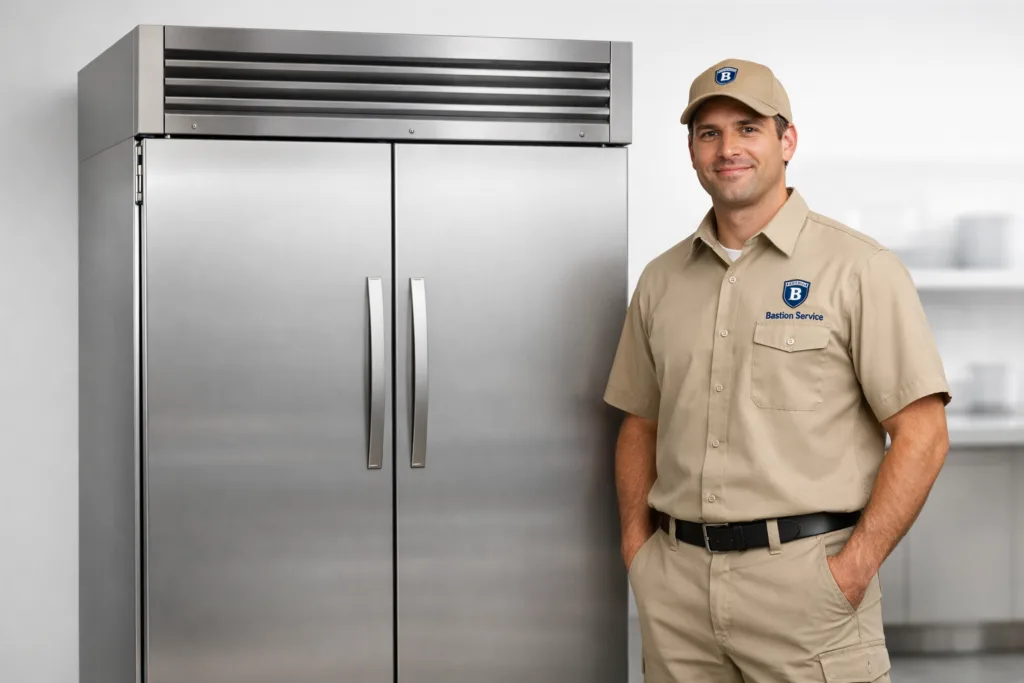
Bastion Service helps Rancho Park businesses troubleshoot True refrigerator and freezer problems with service-oriented diagnosis, repair scheduling, and recommendations based on how the equipment is actually performing. That matters when a unit is still partially cooling, cycling unpredictably, or showing multiple warning signs at once, because the right next step may be continued limited use, expedited repair, or taking the cabinet out of service to avoid broader damage.
True refrigerator and freezer repair for Rancho Park businesses
True equipment is often expected to hold steady temperatures through long operating hours, repeated door openings, and fast-paced kitchen or storage use. When a refrigerator runs warm or a freezer stops recovering properly, the visible symptom does not always point directly to the root cause. A warm cabinet, for example, may come from poor condenser performance, restricted internal airflow, fan failure, sensor issues, a control problem, gasket leakage, frost buildup, or refrigerant loss.
That is why symptom-based service matters. A repair visit should determine not only what failed, but also whether the issue has spread to related components, whether product temperatures are being affected, and how quickly the equipment needs attention to reduce downtime.
Temperature problems that often lead to service calls
Cabinet running warm
If a True refrigerator or freezer is staying above target temperature, the equipment may still look operational while no longer protecting product correctly. Warm conditions can be tied to condenser blockage, evaporator icing, weak fan operation, thermostat or control faults, sensor errors, or sealed-system problems. In many cases, the cabinet works harder and longer as the issue develops, which increases strain on major components.
Service should move higher on the schedule when the unit no longer holds temperature during normal business hours, recovery after door openings becomes noticeably slow, or settings remain unchanged while actual cabinet performance worsens.
Temperature swings and inconsistent holding
Intermittent temperature performance can be more difficult than a complete failure because the equipment may appear normal part of the time. Businesses in Rancho Park often notice this pattern as product temperatures varying through the day, a cabinet that seems fine in the morning but weak later, or a freezer that occasionally softens product before returning to colder operation.
These cases may involve sensors, controls, airflow restrictions, door sealing issues, frost accumulation, or ventilation conditions around the unit. Testing helps separate a temporary operating condition from a repair issue that is likely to worsen.
Slow freezer recovery
When a True freezer takes too long to pull back down after loading or routine access, that is usually a sign that cooling performance is no longer where it should be. Slow recovery may point to airflow loss, ice buildup, condenser trouble, fan issues, defrost faults, or declining system efficiency. Even if the freezer eventually reaches set temperature, delayed recovery can still create product risk and extra wear.
Airflow and circulation issues inside the cabinet
Weak airflow in refrigerator or freezer sections
Poor airflow often shows up before full cooling failure. A unit may still feel cold in one area while another section runs warmer, or product near the door may seem different from product deeper in the cabinet. In True equipment, this can happen when air paths are blocked, evaporator coils ice over, fan motors weaken, or controls fail to manage normal circulation and defrost behavior.
Because reduced airflow can create uneven temperatures and longer run times, it is usually better to address it early rather than wait for a no-cool condition.
Hot spots and uneven cabinet temperatures
If one shelf, one side, or one product zone is consistently warmer, the problem may not be random. Uneven cooling can be caused by circulation problems, loading patterns that block air movement, damaged door seals, partial frost restrictions, or failing internal components. A service diagnosis can determine whether the fix is straightforward or whether the cabinet is showing early signs of a larger cooling problem.
Frost buildup, ice formation, and defrost-related symptoms
Heavy frost inside the unit
Frost on interior walls, around product, near the evaporator area, or along door openings usually means moisture is entering the cabinet or the equipment is not clearing frost as intended. Common causes include damaged gaskets, door alignment issues, defrost component failure, sensor or control faults, and airflow restrictions that let ice build where it should not.
Excess frost can reduce usable storage space, block airflow, and make temperature control less reliable. It can also turn a manageable repair into a more involved one if the condition continues too long.
Ice around doors or evaporator sections
Ice buildup around door frames or internal cooling sections often points to warm-air intrusion, poor sealing, or a defrost problem that is allowing moisture to accumulate and refreeze. If this keeps returning after manual clearing, the issue usually needs repair rather than simple cleanup.
Leaks, moisture, and drainage problems
Water around a True refrigerator or freezer may come from blocked drains, condensation mismanagement, door gasket leakage, or frost melt that is not draining correctly. While some moisture issues appear minor at first, they can signal an airflow or defrost condition already affecting the cabinet’s cooling performance.
For businesses in Rancho Park, puddling water can also create avoidable floor hazards and interfere with surrounding operations. A service visit helps determine whether the problem is limited to drainage or whether it connects to a larger temperature or frost issue inside the equipment.
If the concern is not water but suspected refrigerant loss, the repair path changes significantly. Refrigerant-related problems typically require more detailed testing to confirm leak source, system condition, and whether repair is the right investment based on equipment age, workload, and overall reliability.
Signs the equipment should not be ignored
Some issues can be monitored briefly, but others should be scheduled quickly because continued use may increase damage or product loss. Warning signs include:
- Cabinet temperatures that stay above normal range
- Freezers that no longer recover in a normal time
- Heavy frost returning soon after being cleared
- Fans that sound weak, erratic, or unusually loud
- Long run times or constant operation
- Frequent on-off cycling
- Pooling water or repeat drainage problems
- Uneven cooling across shelves or sections
- Doors that do not seal cleanly
These symptoms do not always require immediate shutdown, but they do justify a repair decision sooner rather than later. The key question is whether the unit is stable enough for temporary use or whether ongoing operation is likely to worsen the failure.
What a repair assessment helps determine
A service assessment should do more than confirm that the equipment is not cooling correctly. It should help answer the practical questions businesses face during an equipment problem:
- Is the issue tied to one failed component or several related problems?
- Is the cabinet still safe to use in a limited way until repair?
- Is the fault likely to worsen quickly?
- Does the problem involve controls, airflow, defrost, sealing, or the cooling system itself?
- Is repair the sensible path, or is replacement worth considering?
That kind of evaluation is especially useful when a refrigerator or freezer is still partially operating, because visible cooling can make the problem seem less urgent than it really is.
Repair versus replacement considerations
Not every True refrigeration issue points toward replacement. Many problems involving fan motors, controls, sensors, gaskets, drainage, or defrost components can often be addressed with targeted repair when the rest of the equipment is in good condition. In other situations, the recommendation may need to account for repeat breakdown history, multiple overlapping faults, or more extensive cooling-system work.
For businesses, the decision usually comes down to reliability, downtime impact, repair scope, and whether the equipment can return to stable operation after service. A good diagnosis supports that decision with specifics instead of guesswork.
Scheduling service in Rancho Park
If a True refrigerator or freezer is showing warm temperatures, poor airflow, frost buildup, leaking water, unstable cycling, or slow freezer recovery in Rancho Park, scheduling repair early usually gives the business better options. The goal is to confirm the cause, define the repair path, and decide whether the equipment should remain in service, be used with caution, or be taken offline until the issue is corrected. Acting while the symptom is still manageable can help limit downtime, protect stored product, and keep a smaller repair from turning into a larger interruption.


