
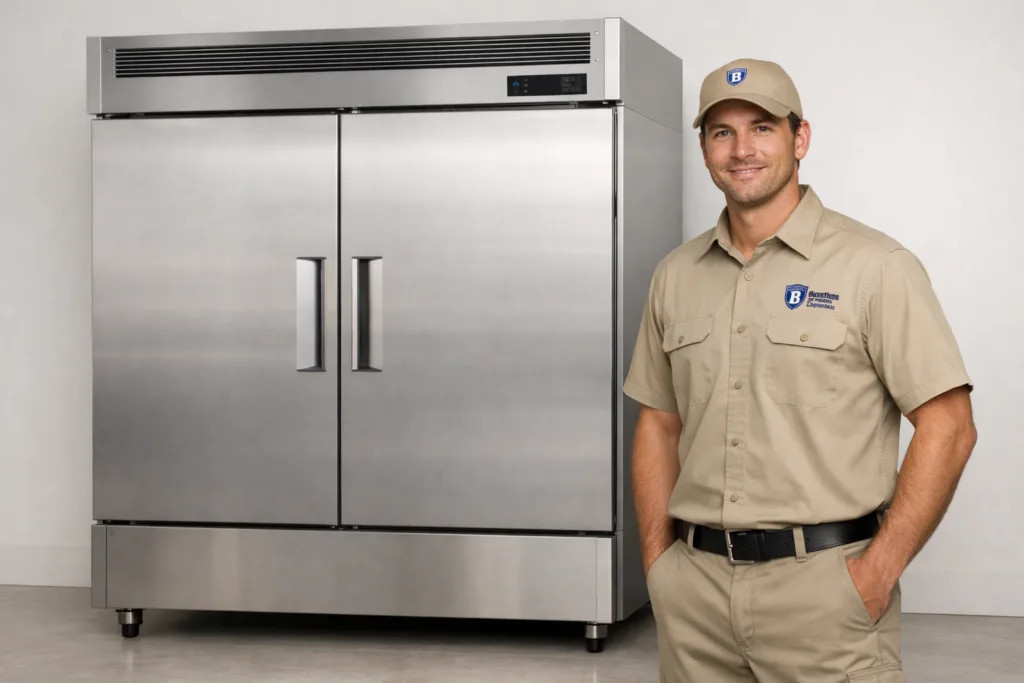




When True refrigeration equipment starts running outside normal conditions, service decisions need to happen quickly. A refrigerator that is warming product, a freezer that is slow to recover, or a cabinet that is building frost can interrupt prep, storage, and daily workflow. For businesses in Pico-Robertson, the most useful repair visit is one that identifies the actual fault, explains the operating risk, and helps schedule the next step before a manageable issue turns into lost inventory or avoidable downtime.
For specific equipment paths in Pico-Robertson, review True Refrigerator Repair in Pico-Robertson, True Freezer Repair in Pico-Robertson, and Commercial Appliance Repair in Pico-Robertson.
Bastion Service works with Pico-Robertson businesses that rely on True refrigerators and freezers during active service hours. The focus is not just replacing parts, but understanding whether the symptom points to airflow trouble, a control problem, a defrost failure, a door-seal issue, drainage trouble, or a more serious cooling-system fault. That provider context matters because repair planning often depends on whether the unit can stay in limited use, needs immediate shutdown, or should be serviced on the fastest available schedule.
True Refrigerator and Freezer Symptoms That Often Lead to Repair
True equipment is widely used because it is built for demanding kitchen and storage environments, but even well-built refrigeration equipment can develop problems that show up gradually or all at once. In many cases, the visible symptom is only part of the story. A cabinet that feels slightly warm, for example, may actually be dealing with weak airflow, heavy condenser loading, fan failure, or a control issue that is affecting temperature recovery.
Common service-triggering symptoms include:
- Warm refrigerator sections or freezer temperature drift
- Long run times or units that seem to run constantly
- Frost buildup on interior panels, evaporator areas, or around doors
- Weak airflow or uneven cooling from one area of the cabinet to another
- Water leaks, moisture accumulation, or condensation around the unit
- Slow recovery after door openings or loading
- Noisy fan operation, repeated cycling, or unusual compressor behavior
These symptoms matter because they affect more than cabinet temperature alone. They can reduce storage reliability, strain major components, and create uncertainty for staff who need to know whether equipment is still safe to use while repair is being arranged.
Warm Cabinets and Temperature Control Problems
A True refrigerator that cannot maintain food-safe temperatures or a freezer that starts softening stored product usually needs prompt inspection. Temperature trouble may be tied to condenser blockage, evaporator fan problems, failing sensors, thermostat or control faults, door gasket leakage, defrost-related icing, or sealed-system performance loss. The same symptom can come from very different causes, which is why repair decisions should follow actual testing rather than assumptions.
Businesses often notice temperature issues in a few predictable ways:
- The cabinet reaches setpoint slowly
- Product temperature rises during busy periods
- The unit runs longer than normal after restocking
- The display and actual product condition do not seem to match
- One section stays colder or warmer than another
When that pattern appears, waiting too long can turn a moderate repair into a larger one. Continued operation under unstable temperature conditions can increase compressor workload and make product protection harder to manage during peak use.
Airflow Problems and Uneven Cooling
Air circulation is a major part of how True refrigeration equipment performs. When airflow weakens, cabinet temperatures can become uneven, recovery after door openings can slow down, and certain sections may ice up while others run warm. Staff may first describe this as “the back is cold but the front is warm” or “the top seems fine but the lower shelf is not holding temperature.”
Airflow-related service calls commonly involve:
- Evaporator fan motor issues
- Ice restricting normal air movement
- Blocked vents or loading patterns that disrupt circulation
- Control issues affecting fan operation
- Door openings or poor sealing that increase moisture and icing
This is one of the most important symptom groups to address early because weak airflow can resemble a major cooling failure when the root cause is somewhere else. It can also hide a developing defrost problem that will become more disruptive if the unit stays in service too long.
Frost Buildup, Ice Formation, and Defrost Concerns
Frost inside a refrigerator or freezer is not just a cleanup issue. It usually means moisture is entering where it should not, air movement is being restricted, or the defrost system is not clearing ice the way it should. In freezers, that can quickly affect usable space, door closure, and temperature consistency. In refrigerators, recurring frost may point to gasket leakage, evaporator icing, or sensor and control problems.
Signs that frost buildup should be treated as a repair issue include:
- Ice returning soon after manual clearing
- Heavy frost around door openings or panel edges
- Cooling performance dropping as frost increases
- Fans becoming noisy or obstructed by ice
- Doors not closing or sealing cleanly
If frost is recurring, repeated manual removal usually does not solve the underlying failure. It may temporarily improve performance, but the unit often returns to the same condition until the root cause is diagnosed and corrected.
Leaks, Condensation, and Moisture Around the Cabinet
Water around True refrigeration equipment can be easy to underestimate, especially if the unit still appears to be cooling. In reality, moisture around or inside the cabinet can point to blocked drainage, excessive condensation, gasket leakage, defrost drainage trouble, or a broader operating issue that is affecting internal temperatures and humidity levels.
Leaks should be taken seriously because they can create more than one problem at once:
- Slip hazards near work areas
- Damage to flooring or surrounding materials
- Moisture exposure for stored goods
- Hidden signs of airflow or defrost malfunction
- Added strain on the unit as moisture control worsens
When leaks appear together with warm temperatures, frosting, or long run times, the repair priority usually becomes higher because the moisture may be part of a larger operating failure rather than a simple isolated issue.
Freezer Recovery Issues and Ongoing Cooling Failure
Freezers that recover slowly after loading or door openings often signal a performance problem before a full no-cool condition occurs. If product is remaining soft, frost is increasing, or the cabinet takes too long to return to operating temperature, it is important to determine whether the issue is related to airflow restriction, fan performance, door sealing, control response, or loss of cooling capacity.
A more advanced cooling failure may show up as:
- Very long run cycles with little temperature improvement
- Short cycling that never stabilizes temperature
- A freezer that is cold in one area but not throughout the cabinet
- Repeated alarms or staff complaints about inconsistent storage conditions
- A unit that was previously reliable but has recently lost recovery speed
At that stage, the main question is not only what failed, but whether the equipment can continue operating safely while service is scheduled. That decision should be based on measured performance and symptom severity rather than appearance alone.
What a Service Visit Helps Determine
For refrigeration equipment used in daily operations, a repair visit should answer practical questions quickly. Managers usually need to know whether the unit can remain in use, how serious the fault appears, whether parts are likely to be involved, and what kind of downtime to expect. That is especially important when the equipment supports active storage, prep flow, or back-of-house timing.
A service assessment may help determine:
- Whether the problem is isolated or part of a broader wear pattern
- If the cabinet is maintaining usable temperature under load
- Whether the issue is likely electrical, airflow-related, defrost-related, or cooling-system related
- If temporary operating precautions are realistic until repair is completed
- Whether the unit remains a strong repair candidate
This kind of symptom-based explanation is useful because it turns general complaints into repair decisions that match the equipment’s real condition.
When to Continue Limited Use and When to Stop Using the Unit
Not every problem requires immediate shutdown, but some symptoms should not be pushed through a full workday. A cabinet with mild gasket wear or an early airflow complaint may sometimes stay in limited use while service is scheduled. A unit with unstable temperatures, repeated frosting, obvious cooling loss, or product safety concerns usually needs a faster response.
It is generally time to stop using the equipment or sharply limit use when:
- Product temperature cannot be maintained consistently
- The cabinet is warming despite continuous operation
- Frost is rapidly spreading and restricting normal airflow
- Water, ice, and temperature symptoms are happening together
- The compressor is acting erratically or the unit is no longer recovering
For businesses in Pico-Robertson, those decisions affect more than the equipment itself. They affect inventory handling, staffing pace, and whether surrounding operations need to be adjusted while repair is underway.
Repair Planning for True Refrigeration Equipment
Once the fault pattern is understood, the next step is deciding how the repair fits into current operations. A newer refrigerator or freezer with a defined fan, gasket, control, or defrost issue is often a straightforward repair situation. An older unit with repeated cooling complaints, multiple failing components, or signs of larger system wear may require a broader discussion about repair value and expected reliability after service.
Good repair planning should account for:
- The symptom history and how quickly performance changed
- The effect on food storage or workflow
- Whether downtime can be scheduled or needs immediate action
- The likelihood that repair will restore stable operation
- Whether current symptoms suggest a recurring or end-of-life pattern
That approach helps businesses make decisions based on risk, timing, and equipment condition instead of reacting only to the most visible symptom.
Service Support for Businesses in Pico-Robertson
When True refrigeration equipment starts showing warm cabinet conditions, freezer recovery issues, airflow trouble, leaks, or recurring frost, the next step should be service-oriented and timely. Businesses in Pico-Robertson usually need more than general troubleshooting advice—they need a provider who can evaluate the symptom pattern, explain the likely repair path, and help schedule work around downtime concerns. If your True refrigerator or freezer is no longer performing the way it should, arranging repair service is the practical way to protect inventory, restore stable operation, and move forward with a clear plan.


