
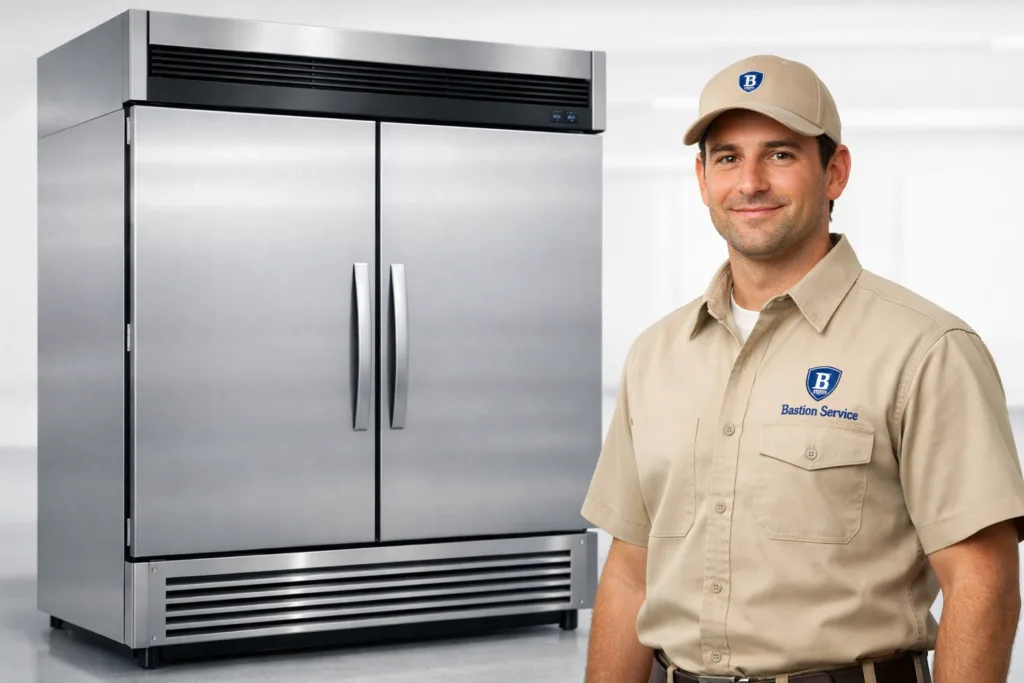




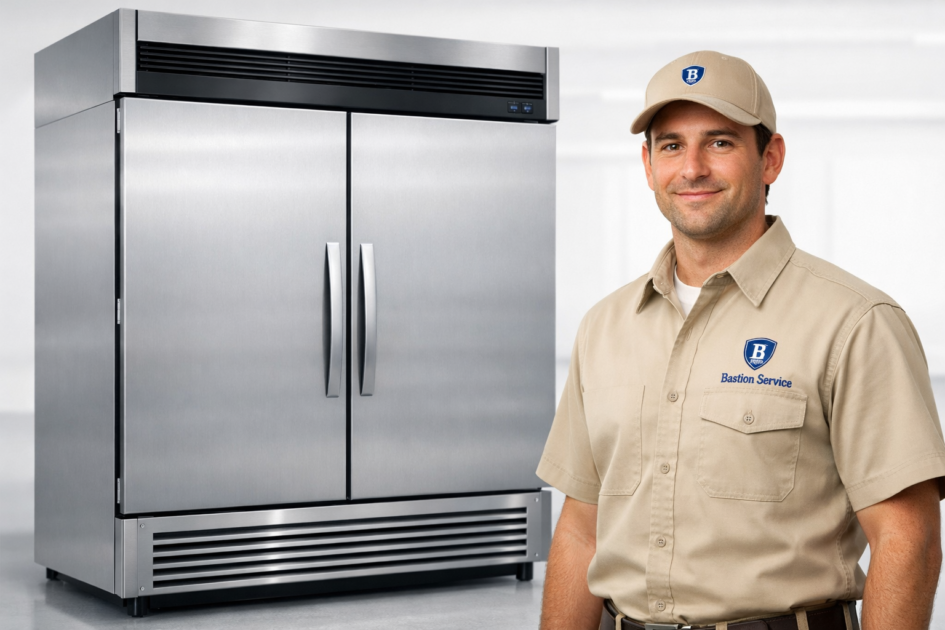
When a True refrigerator or freezer starts missing temperature targets in Los Angeles, the first priority is figuring out whether the problem is isolated, worsening, or likely to cause product loss. A proper diagnosis helps businesses decide whether equipment can remain in limited use, whether service should be scheduled immediately, and what repair path makes the most sense before downtime spreads.
Commercial refrigeration issues rarely stay small for long. A unit that runs constantly, frosts over, leaks, or struggles with airflow can interrupt operations, affect inventory, and create uncertainty for staff. Bastion Service handles True refrigeration equipment repair in Los Angeles with a service-first approach focused on diagnosis, repair planning, and practical scheduling decisions for business environments.
True refrigerator and freezer problems that usually need service
True equipment is built for commercial duty, but heavy use, heat load, door traffic, and wear on key components can still lead to performance problems. In many cases, symptoms that look simple on the surface are connected to a broader refrigeration or airflow fault that should be identified before operation continues.
Temperature instability
If a refrigerator or freezer is running warm, drifting out of range, or taking too long to recover after door openings, the issue may involve sensors, controls, evaporator airflow, condenser problems, refrigerant-related faults, or failing components in the cooling system. If the problem is centered on refrigerated holding temperatures rather than deep-freeze performance, True Refrigerator Repair in Los Angeles may be the better fit. Scheduling diagnosis early helps determine whether the unit is safe to keep using and whether the repair is straightforward or likely to escalate.
Weak airflow and uneven cooling
Hot spots, slow pull-down, or inconsistent cabinet temperatures often point to airflow restrictions, fan motor issues, frost buildup, blocked coils, or door seal problems. These conditions can force longer run times and reduce reliability. A service visit can confirm whether the problem is limited to airflow correction or tied to a deeper cooling-system repair.
Frost accumulation and ice buildup
Excess frost inside a True freezer or refrigerator can interfere with airflow, sensor accuracy, and door operation. Depending on the unit, the cause may be gasket leakage, defrost failures, fan issues, drainage problems, or operating conditions that are stressing the system. If cooling problems are concentrated in the freezer compartment, True Freezer Repair in Los Angeles may be more relevant. Continued use without diagnosis can worsen temperature control and increase strain on other components.
Water leaks or moisture around the unit
Leaks are not always a simple drain issue. Water on the floor or inside the cabinet may result from blocked drains, icing, condensation management problems, door seal failures, or cooling issues that are changing how moisture behaves inside the system. In commercial spaces, leaks also create safety and sanitation concerns, which is why prompt service planning is often the better decision.
What common symptoms can indicate
Service decisions are easier when symptoms are grouped by how they affect operation. A noisy unit, a warm cabinet, and visible frost may be separate complaints, but they can all come from one underlying fault. Diagnosis is important because part replacement without confirmation can waste time while the real cause continues to affect uptime.
Constant running or short cycling
A True refrigerator or freezer that rarely shuts off may be compensating for poor heat exchange, airflow loss, control issues, or a declining cooling system. Short cycling can point to control faults, sensor issues, electrical problems, or protective shutdown behavior. Either pattern deserves service attention because both can lead to unstable temperatures and additional component wear.
Noise changes or vibration
Buzzing, rattling, fan noise, or compressor-related sounds can indicate loose hardware, fan blade interference, motor wear, or mounting problems. In some cases, a new sound appears before a complete cooling failure. If the sound change is accompanied by warming temperatures or ice buildup, it is a strong sign that diagnosis should be scheduled soon.
Cabinet not holding set temperature
When staff adjusts controls more often but results do not improve, the issue usually requires testing rather than trial-and-error changes. Problems with sensors, controls, fans, coils, or sealed-system performance can all produce similar symptoms. If the concern applies across business-use cooling equipment beyond one True unit, Commercial Refrigerator Repair in Los Angeles may be the better service path. Confirming the source protects against unnecessary downtime and helps determine whether repair is likely to restore dependable operation.
When continued use may make the problem worse
Some refrigeration problems allow a short window for managed operation, but others should not be ignored. If temperatures are drifting, frost is spreading, the unit is leaking, or recovery times are getting longer, continued use can increase product risk and place more stress on motors, controls, and cooling components. The right response depends on what the unit is doing now, not only on what failed before.
Service is usually worth scheduling promptly when a True unit is no longer maintaining consistent temperature, when airflow is visibly weak, when alarms or error conditions are recurring, or when staff have to compensate manually to keep inventory protected. A local diagnosis helps determine whether the equipment should be taken out of service, monitored temporarily, or repaired on the current schedule.
Repair planning for commercial True equipment
For businesses in Los Angeles, the real question is often not just what failed, but how the repair fits operational needs. A useful service visit should identify the failed system or component, explain the likely repair scope, and clarify whether the unit is a good candidate for repair based on condition, age, repeat history, and downtime impact.
Repair may be the practical option when the cabinet and core structure are still in solid condition and the problem is tied to serviceable components such as controls, fans, seals, drainage, or accessible refrigeration-related parts. Replacement becomes more relevant when the unit has severe recurring issues, major system decline, or repair costs that no longer support reliable operation. That decision is easier after diagnosis, not before.
What a service-focused visit should help you decide
For True refrigeration equipment repair in Los Angeles, businesses typically need more than a symptom list. They need to know what is failing, whether inventory can remain protected, how quickly service should be scheduled, and whether repair supports continued use. That is especially important for refrigerators and freezers tied directly to daily operations, holding capacity, and compliance expectations.
If your True refrigerator or freezer is running warm, icing over, leaking, or showing signs of airflow or cooling trouble, the next practical step is to schedule diagnosis and confirm the safest repair path. A clear service assessment helps reduce guesswork, limit downtime, and decide whether the equipment should stay in use while repairs are planned.


