
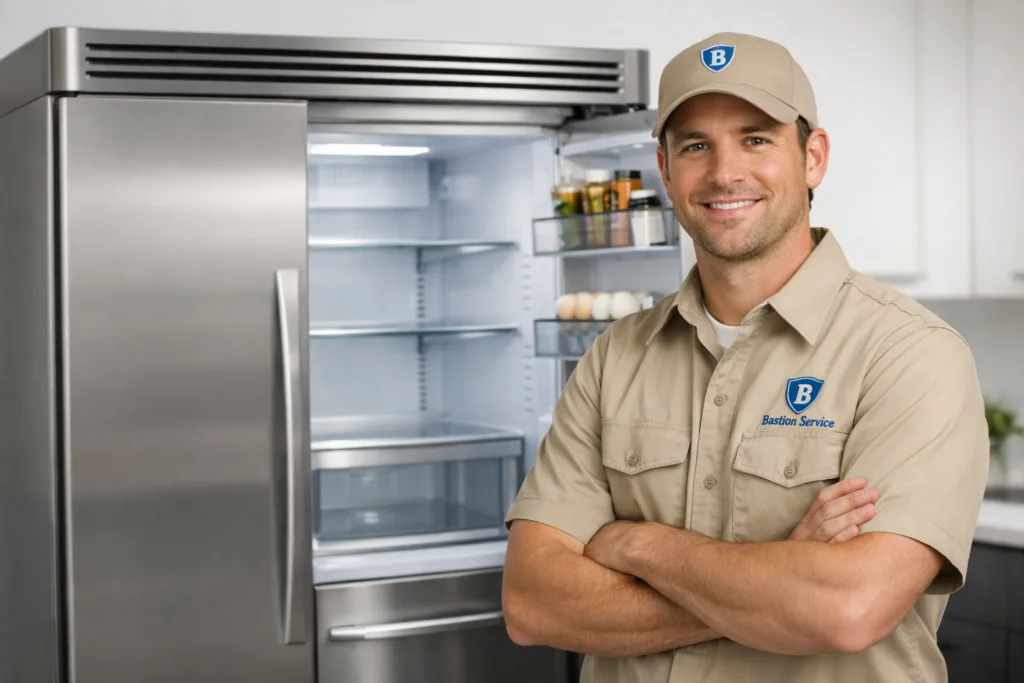




One symptom can point to several different True appliance problems

Cooling appliances rarely fail in a simple, obvious way. A True refrigerator that feels warm, a freezer with heavy frost, an ice maker that slows down, or a wine cooler with condensation may all be showing early signs of trouble rather than one single failed part. The same symptom can come from airflow restrictions, fan issues, sensor errors, defrost faults, door sealing problems, drain blockages, or deeper cooling-system concerns.
That is why it helps to look at the full pattern instead of reacting to one symptom alone. In many West Los Angeles homes, owners first notice subtle changes such as longer run times, temperature swings, small puddles, or new noises before performance drops more sharply. Catching those warning signs early can reduce the chance of food loss, moisture damage, or a larger repair later.
True refrigerator problems homeowners often notice first
Refrigerator issues usually begin with uneven cooling. Food may not stay cold as expected, drinks may feel less chilled, or one area of the cabinet may seem colder than another. Those conditions often suggest a problem with airflow, fan operation, temperature sensing, condenser condition, door sealing, or compressor performance.
Fresh-food section running warm
If the refrigerator compartment is warmer than normal while the unit still appears to be operating, the cause may involve blocked air movement, frost buildup behind interior panels, a weak evaporator fan, or a control issue. This is one of the most important symptoms to address quickly because food safety can become a concern before a complete breakdown happens.
Water collecting inside or under the refrigerator
Water around the appliance is often linked to a clogged defrost drain, excess condensation, improper leveling, or a leak from a connected water supply line on applicable models. Even a small recurring leak deserves attention, since repeated moisture can affect flooring and nearby cabinetry.
New or louder noises
Buzzing, clicking, rattling, humming, or intermittent knocking can mean different things depending on when the sound occurs. Fans can strike ice, mounting points can vibrate, and compressors can become louder when under strain. A noise change does not always mean a major failure, but it is often a useful clue when combined with cooling complaints.
Freezer symptoms that should not be ignored
A True freezer should hold steady freezing temperatures without major frost accumulation. When stored food softens, ice crystals form on packages, or the interior develops thick frost, the unit is no longer operating normally. Common causes include defrost failures, poor door sealing, airflow restrictions, sensor problems, and cooling-system faults.
Heavy frost that keeps returning
Persistent frost usually points to more than normal humidity. A gasket that is not sealing well, a door left slightly ajar, or a defrost system problem can all cause frost to build up again soon after cleaning. If ignored, frost can limit airflow, reduce usable storage space, and force the appliance to run longer.
Freezer not freezing solidly
If frozen foods become soft or partially thawed, service should be scheduled promptly. A freezer that runs without reaching proper temperature may have a fan problem, restricted airflow, inaccurate sensing, or reduced cooling capacity. Waiting too long can lead to food spoilage and additional strain on other components.
Constant running with poor results
When a freezer seems to run for long periods but still does not maintain proper temperature, it is often working harder than it should. That can happen because of dirty heat-exchange surfaces, a sealing problem, frost blockage, or a more involved refrigerant-system issue.
True ice maker issues are not always caused by the ice maker itself
Ice makers depend on proper water supply, correct freezing conditions, timing, and unobstructed movement. When production slows, stops, leaks, or creates irregular ice, the problem may involve the water inlet system, fill timing, temperature performance, sensors, drainage, or ice buildup around moving parts.
No ice production
If the unit has stopped making ice entirely, the cause may be as simple as a water supply problem or as involved as a cooling or harvest-cycle issue. Because different faults can produce the same result, symptom-based testing is more useful than assuming the ice maker assembly itself has failed.
Slow or inconsistent output
Reduced ice production is often an early warning sign. The appliance may still make some ice, just not enough to meet normal household use. This can happen when temperatures are drifting, water flow is restricted, or scale and ice buildup are interfering with normal operation.
Leaks, puddles, or excess ice buildup
Water around an ice maker should be addressed quickly. Depending on the design, the issue may involve fill overrun, drainage problems, a loose connection, or ice obstruction causing water to go where it should not. Left alone, these issues can lead to slipping hazards, floor damage, or frozen interference inside the unit.
Wine cooler problems can affect storage conditions faster than expected
Wine coolers are designed for stable temperature control, so even mild drift matters. If a True wine cooler runs warm, cycles too often, or develops visible condensation, likely causes include sensor faults, fan issues, gasket wear, control calibration problems, or declining cooling performance.
Cabinet not holding the set temperature
A wine cooler that cannot maintain its selected range is no longer protecting storage conditions as intended. Before assuming a major failure, it makes sense to check that the door is closing fully and nothing inside is blocking circulation. If the problem continues, service is the next logical step.
Condensation on shelves, walls, or glass
Moisture inside the cabinet often points to warm-air intrusion, door sealing issues, or inconsistent temperature regulation. In West Los Angeles, repeated door opening combined with a weak seal can make condensation more noticeable and put extra stress on the cooling system.
Short cycling or nonstop running
If the wine cooler starts and stops too frequently, or runs for unusually long stretches, it may be struggling to maintain the correct environment. That behavior can signal control issues, sensor inaccuracy, restricted airflow, or declining system efficiency.
Signs that it is time to schedule service
It is usually time to act when a symptom keeps returning instead of improving. Cooling appliances often show a pattern before complete failure, and that pattern matters. A unit that is still partly working can still be in active decline.
- Food is not staying safely cold
- The freezer is thawing or frosting heavily
- The ice maker has stopped producing or is leaking
- The wine cooler no longer holds a stable range
- The appliance is running constantly, cycling oddly, or making new noises
- Water is appearing under or inside the unit
- The appliance will not start properly or shows repeated error behavior
If continued use is leading to rising temperatures, persistent leakage, or worsening frost buildup, delaying service can make the problem more expensive and less predictable.
How homeowners usually think through repair versus replacement
Repair or replacement is rarely decided by age alone. The more useful question is what has actually failed and how the appliance has been performing overall. A focused repair often makes sense when the issue is isolated and the unit is otherwise in good condition. Replacement becomes more likely when there are repeated major cooling problems, multiple failing systems, or repair cost is too close to the value of keeping the appliance in service.
Two appliances can show the same symptom and lead to very different recommendations. One warm refrigerator may need a targeted fan or defrost repair, while another may have a more serious cooling-system problem. The same is true with freezers, ice makers, and wine coolers.
A practical way to evaluate a True appliance problem
The most useful approach is to match the repair plan to the actual symptom pattern. That usually means checking temperatures, airflow, fan function, seals, drains, controls, and overall cooling behavior before deciding what repair makes sense. For West Los Angeles homeowners, that kind of evaluation helps separate a manageable fix from a broader performance issue.
Whether the concern involves a refrigerator, freezer, ice maker, or wine cooler, the goal is straightforward: identify why the unit is not performing normally, prevent the problem from spreading, and choose the repair direction that fits the condition of the appliance.


